GD
Geodynamics

tectonophysics

Application of lubrication theory in understanding subduction interface dynamics

Application of lubrication theory in understanding subduction interface dynamics

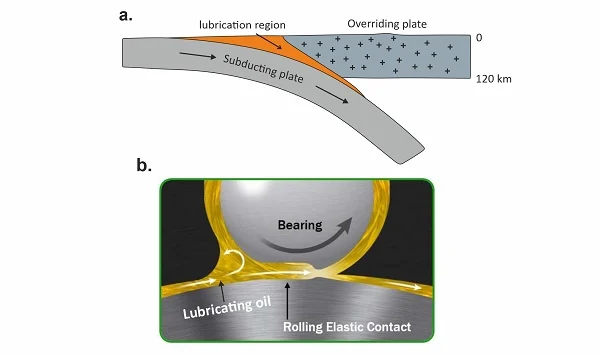
Plate interface lubrication is essential for stabilization and continuation of subduction process for million of years. The magnitude of plate interface lubrication determines transfer of stress between two converging plates, topography of mountain belts, transportation of volatiles to the mantle, and return flow of high to ultra-high pressure rocks to the earth’s surface.  In this …[Read More]

Journey of the Indian plate

Journey of the Indian plate

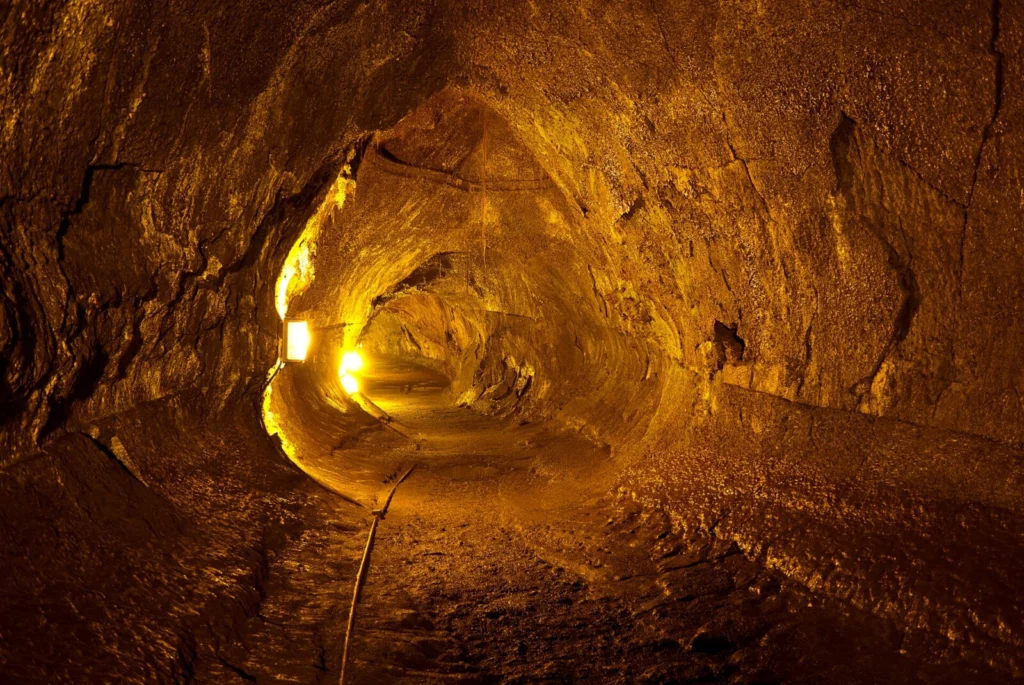
Plume craton interaction is a fascinating geological phenomenon. The Indian plate, which has experienced several plume eruptions underneath it, is one of the best locations to study the effect of plume craton interaction. In this week’s news and view, I will provide an overview of the controversy and hypotheses related to the plume craton interaction …[Read More]

Repurposing a research tectonic modeling code as a community service: The case of DES3D

Repurposing a research tectonic modeling code as a community service: The case of DES3D

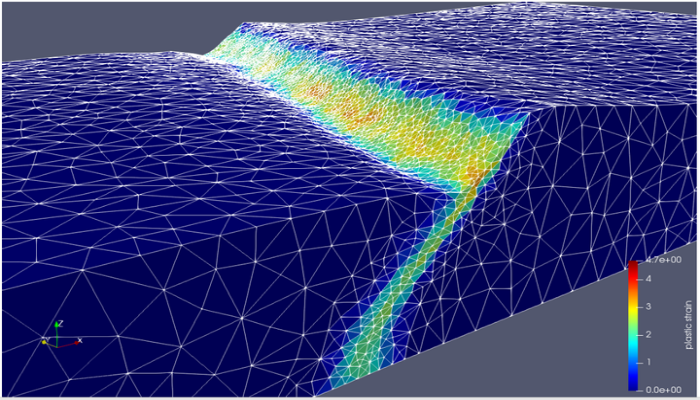
This week, Dr. Eunseo Choi, a professor at the Center for Earthquake Research and Information, the University of Memphis, talks about tectonic modelling using DES3D. *Spoiler alert* read till the end for an exciting opportunity to work on it The advent of the open-source movement and the free public software repositories such as GitHub have …[Read More]

Whole solid-Earth numerical simulation: Towards an understanding of mantle-core interactive dynamics

Whole solid-Earth numerical simulation: Towards an understanding of mantle-core interactive dynamics

Due to huge difference between the time scale of the mantle convection and the outer core convection, they are modelled separately. In this week’s News and Views, Masaki Yoshida from the Volcanoes and Earth’s Interior Research Center, Japan Agency for Marine-Earth Science and Technology (JAMSTEC), Japan, put forward the recent development on the modeling of …[Read More]

Modelling the deformation in the Indian plate and the India-Eurasia collision zone

Modelling the deformation in the Indian plate and the India-Eurasia collision zone

A complete fluid dynamical approach of modeling the Earth’s deformation can not provide a complete picture due to presence of rigid lithospheric plates. In this week’s news and views, Srishti Singh, scientist at National Geophysical Research Institute, India, explains how coupled models of lithosphere dynamics and mantle convection are developed.  The ongoing collision of the Indian plate …[Read More]

2021: 100th year of the craton concept and beyond

2021: 100th year of the craton concept and beyond

One hundred years back, Leopold Kober first introduced the term “Kratogen”. With time, the concept of kratogen has evolved, and they are now known as cratons. In this week’s news and views, Jyotirmoy (@GeophyJo), a PhD student from the Indian Institute of Science revisits the history of craton science: how the craton concept has evolved and …[Read More]

Advanced geodynamic models of giant earthquakes

Advanced geodynamic models of giant earthquakes

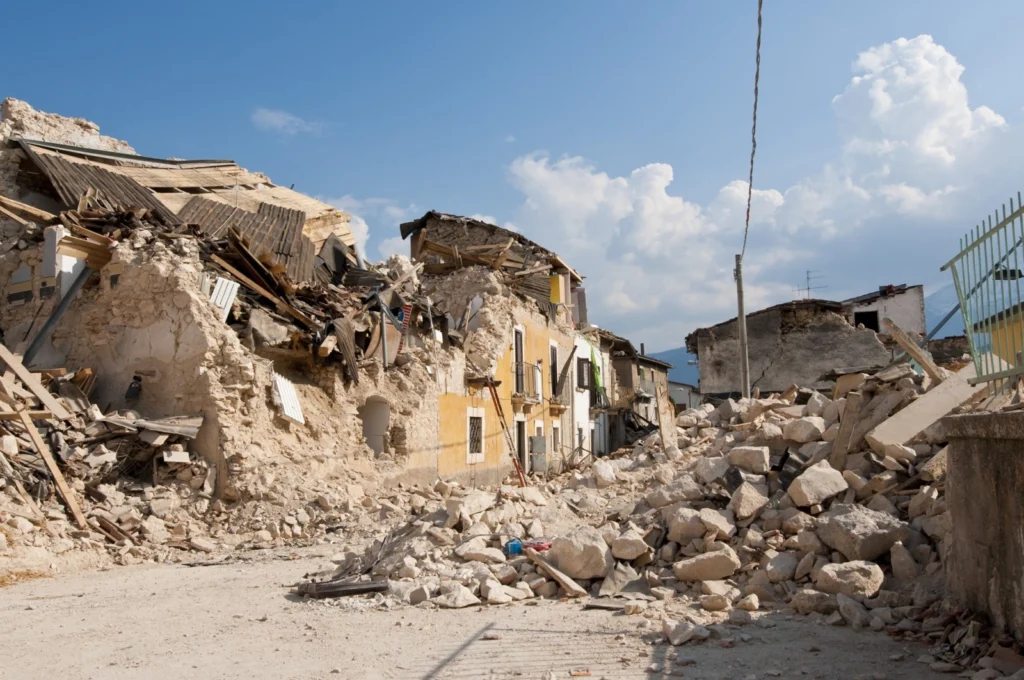
Though giant earthquakes are disastrous, they provide essential information to investigate earthquake physics. In this week’s news and views, Thyagarajulu Gollapalli, a PhD student jointly from the Monash University and the Indian Institute of Technology, Bombay, discusses our present understanding of such big earthquakes and how advanced numerical models will help to get a more …[Read More]

Baking geological cakes!

Baking geological cakes!

Who doesn’t love baking? Seriously, baked goods are the best: with or without gluten, with or without chocolate. But you know what makes every bake out there even better? A geological theme. You heard it here first! This week, Ruth Amey, postdoctoral researcher and programme manager of the Earth Observation Center for Doctoral Training at …[Read More]

Understanding intraplate earthquakes

Understanding intraplate earthquakes

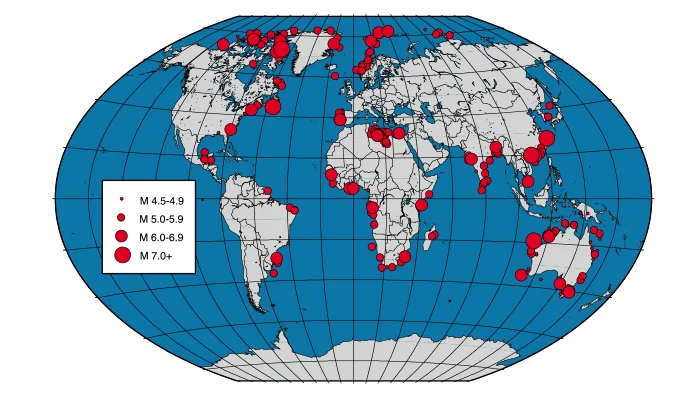
  One of the basic tenets of plate tectonics states that deformation occurs along plate boundaries while plate interiors remain almost undeformed. Intraplate earthquakes  defy this principle and hence are quite enigmatic.  In this week’s News and Views, Prof. Attreyee Ghosh from the Centre for Earth Sciences, Indian Institute of Science, tries to explain the …[Read More]