GD
Geodynamics

Archives / 2021 / November

The Sassy Scientist – On The Other Side Of The Trench

The Sassy Scientist – On The Other Side Of The Trench
Long (mostly self-inflicted) working hours, low pay, one short-time contract after another and no long-term guarantee whatsoever. That is academic life for you, in case you haven’t noticed. Sooner or later all academics start to ask themselves the same thing that Gabby asks: What are the nicest alternatives to academia? Dear Gabby, My personal favourites are careers that involve telling acad ...[Read More]

Orphaning: Discovering New Subduction Processes

Orphaning: Discovering New Subduction Processes

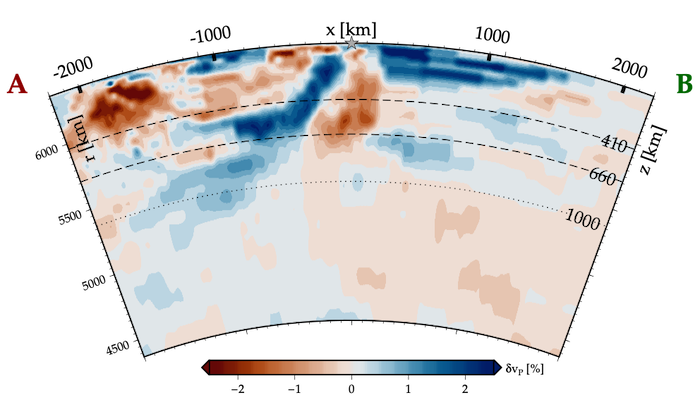
Science is all about discovering new things. But how do we make these discoveries, adding to the ever growing pantheon of knowledge? This week, we sit with one of our editors Antoniette Greta Grima, a Postdoctoral Fellow from the University of Texas at Austin, to understand what it takes to discover a new slab process.  Thanks for sitting down with us this week! First things first, which subductio ...[Read More]

The Sassy Scientist – To A Galaxy Far Far Away

The Sassy Scientist – To A Galaxy Far Far Away

Jesper has a lot of green on his mind. No not money, you capitalists. Nature. The environment. Basil and chives. With the recent advent of billionaires finding new ways to caress their egos, and in a totally-not-aiming-to-start-mining-other-celestial-bodies kinda way, Jesper has some troubled thoughts: Should we really colonize other planets? We are already destroying this one… Dear Jesper, Sure. ...[Read More]

Magma-Assisted Flexure in Hawaiian Lithosphere?

Magma-Assisted Flexure in Hawaiian Lithosphere?

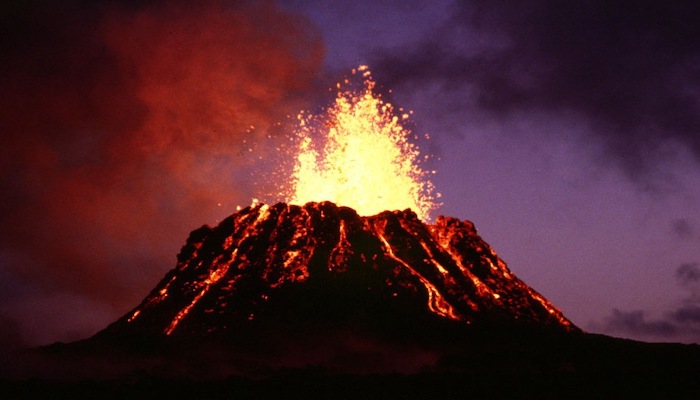
This week Daniel Douglas, who is now a PhD student at New Mexico Tech, discusses his master thesis research while at the university of Hawaii. He investigated the role of magma in the flexure of the Hawaiian lithosphere. When a topographic load is applied to the lithosphere, the lithosphere accommodates the load by flexing. The observed flexure can be measured through seismic methods, gravity anom ...[Read More]

The Sassy Scientist – Stating The (not so) Obvious

The Sassy Scientist – Stating The (not so) Obvious

Applying for tenure-track (or something close to that) positions is the very reason for many brilliant scientists to eventually run away from academia as fast as they can. Finding an opening, preparing your application and bracing yourself for the n-th `no thank you, but you should really try again!’ is a tedious, time-consuming, numbing, soul-destroying, kill-me-now process. Among the many ...[Read More]

To boldly go… deep sea exploring to study Earth’s interior

To boldly go… deep sea exploring to study Earth’s interior

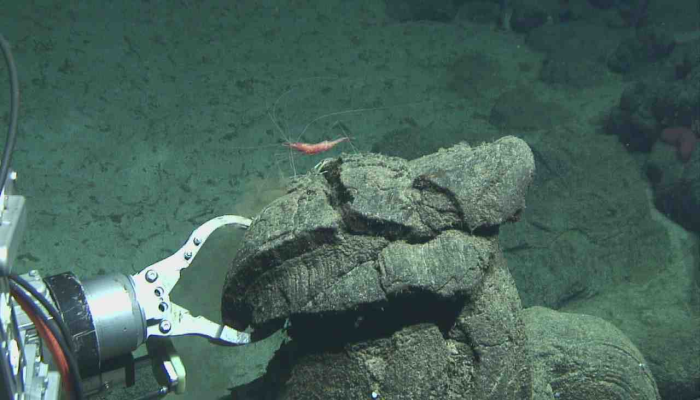
As geodynamicists, we are sometimes oblivious on how we get the geophysical constraints in our numerical models. This week Molly Anderson, a PhD student at the University of Florida, takes us on a exciting dive to study the geochemical signatures of the East Pacific Ocean seafloor! People are often surprised to hear that the seafloor is covered with volcanoes, let alone that the most extensive cha ...[Read More]

The Sassy Scientist – Impatient Or Too Late?

The Sassy Scientist – Impatient Or Too Late?

Hilde has been ever so occupied with her research, especially finishing a manuscript for the first time. Submitting that paper was supposed to be some sort of closure, and mental solace, yet somehow there seems to be a predilection for progressive diffidence: When has enough time passed to send a reminder/enquiry to an editor if the paper is in the ‘decision with editor’-stage? Dear Hilde, Don&#82 ...[Read More]

Sliding across the Solar System – The missing origins of gigantic landslides

Sliding across the Solar System – The missing origins of gigantic landslides

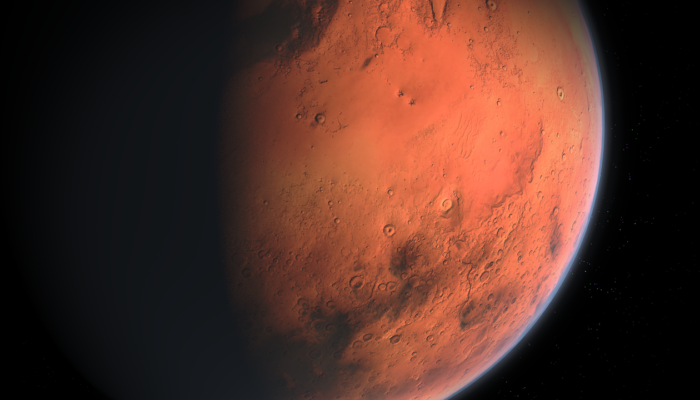
Landslides can be impressively huge and fast and can occur on all sorts of places including asteroids, rocky moons and Mars! Giulia Magnarini Post Doctoral Researcher at the Natural History Museum in London writes all about these gigantic landslides and the clues they could hold into the martian past! Gigantic landslides are ubiquitous in our solar system. Indeed, Earth, Mars, Mercury, Venus, aste ...[Read More]