The Division Outstanding Early Career Scientist Awards highlight exceptional scientific contributions made by an Early Career Scientist in the fields of Earth Sciences associated with each division. This year, the prestigious recognition for the Geodynamics Division has been awarded to Dr. Sia Gelichkhan, from the Australian National University. Today we have the pleasure of interviewing …[Read More]
Archives / 2026 / March
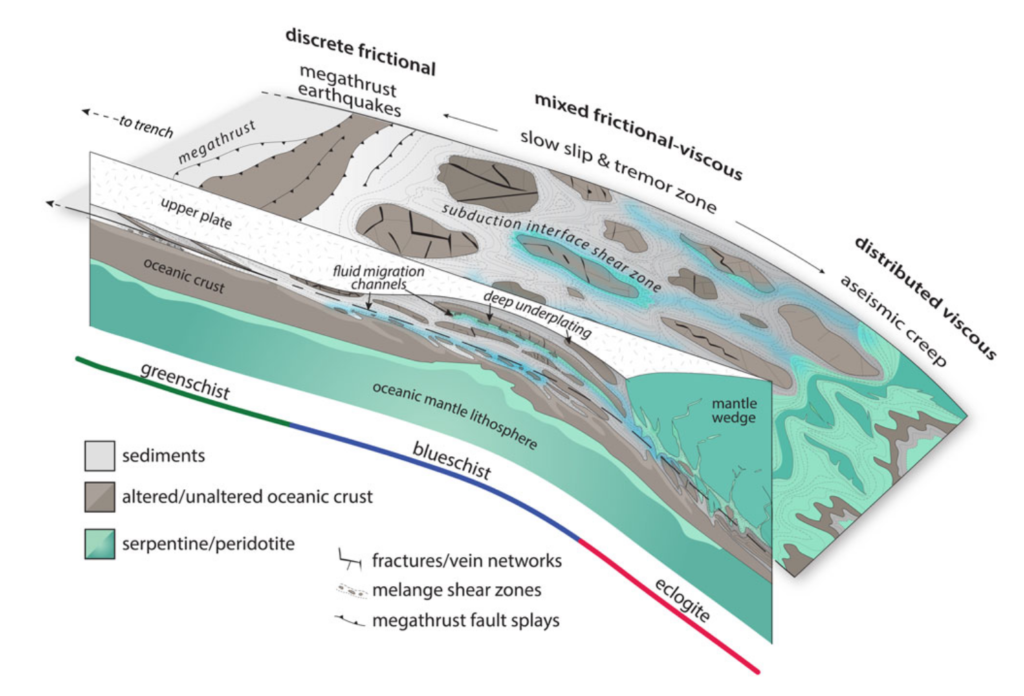
Subduction interfaces are complicated – and that’s their beauty!
The dynamics of subduction zones are strongly influenced by the subduction interface. Understanding its rheology enables geodynamic modellers to better simulate these systems and unravel the fundamental processes that govern them. In today’s blog post, we explore subduction interface rheology and discuss effective approaches for modelling it. What is a subduction interface? I first met …[Read More]
Under pressure: measuring stress within the crust
At the geodynamic scale, tectonic forces guide the distribution of stress. Stress in the Earth is not constant, but varies through space. Variations in gravitational energy caused by changes in mass distribution within the Earth, forces acting at plate boundaries, and basal mantle drag all cause stress to vary and act in different directions. Overall, …[Read More]
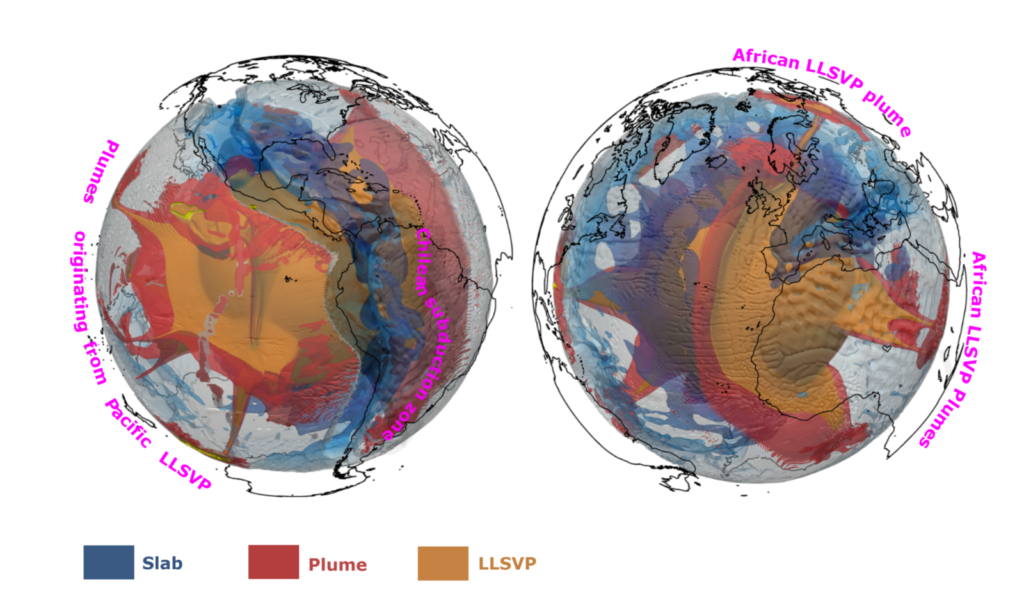
What’s blobbing inside the Earth? – insights from numerical modelling
Seismic waves tell us that something unusual is happening in the lowermost few hundred kilometers of Earth’s mantle. Beneath Africa and the Pacific lie two enormous thermochemical structures known as Large Low-Shear-Velocity Provinces (LLSVPs). These “large blobs” are slower to transmit shear waves, but beyond that, their physical nature remains one of the biggest open questions …[Read More]