GD
Geodynamics

Archives / 2020 / September

The mantle as seen from the core: more than a thermostat
The mantle as seen from the core: more than a thermostat

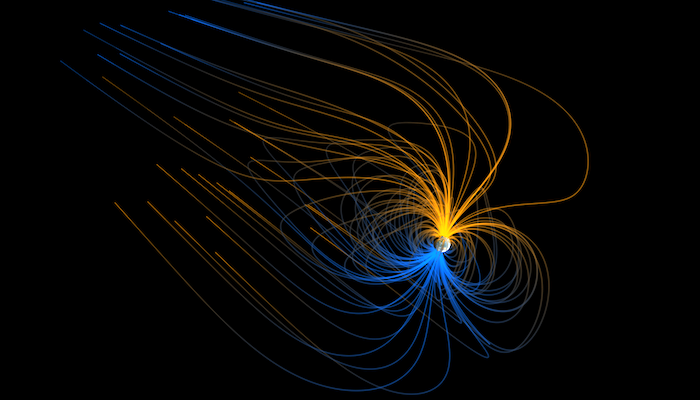
Geodynamics does not stop at the core-mantle boundary – the Earth’s outer core is a truly dynamic geosystem. This week Stefano Maffei (Research fellow) and Chris Davies (Associate Professor) from the School of Earth and Environment at the University of Leeds tell us more about the possible interplay between mantle and core and some of the remaining mysteries of the Earth’s magnetic field generatio ...[Read More]

The Sassy Scientist – Only Time Will Tell

The Sassy Scientist – Only Time Will Tell

Being a geophysicist, Eocenia is well aware of the fundamental cyclical rhythm of life – inbox time, coffee time, lunch time, nap time, scream-at-the-cluster time, tea time, pub time, late-night-coding time. But apparently stratigraphers just don’t accept this universal cycle, leaving us all with the question: When will geologists figure out time? Dear Eocenia, Ma or Myr? Either would ...[Read More]

Venus: science! Today!

Venus: science! Today!

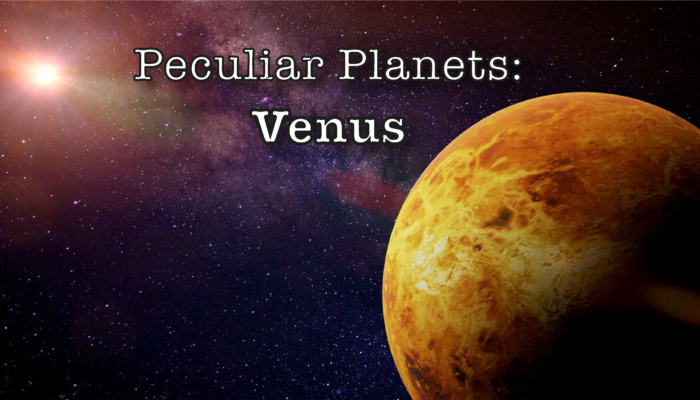
After many (attempted) visits to Venus in an earlier era of space exploration, the focus of terrestrial planet science was shifted towards e.g. our other neighbour Mars. Yet, lately, Venus seems to gain scientific popularity and not without reason – there remains so much to figure out about the puzzling planet. The virtual mini-workshop ‘Venus Science Today’ was held a few weeks ago to bring toget ...[Read More]

The Sassy Scientist – The Story of Plate Tectonics

The Sassy Scientist – The Story of Plate Tectonics

As a new coping mechanism with reality, Sascha has been digging into some science history and asked: How did scientists discover plate tectonics? Dear Sascha, I do enjoy a good walk on the memory lane of scientific discoveries. You might know by now that great insight is gained when we look at data with fresh eyes. Hence, lots of advances in certain narrow scientific fields come from outsiders. In ...[Read More]

Advanced geodynamic models of giant earthquakes

Advanced geodynamic models of giant earthquakes

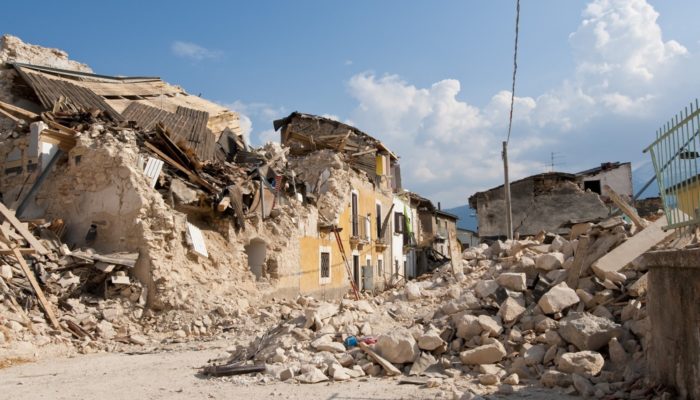
Though giant earthquakes are disastrous, they provide essential information to investigate earthquake physics. In this week’s news and views, Thyagarajulu Gollapalli, a PhD student jointly from the Monash University and the Indian Institute of Technology, Bombay, discusses our present understanding of such big earthquakes and how advanced numerical models will help to get a more precise picture of ...[Read More]

Locking people up to program — or: “What is a hackathon?”

Locking people up to program — or: “What is a hackathon?”

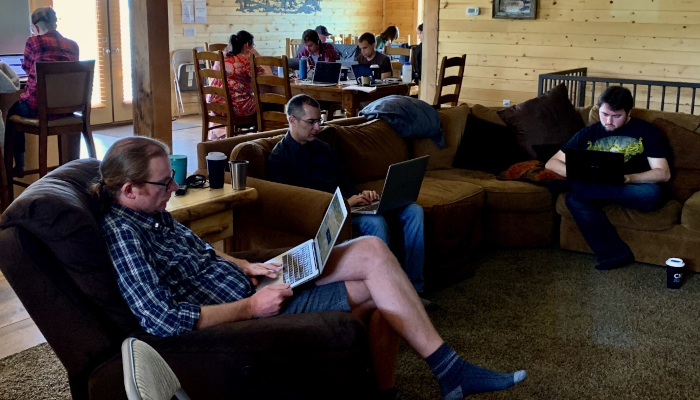
This week the seventh yearly hackathon of the geodynamics code ASPECT is taking place. But what actually is a hackathon, why is it useful and how did it get started in the first place? This week, Wolfgang Bangerth, one of the founders of ASPECT, explores all these questions for us. Due to the intensity of a hackathon, he wrote this article before the start of the hackathon. It’s really not p ...[Read More]

The Sassy Scientist – Picturing The Perfect Petting Zoo

The Sassy Scientist – Picturing The Perfect Petting Zoo

Kamal is happy, trotting around academia with a laptop in one hand, a cup of coffee in the other, and a faint grin on his face as he contemplates how to tackle the next big questions in geodynamics. Amazed that others do not consider academia as a radiant beacon on the horizon of potential career pathways, he is curious: If you were not a scientist, what would you be? Dear Kamal, I suppose I would ...[Read More]

The two faces of Mars

The two faces of Mars

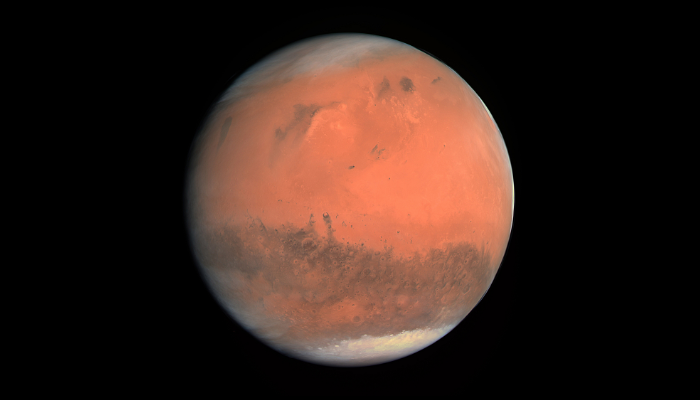
In this week’s blog post, we will learn more about the past of our neighbouring planet Mars. Kar Wai Cheng, PhD student at the Institute of Geophysics at ETH Zurich, is talking about the Martian dichotomy and how it could have formed. Humans have recognized Mars for a very long time. One of the earliest records of Mars is seen on a skymap in the tomb of an ancient Egyptian astronomer. By tha ...[Read More]

The Sassy Scientist – The Cricetinae Model

The Sassy Scientist – The Cricetinae Model

Despite workshops and seminars and conference sessions and Zoom colloquia, of which Geraldine has attended many, one big question remains in geophysics: What drives plate tectonics? Dear Geraldine, Slab pull? Ridge push? Mantle drag? Continental keels? Super plumes? Mantle wind? Expanding Earth? God? Nope, there is only one explanation that truly fits the data and passes the common sense test: The ...[Read More]

What happens when two worlds collide?

What happens when two worlds collide?

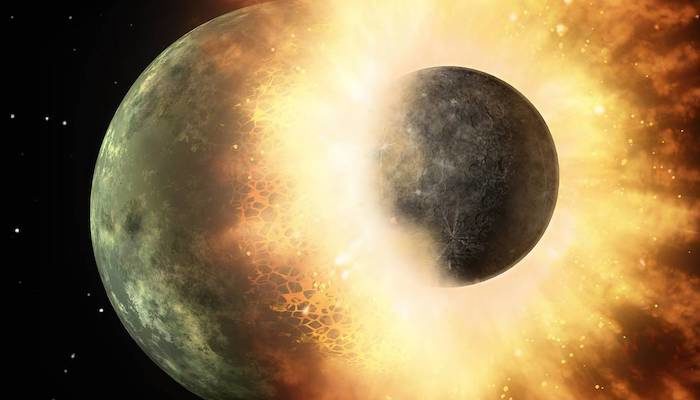
Why does the Moon have a very small core and Mercury one that makes up roughly 85% of the planet’s radius? Why are humans doing research in geoscience and not some evolved version of dinosaurs? In this week’s blog post, Harry Ballantyne, PhD student at the Department of Space and Planetary Sciences at the University of Bern, is talking about large-scale collisions and how they can answ ...[Read More]