OS
Ocean Sciences

Ocean Sciences

When the atmosphere moves the sea: Meteotsunami waves

When the atmosphere moves the sea: Meteotsunami waves

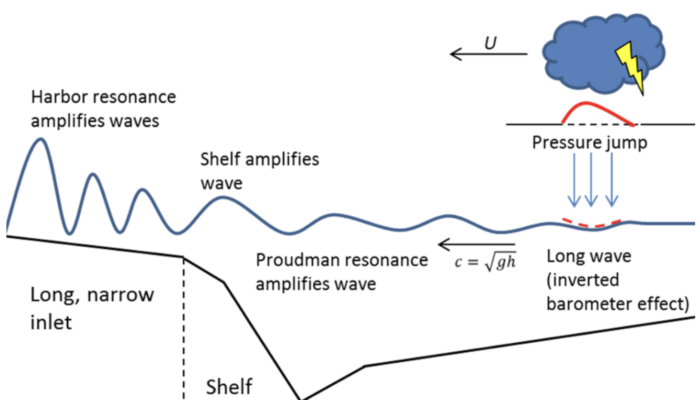
Meteotsunamis or meteorological tsunamis are globally occurring progressive shallow water waves with a period of between 2 to 120 minutes which results from an air-sea interaction. They tend to be initiated by sudden pressure changes and wind stress from moving atmospheric systems with sources ranging from convective clouds, cyclones, squalls, thunderstorms, atmospheric gravity waves and strong mi ...[Read More]

More Than a Rain Gauge: When Salt Starts Steering the Sea

More Than a Rain Gauge: When Salt Starts Steering the Sea

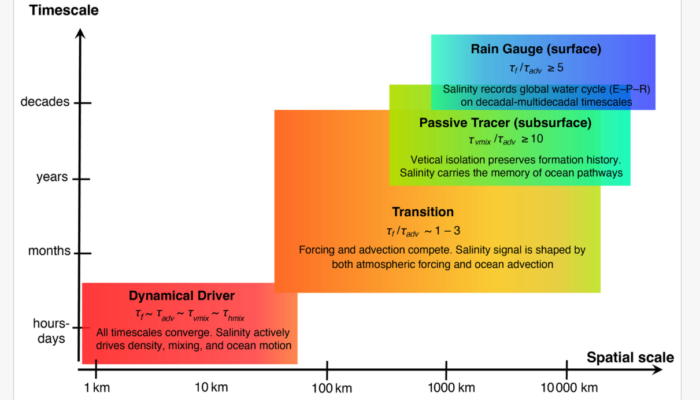
Posted in: Ocean Sciences | Reviews & Perspectives | Ocean Science Jubilee Special Issue We usually think of ocean salinity as the ocean’s rain gauge. Rain, rivers, and melting ice freshen the surface; evaporation leaves it saltier. Seen from space, these changing patterns reveal how Earth’s water cycle is evolving, with wet regions generally becoming fresher and dry regions saltier as the cli ...[Read More]

Fifty years of ocean chemistry in one place: GLODAPv3 is here!

Fifty years of ocean chemistry in one place: GLODAPv3 is here!

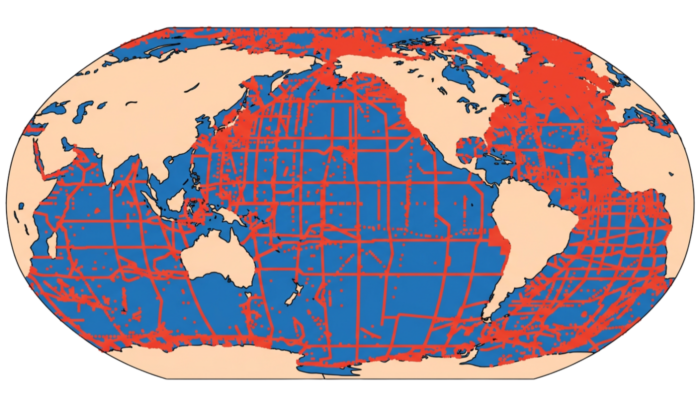
Working with marine carbonate-system observations has taught me how much effort lies behind every row of an oceanographic dataset: long hours at sea, careful sampling, laboratory analyses, calibration and quality control. A single bottle of seawater may represent only one place, one depth and one moment, but when many such samples are brought together, they can reveal how the ocean is changing. On ...[Read More]

Can the Ocean Explain Why Climate Models Struggle with the Indian Monsoon?

Can the Ocean Explain Why Climate Models Struggle with the Indian Monsoon?

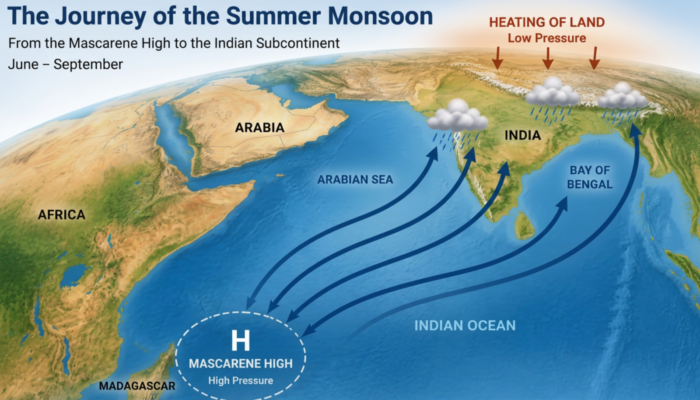
Few climate phenomena affect as many people as the Indian Summer Monsoon (ISM). Between June and September, it delivers most of the annual rainfall over the Indian subcontinent, supporting agriculture, water resources, and livelihoods for more than a billion people. Yet predicting how the monsoon will respond to climate change remains a major scientific challenge because it is shaped by complex in ...[Read More]