
The Geodynamics programme of the General Assembly starts with your ideas. With the call for session proposals for the 2027 EGU General Assembly approaching, the Geodynamics Division President Laetitia Le Pourhiet shares her thoughts on what makes a successful session proposal, and how to help shape next year’s scientific programme.
Dear GD community,
It is already time to start thinking about the Geodynamics programme for the EGU General Assembly 2027. The programme is built from the ideas, energy, and scientific curiosity of the community, so this is the moment to ask yourself: what topic should we discuss next year? What emerging direction needs more visibility? Which communities should talk to each other more?
We are especially looking for new session ideas, refreshed session descriptions, and new co-conveners who would like to help build an exciting, inclusive, and well-balanced GD programme.
what topic should we discuss next year? What emerging direction needs more visibility? Which communities should talk to each other more?
Convening a session is a great way to bring people together around a scientific question. It can help structure a community, create space for new collaborations, and make sure that important topics are visible at the General Assembly. But a good EGU session should not be too narrow. A useful rule of thumb is that a session should be able to attract around 20 abstracts. This is important because the number of abstracts strongly influences whether a session can receive an oral block, or whether it needs to be merged with another session.
So, before proposing a session, please ask yourself a few simple questions. Is the topic broad enough to attract contributions from several groups and countries? Does the convener team reflect the diversity of the community, in terms of career stage, geography, gender, methods, and scientific background? Is there already a similar session in the programme that could be joined or refreshed instead of duplicated? And, very importantly, are you proposing a session to serve the community, rather than to create a speaking slot for yourself? At EGU, conveners and co-conveners cannot be presenting authors for oral presentations in the session they convene, and solicited presentations also come with specific restrictions.
For EGU General Assembly 2027, the GD programme will be organised around five broad programme groups:
 GD1 – Earth and Planetary Dynamics, Structure, Composition and Evolution
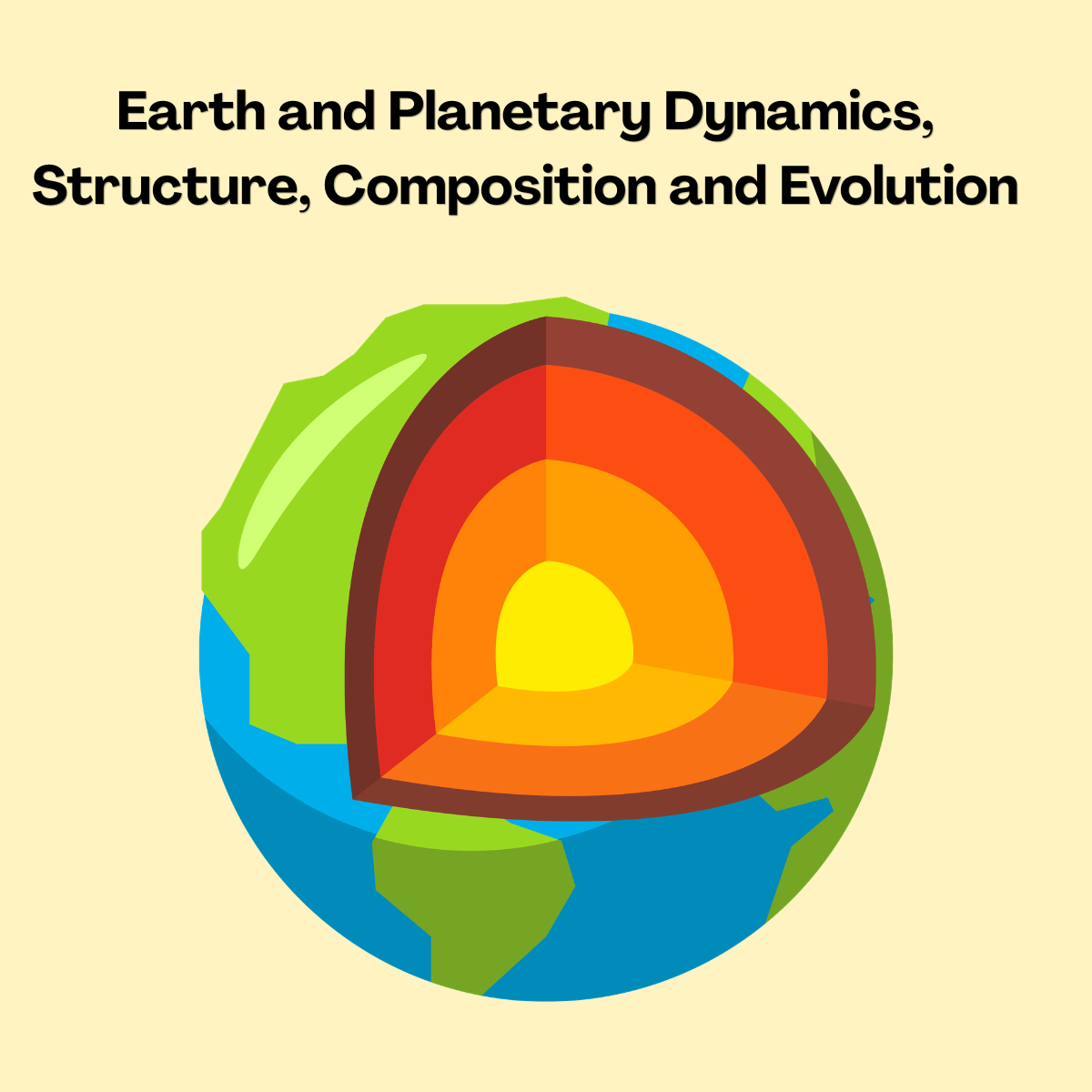
For sessions on the dynamics, structure, composition, and evolution of the Earth and other planetary bodies. This includes mantle and core dynamics, planetary interiors, deep Earth evolution, geochemical reservoirs, and links between structure, composition, and dynamics.
GD2 – Plate Boundary Dynamics, Structure and Evolution Across Timescales; Conceptual and Regional Perspectives
For sessions on plate boundaries across timescales, from long-term tectonic deformation, rifting, subduction, collision, transforms, and mountain building to transient deformation, seismic-cycle processes, and links with earthquake dynamics. This group welcomes both conceptual and regional approaches.
GD3 – Rheology, Rock and Mineral Physics, and Multiphase Materials in Geodynamics
For sessions on the physical properties and deformation of Earth and planetary materials across scales. This includes rheology, deformation mechanisms, rock and mineral physics, high-pressure and high-temperature behaviour, seismic anisotropy, state of stress, ab initio and experimental constraints, and multiphase systems such as partially molten rocks, magma-rich regions, and fluid-bearing materials.
GD4 – Geodynamics across the Earth System: Surface Processes, Climate, Life and Feedbacks
For sessions linking geodynamics with the broader Earth system, including surface processes, erosion, sedimentation, climate, sea level, the carbon cycle, life, biogeodynamics, and long-term feedbacks between the solid Earth, surface environments, and planetary habitability.
GD5 – Modelling, Inversion, Data Assimilation, Multiscale and Multiphysics Methods for Geodynamics
For sessions focused on methodological and technical developments in geodynamics. This includes numerical and analogue modelling, inversion, data assimilation, computational methods, workflow development, model coupling, and multiscale or multiphysics approaches.
These groups are meant to help structure the programme, not to put walls between communities. Many good session ideas will naturally sit at the boundary between several topics. That is fine. If your session connects plate dynamics with rheology, or mantle convection with surface processes, or modelling with observations, please do not hesitate to propose it. Cross-disciplinary sessions are often the ones that generate the most interesting discussions.
These groups are meant to help structure the programme, not to put walls between communities.
We also warmly encourage early career scientists to join convener teams. You do not need to have convened before to contribute. If you have a good idea, or if you would like to help refresh an existing session, contact colleagues, contact the GD programme team, and start the discussion. A strong convener team usually combines experience, fresh ideas, and a real willingness to advertise the session broadly.
In short: think broad, think community, think diversity, and think ahead. A good session is not only a title and a description. It is a small scientific meeting within the General Assembly, and it works best when the conveners actively help build the audience around it.
We look forward to receiving your ideas and to building, together, a lively and ambitious GD programme for EGU General Assembly 2027.
NB: Do not hesitate to comment and let us know your thoughts on how to build the GD program for the next GA