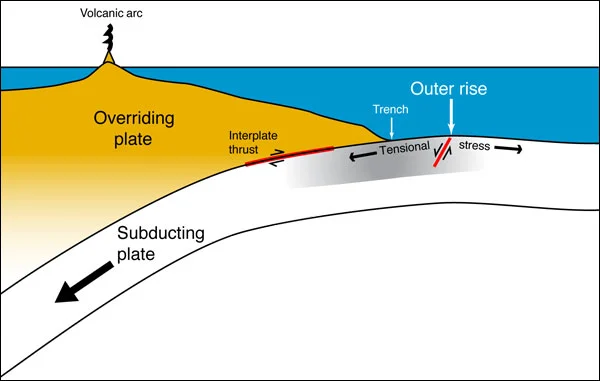
In this week’s blog post, Daniel Douglas teaches us everything about poroelasticity, water in subduction zones and… sponges under the sea! Are you ready kids? Aye, aye, Captain! Why study subduction zones? “Subduction” is a process that occurs when two tectonic plates collide with each other. As long as one of the plates is an …[Read More]
geodynamics
The truth about The Odyssey: Geodynamics, lies, cries and the hunt for Ithaca
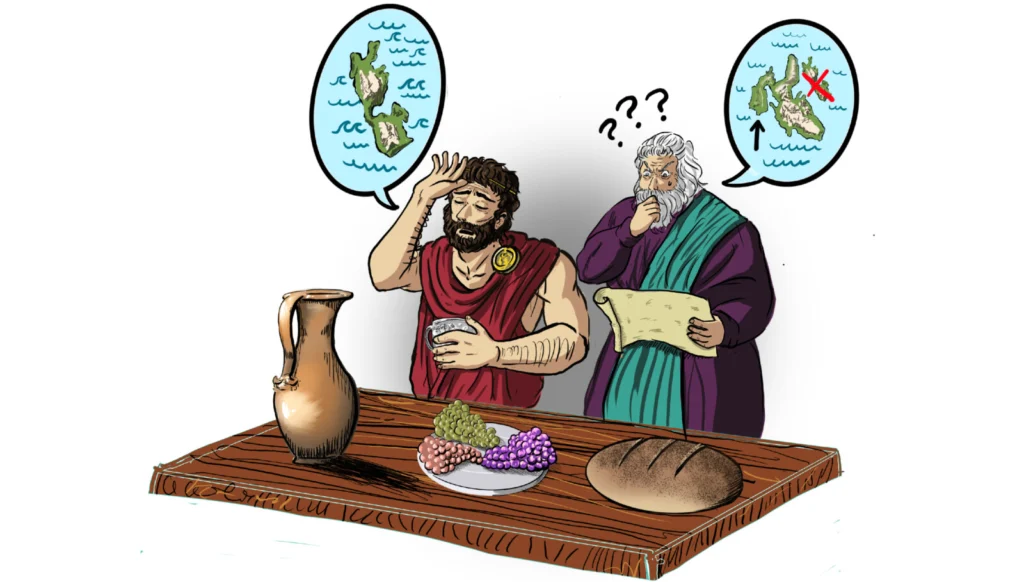
If you have ever tried to draw a geological cross-section under a fantasy map, Homer is surprisingly cooperative (and if you remember my Middle-earth geology post, you already know I live for this). The Odyssey is full of real places and real people—Troy, Mycenae, Sparta—stitched together with storms, monsters and divine interventions that would make …[Read More]
Help us shape the GD programme for EGU General Assembly 2027
The Geodynamics programme of the General Assembly starts with your ideas. With the call for session proposals for the 2027 EGU General Assembly approaching, the Geodynamics Division President Laetitia Le Pourhiet shares her thoughts on what makes a successful session proposal, and how to help shape next year’s scientific programme. Dear GD community, It is …[Read More]
(Almost) everything wrong with: Journey to the Centre of the Earth
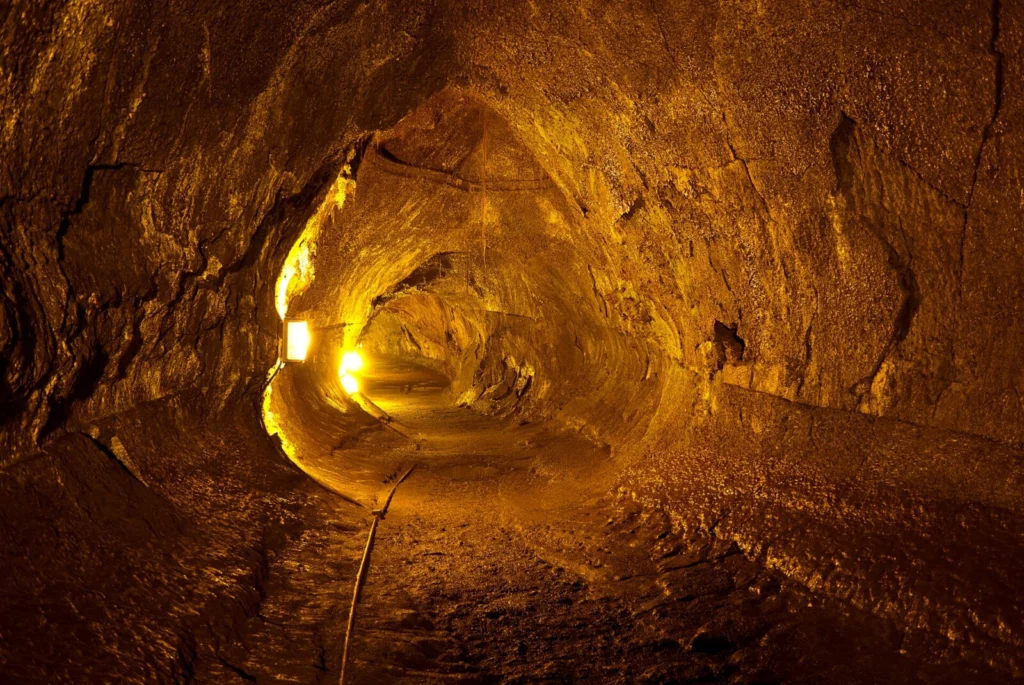
Spoiler warning! Have you ever watched a science fiction movie and thought, huh, I wonder if that is actually possible? Now, I hope by the time the dinosaurs turned up during this film, that this transient thought had departed from your mind, but to satisfy the idle curiosity of those who wondered this during …[Read More]
Saskia Goes – Augustus Love Medallist 2026
Profesor Saskia Goes is the receipent of the 2026 Augustus Love Medal of the Geodynamics Division for her outstanding contributions to our understanding of Earth structure and evolution, using integrative research at the confluence of geodynamics, seismology, mineral physics, and geochemistry. In this interview, she talks about her professional journey and shares her thoughts on …[Read More]
The Geodynamics Division @ EGU26
The EGU General Assembly is only a few weeks away, and attendees are starting to plan their schedules into what promises to be a week full of exiciting presentations and events. Don’t know where to start planning your week? We got you covered! In today’s blog, we highlight the key events of Geodynamics Division and …[Read More]
Interview ECS GD Awardee 2026 – Sia Ghelichkhan
The Division Outstanding Early Career Scientist Awards highlight exceptional scientific contributions made by an Early Career Scientist in the fields of Earth Sciences associated with each division. This year, the prestigious recognition for the Geodynamics Division has been awarded to Dr. Sia Gelichkhan, from the Australian National University. Today we have the pleasure of interviewing …[Read More]
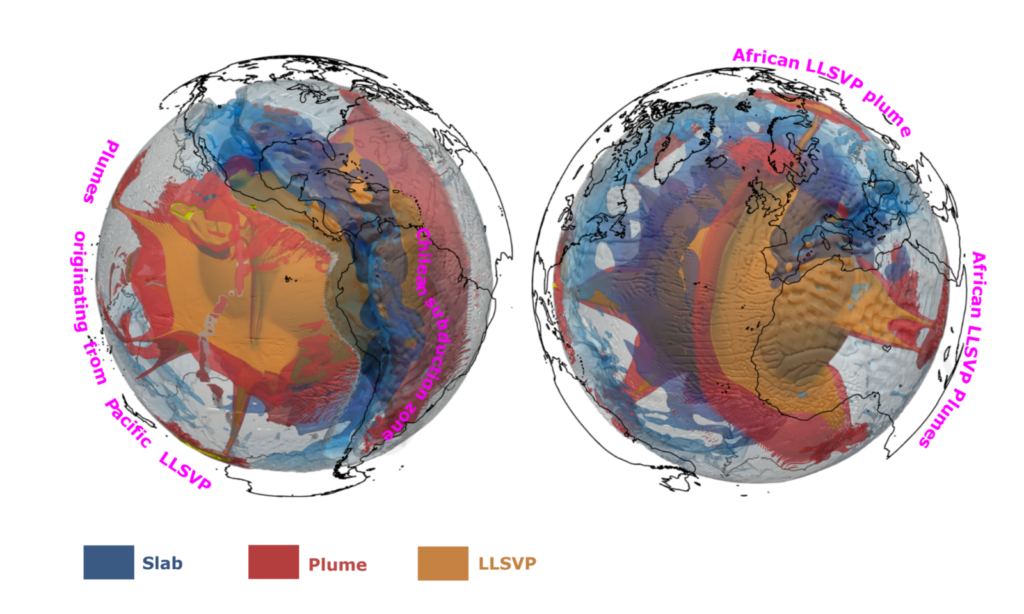
What’s blobbing inside the Earth? – insights from numerical modelling
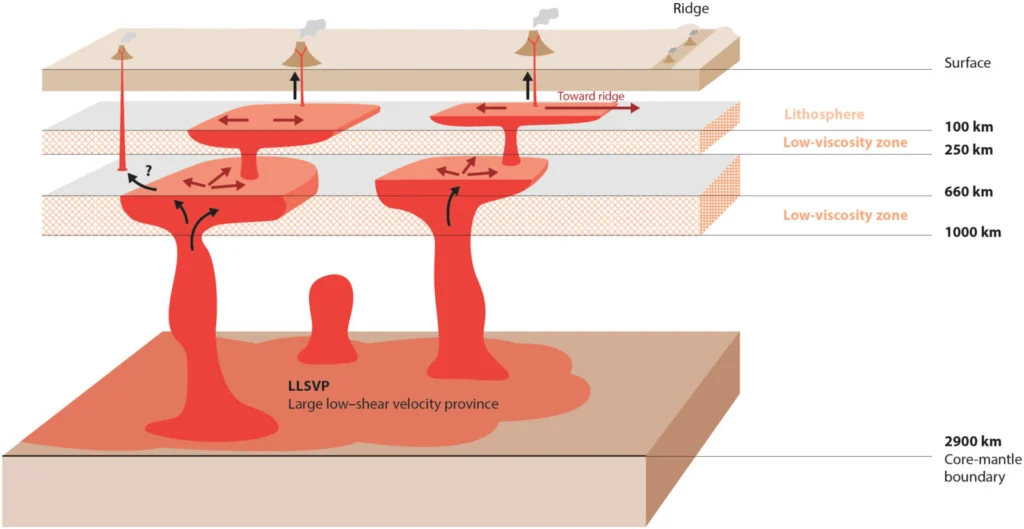
Seismic waves tell us that something unusual is happening in the lowermost few hundred kilometers of Earth’s mantle. Beneath Africa and the Pacific lie two enormous thermochemical structures known as Large Low-Shear-Velocity Provinces (LLSVPs). These “large blobs” are slower to transmit shear waves, but beyond that, their physical nature remains one of the biggest open questions …[Read More]
Bored by the Lower Mantle? Think Again!
Is the lower mantle boring? For a long time, the lower mantle was thought to be relatively featureless and uniform compared to the more dynamic upper mantle. But recent seismic observations are challenging that idea, especially when we look near the base of the mantle. Recent studies from Maureen Long’s group (Creasy et al. 2017, …[Read More]
From Mountains to Oceans: How the memory of ancient orogens guides the rupture of continents
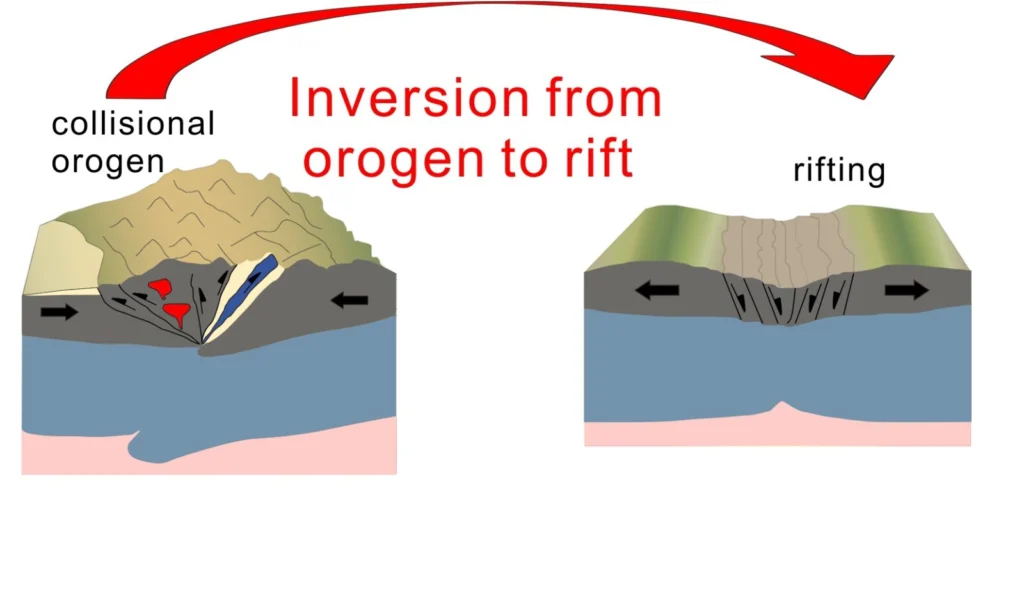
In this new blog, Dr. Kai Li (GFZ Potsdam) talk about his PhD work, where he used accordion numerical models to explore the tectonic history of the South China Sea. His PhD research focuses on the impact of orogenic inheritance on rifts and rifted margins, employing advanced geodynamic modeling techniques. Have you ever tried to …[Read More]