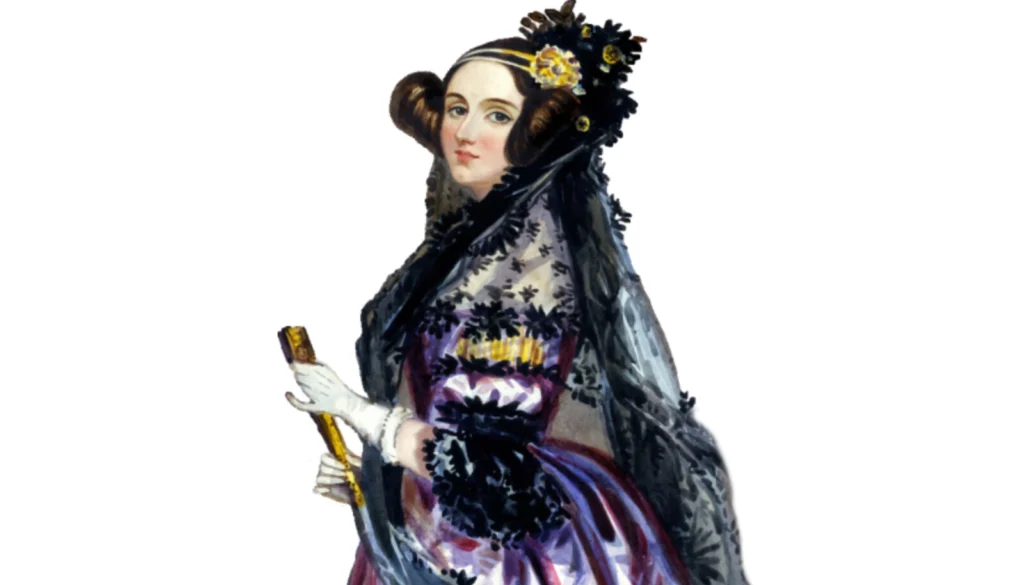
From 21 to 26 June, the 2026 Ada Lovelace Workshop on Modelling of Mantle and Lithosphere Dynamics brought together the geodynamics community in Seč, Czech Republic. In this week’s blog post, Vojtěch Patočka, Assistant Professor in the Department of Geophysics at Charles University in Prague and a member of the organising committee, offers an offbeat take on the workshop.
Every two years, a group of mantle and lithosphere dynamics modelers gathers at an isolated venue in Europe. Two weeks ago, the meeting was organized in Czechia, where it returned after more than two decades. Warm greetings from the arriving participants, not unlike those in the Love Actually movie introduction, made me wonder how many Ada Lovelace workshops I have attended already. Well, almost all of them, as the official name comes from 2018 only, but the series started in 1987 in Neustadt, the year I was born. I did not attend that year. In fact, nobody was present at both the 1987 and 2026 meetings, the series matadors Bernhard Steinberber, Anne Davaille, and Neil Ribe recall. Bernhard arrived to ALW2026 with a bag he had packed several months ago while getting ready to board the deep-ocean research vessel “Sonne”, departing from San Diego. After cruising to Japan he traveled to Czechia mostly on land and sea via China and Kyrgyzstan, and only leapfrogging Azerbaijan – some people just do what it takes to get to the Ada Lovelace meetings 🙂
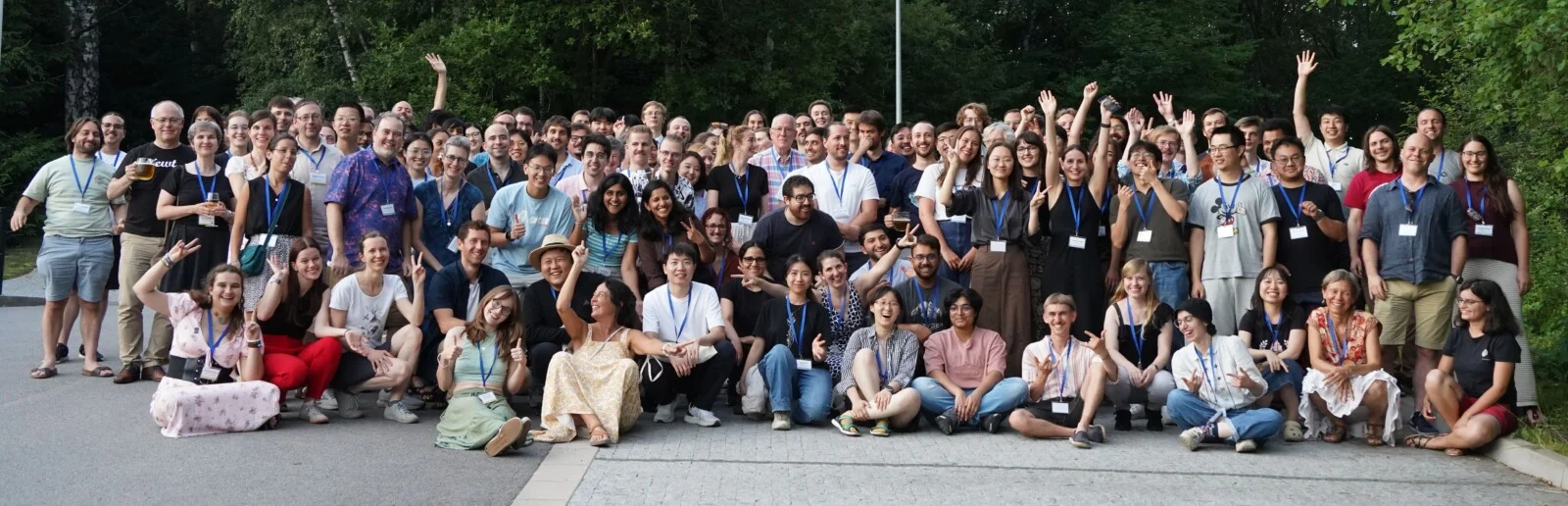
Participants of the 2026 Ada Lovelace Workshop, hotel Jezerka, Lake Seč
While no 3D numerical models were presented in 1987 in Neustadt, already in 1993, the first ALW in Czechia, Paul Tackley featured “The effects of phase transitions in 3D spherical models of mantle convection”. By comparing other abstracts from that year, e.g. “The effects of phase transition kinetics on subducting slabs” (Daessler, 1993), with those from ALW2026, such as “Effects of mineral phase transitions on mantle dynamics and heat flow in Venus” and “Beyond equilibrium: kinetic thresholds and rheological feedbacks create a potentially complex 410 in slab regions”, it may seem that scientists like to run in circles. Indeed, some researchers have been spotted jogging around lake Seč repeatedly. When looking into the abstract booklets in detail, however, it is obvious that significant progress has been made not only in terms of the available methods, but also that the questions posed decades ago have acquired quite different flavors. Importantly, funding has skyrocketed many projects away from Earth, with a clear increase of interest in planetary science. The number of presentations about icy moons has multiplied by a factor of infinity compared to the early 90s meetings, and even Venus seems hotter than it used to be.
The program started with an ice-breaker on Sunday. Despite several experts from the field, ice rheology was surprisingly little discussed, with most people contemplating the karaoke songs list instead, knowing that the upcoming social events are endangered in the absence of well established pop-stars from ETH Zurich (the department being evaluated during that week). On Monday, after exciting keynotes by Susanne Buiter, Oğuz Göğüş, Denise Degen, Anthony Jourdon, and Sebastian Wolf, the early career researchers plucked up the courage at students-speakers meeting, discussing dripping continents and vertical tectonics, and held onto the microphone also throughout the aforementioned karaoke later that night. Both actively singing and aside standing seniors were proudly observing that the geodynamic community shows no stage fright.
After Tuesday, another busy day of keynote talks by Adina Pusok, Tobias Keller, Agnes Kiraly, Arne Spang, and Christian Sippl, the schedule finally became more relaxed and only then most participants suddenly realized that they were accommodated in a wellness hotel. The exception was a group of highly motivated workaholics who signed up for the geological field trip and then continued straight to the MAGEMin and Geodynamic World Builder hands-on lectures, spending their late evening by coding. On Thursday, the recharge of batteries powered the last but not least enthusiastic talks, both by early career as well as by very very experienced scientists Julian Lowman, Diogo Lourenço, Madeleine Kerr, Martin Kihoulou, and Christophe Sotin. Many have learned about the fascinating geological activity of icy worlds for the first time. During plenary discussion, however, sensitive minds could already hear the live music in the air, and some were thinking about their dance moves for the farewell party. Carrying on the legacy, the last evening was memorable, with jazz & blues musician and our former colleague Ondřej Šrámek leading the tunes. For some mysterious reason, the local house owners at Lake Seč are still singing about West Virginia in their dreams, and wondering what the fox says.
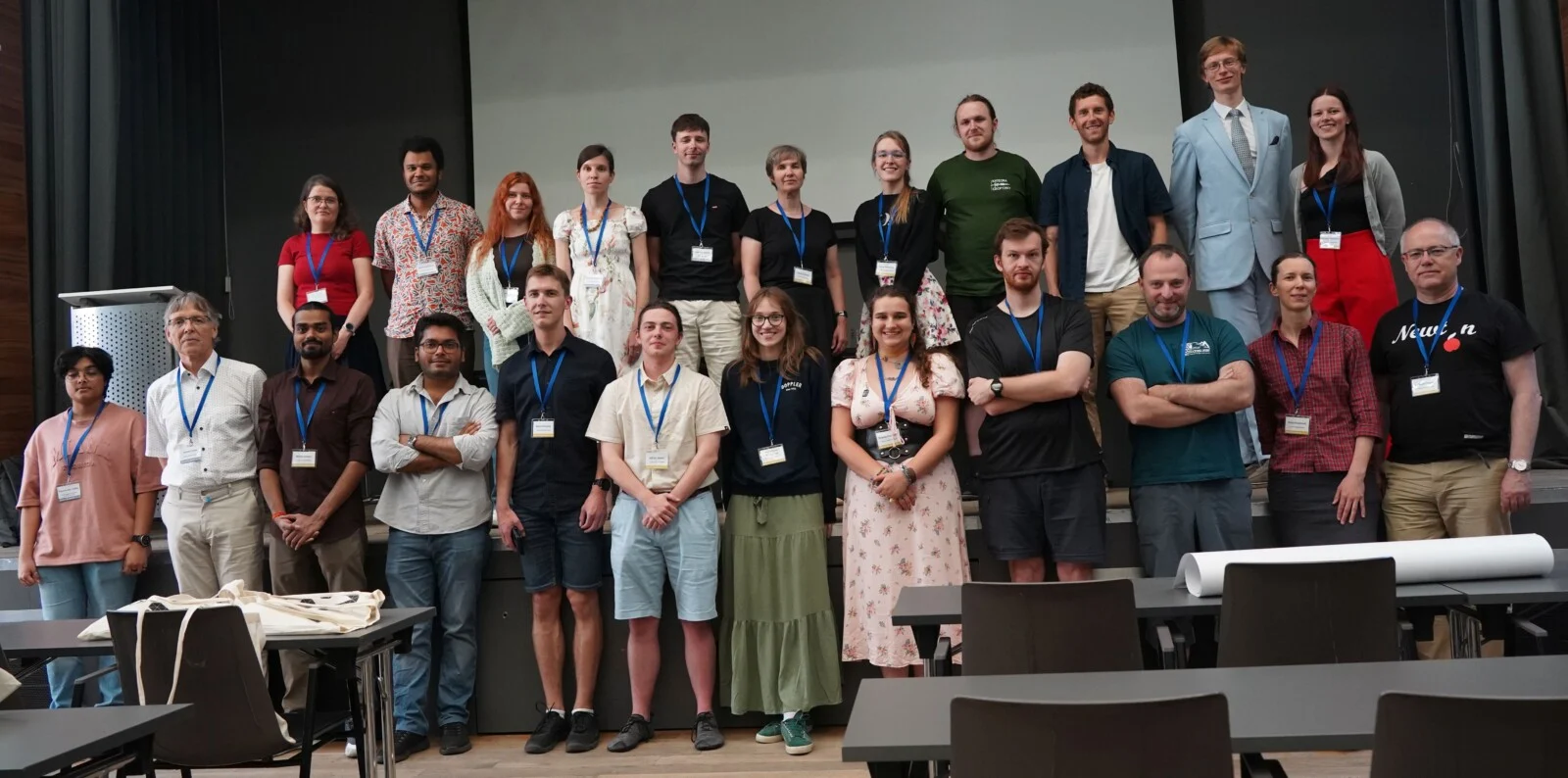
Organizing team (Department of Geophysics, Charles University)
With everyone hopefully getting more sleep now, and with the lead organizer and our department head Hana Čížková slowing down from ten emails per second, it is time to thank everyone for their contributions. The geodynamic family has assimilated several new members and the tradition is about to continue in the Netherlands in 2028. Country roads, take me there.