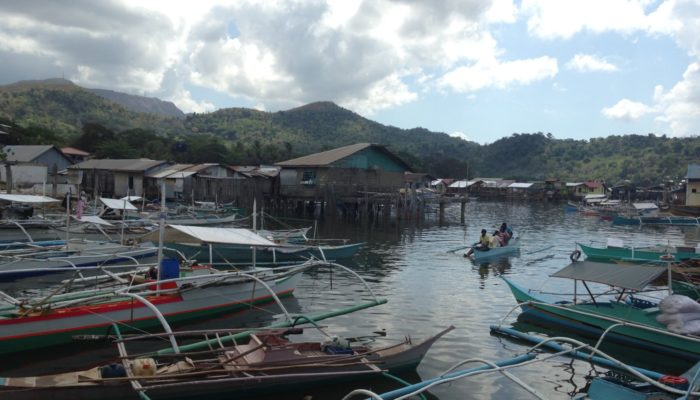
CoastSnap is a global citizen science project aiming at monitoring the changes in our coastlines due to processes such as storms, rising sea levels, and human activities using smartphones. We will discover more about this promising project by chatting today with Dr Mitchell Harley, founder of the CoastSnap program. Mitchell is a Researcher and Senior Lecturer in the School of Civil and Environment ...[Read More]
Writing successful research proposal: tips and tricks
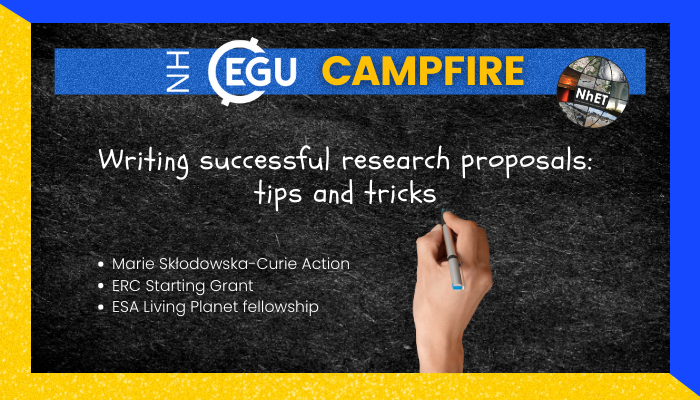
Have you arrived at that moment in your career when you have some potential ideas that you think would be relevant to science? Do you need financial support to advance your science career, and decided to apply for a grant? Today’s blog post brings you a good starting point with advice from three grant winners during the campfire organised by the NH ECS division team: “Writing successful research p ...[Read More]
COVID-19 and natural hazards: a complex multi-risk scenario
COVID-19 has been a disruptive ‘tsunami’ that most countries were not prepared to handle. The pandemic has been representing a global slow-onset long-lasting disaster that has drastically challenged all emergency management systems worldwide. The pandemic slow-onset disaster has been characterized by a prolonged emergency phase with varying intensity levels, and a cyclic behavior, where the interp ...[Read More]
Reducing housing vulnerability to natural hazards – Interview with Dr Eefje Hendriks
The impact of natural hazards on vulnerable communities can be devastating, causing fatalities, damaging houses and livelihoods, and pushing people into poverty. These disasters make them even more vulnerable. A growing line of research identifies actions and tools to reduce vulnerability and make communities more resilient. An interesting and crucial part of this research investigates the role of ...[Read More]
Getting to know NH11: Climate Hazards, the new EGU Natural Hazards Sub-Division
Earlier this year, the EGU Natural Hazards Division launched a new sub-division dedicated to climate hazards. In today’s interview, Dr Steven Hardiman, a Senior Research Scientist at the Met Office (UK) and the Science Officer of this new sub-division, will share some insights about NH11 and its future development. Hi Steve, and congratulations on your new role! Please tell us about your ca ...[Read More]
IoT and Natural Hazards: the latest updates
In my blog post last year, I talked about the escalation of extreme events in Brazil, and one of the main questions was whether the scientific community would need new methods and technologies to deal with extreme events aggravated by climate change. This year, during one of the Innovations (WG05) working group meetings of the International Network on Landslide Early Warning Systems (LandAware), I ...[Read More]
Let’s begin the recovery before the disaster
Every natural event that causes damage to the built environment must be followed by recovery; however, this phase of disaster risk management has received less attention from academics than the others [1]. In all its aspects, disaster recovery has remained a contentious topic, with experts debating its definition, approaches, objectives, activities, and even when it should begin and finish [2–4]. ...[Read More]
Climate change: let’s talk about adaptive capacity
The ancient Greek philosopher Heraclitus once said, “there is nothing permanent except change”. We are living in an epoch where constant change is the new normal. Unquestionably, climate change is one of the most significant challenges of our time. How can we shape our thinking to become more agile to change, and what attributes do organisations and societies need to increase their cap ...[Read More]
Active faulting causes subsidence-related flooding: the example of the Kashmir basin of NW Himalaya
Flood hazards often turn destructive and cause substantial loss of life and assets. Annually floods cause significant damage; for example, during the last decade of the 20th century, around 100,000 people lost their lives, and more than 1.4 billion people were affected [1]. Historically, flooding has been viewed as a friend and foe of human civilisations. As a good friend, floods bring nutritious, ...[Read More]
Fire impacts on Earth across space and time: a discussion-driven conference
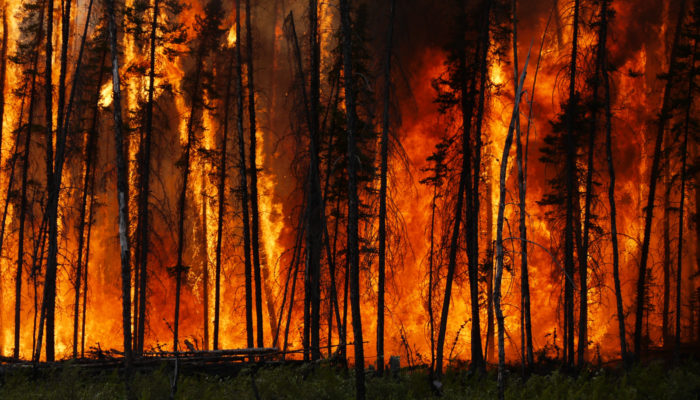
Earth is the only known planet with fire activity – everywhere else, there is not enough oxygen for this process to occur. Since fire appeared on Earth many millions of years ago, it has played a key role in the development of plant adaptation and the distribution of ecosystems. However, the natural occurrence of fire changed with the onset of human evolution. The purposeful use of fire for ...[Read More]