
Earthquakes remain among the most disruptive natural hazards worldwide, capable of causing sudden loss of life, severe economic damage, and long-lasting societal impacts. One of the most effective tools developed in recent decades to mitigate these effects is Earthquake Early Warning (EEW), a real-time monitoring strategy that exploits a fundamental physical property of earthquakes: seismic …[Read More]
Seismic hazard
Modern Solutions for Ancient Hazards: Speaking with Jacopo Selva, the 2024 EGU Plinius Medalist
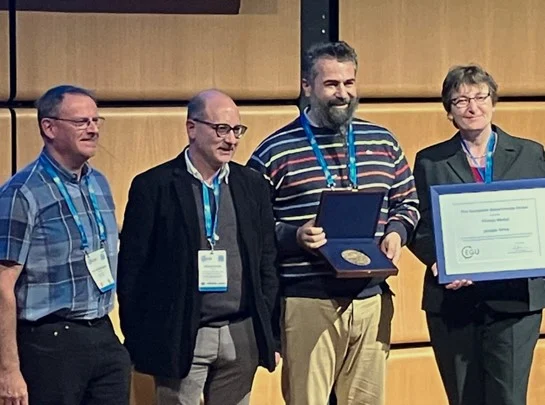
Jacopo Selva is an associate professor at the University of Naples Federico II, Italy, and a former researcher at the Istituto Nazionale di Geofisica e Vulcanologia (INGV), Italy. His research on seismic, volcanic, and tsunami hazards has been instrumental in advancing our understanding of these natural phenomena, particularly by developing probabilistic methods for hazard assessment …[Read More]
“Studying earthquakes is a great opportunity to learn every day a lot about many different fields of earth sciences” Yann Klinger- Stephan Mueller Medalist-2024
Hi Yann, first of all, congratulations on the Stephan Mueller Medal, and it is my pleasure to interview you!! To all my readers, the Stephan Mueller Medal is one of the prestigious medals awarded for exceptional contributions to tectonics and structures by the European Geosciences Union (EGU). Dr Yann Klinger wears many hats, he is …[Read More]
Advances in earthquakes forecasting pass through machine learning
In today’s interview, we meet Dr Fabio Corbi, a researcher at IGAG-CNR, the Institute of Environmental Geology and Geoengineering of the Italian National Research Council. Fabio has experience in analogue modelling of megathrust earthquakes and he is currently exploring the potentiality of machine learning in this research field. Hi Fabio, would you briefly tell us …[Read More]
The earthquake traffic light
Dr. Laura Gulia is a senior post-doc at the University of Bologna, Department of Physics and Astronomy. She has a strong experience in statistical seismology, seismicity analysis as well as seismic hazard and risk assessment. Recently, she investigated the spatio-temporal evolution of the earthquake size distribution throughout a seismic sequence focusing on the b-value, a …[Read More]
Faults and earthquakes as friends and not foes
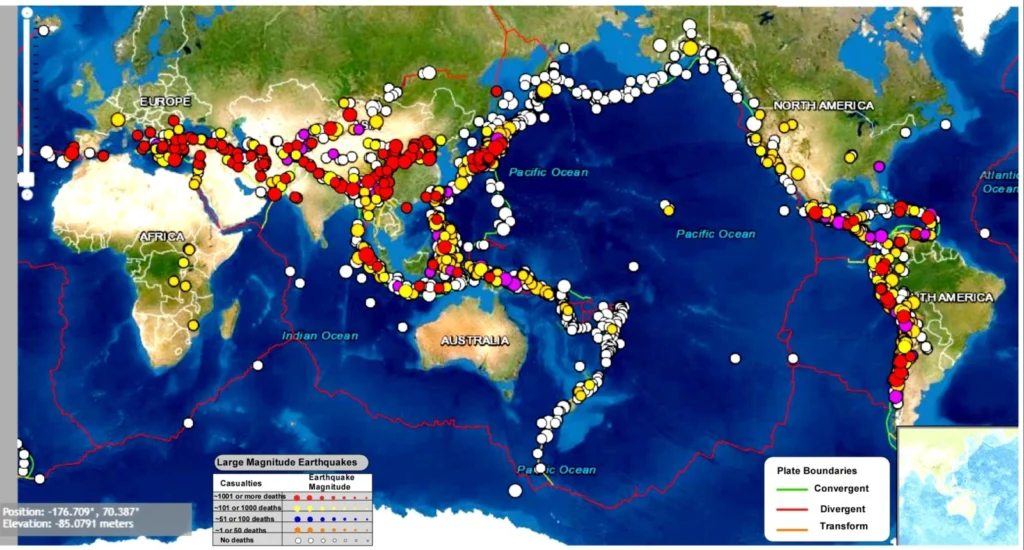
The earthquakes’ occurrence on the planet Earth is largely considered synonymous with disasters and people generally perceive geological faults as a threat to life and belongings. However, there are exceptions since a small community of earthquake researchers relate the occurrence of earthquakes with the lithospheric plate interactions where movement on faults causes earthquakes. Therefore, my …[Read More]
Vitor Silva: 2020 Natural Hazards division medallist story
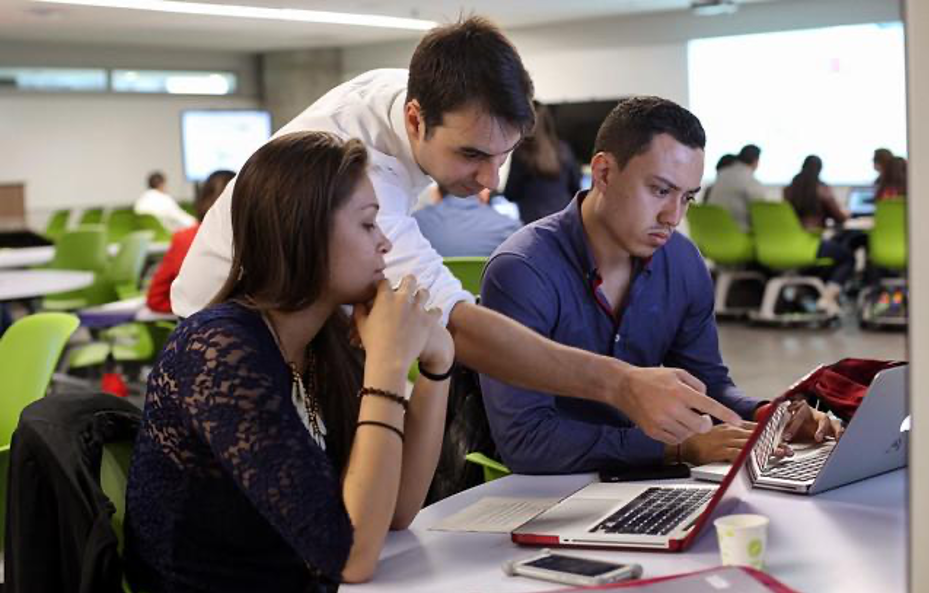
In today’s interview, we talk with Dr Vitor Silva, who was awarded the 2020 Natural Hazard Division Outstanding Early Career Scientist Award for his fundamental contributions to the research on earthquake risk assessment. Seismic risk is the probable building damage and the number of people that are expected to be hurt or killed if a …[Read More]
The Italian catalogue of earthquake-induced ground failures: saving the past for the future seismic hazard assessment #CEDIT
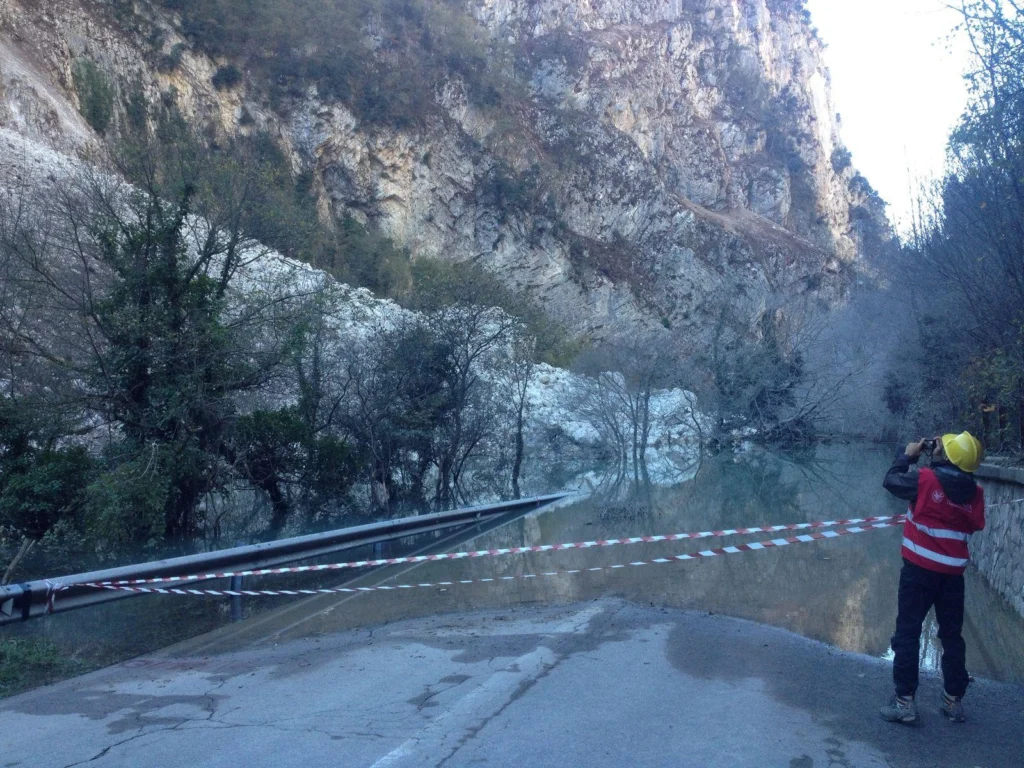
The Italian Catalogue of Earthquake-Induced Ground Failures (CEDIT) is a database available online since January 2013 that stores data about ground failures induced by strong earthquakes, which occurred on the Italian territory since 1000 AD up to now. CEDIT is freely available on a web-GIS portal (currently the access is granted using Firefox as …[Read More]