NH
Natural Hazards

Earthquake hazard

Why Did a Magnitude 6.8 Earthquake Left Malaysia Unscathed?
Why Did a Magnitude 6.8 Earthquake Left Malaysia Unscathed?
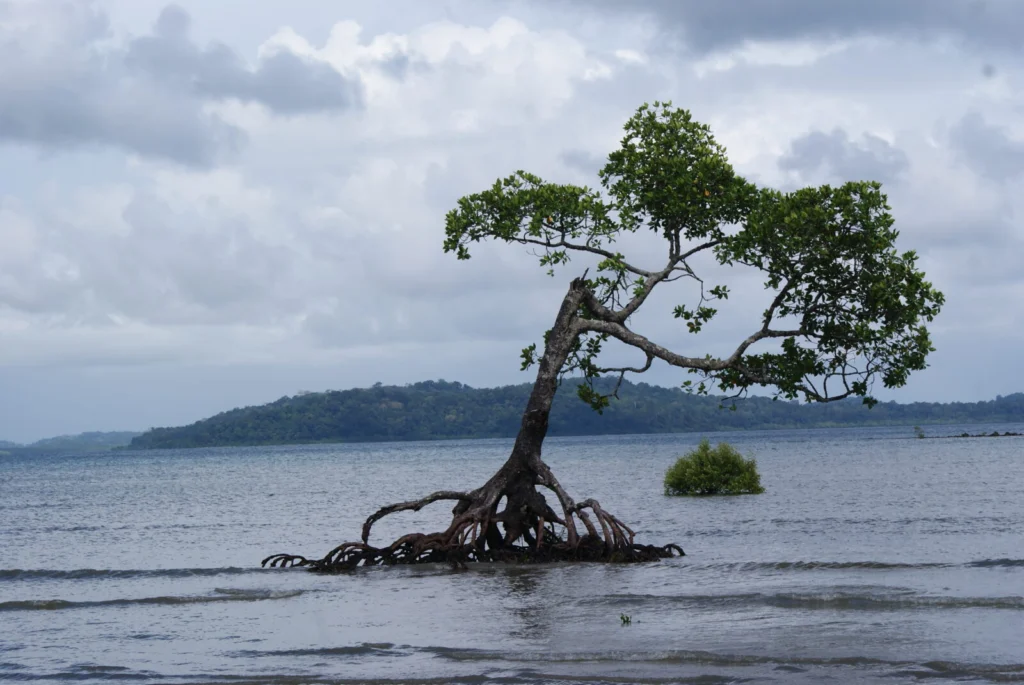
On 23rd February 2026, Malaysia faced one of the strongest earthquakes ever recorded in its history. A magnitude 6.8 event struck offshore Sabah, the most seismically active state in Malaysia. The event was reported as magnitude 6.8 by MetMalaysia, while the USGS recorded it as magnitude 7.1, with the difference reflecting variations in magnitude estimates …[Read More]

From Seismic Signals to Safer Trains: Italy’s First Earthquake Early Warning System for High-Speed Railways

Earthquakes remain among the most disruptive natural hazards worldwide, capable of causing sudden loss of life, severe economic damage, and long-lasting societal impacts. One of the most effective tools developed in recent decades to mitigate these effects is Earthquake Early Warning (EEW), a real-time monitoring strategy that exploits a fundamental physical property of earthquakes: seismic …[Read More]

“Studying earthquakes is a great opportunity to learn every day a lot about many different fields of earth sciences” Yann Klinger- Stephan Mueller Medalist-2024

“Studying earthquakes is a great opportunity to learn every day a lot about many different fields of earth sciences” Yann Klinger-  Stephan Mueller Medalist-2024

Hi Yann,  first of all, congratulations on the Stephan Mueller Medal, and it is my pleasure to interview you!! To all my readers, the Stephan Mueller Medal is one of the prestigious medals awarded for exceptional contributions to tectonics and structures by the European Geosciences Union (EGU).  Dr Yann Klinger wears many hats, he is …[Read More]

Learning more about geohazard: Talking with EGU_NH 2023 Sergey Soloviev Medalist

Learning more about geohazard: Talking with EGU_NH 2023 Sergey Soloviev Medalist

It is my pleasure to interview the 2023 EGU Sergey Soloviev Medalist Dr Peng Cui, Professor at the Institute of Geographical Sciences and Resources、Institute of Mountain Hazards and Environment, Chinese Academy of Sciences (CAS), known for his work and commitment to understanding geohazards, especially earthquake-induced hazards. He has dedicated his life to understanding how to …[Read More]

Advances in earthquakes forecasting pass through machine learning

Advances in earthquakes forecasting pass through machine learning

In today’s interview, we meet Dr Fabio Corbi, a researcher at IGAG-CNR, the Institute of Environmental Geology and Geoengineering of the Italian National Research Council. Fabio has experience in analogue modelling of megathrust earthquakes and he is currently exploring the potentiality of machine learning in this research field. Hi Fabio, would you briefly tell us …[Read More]

The earthquake traffic light

The earthquake traffic light

Dr. Laura Gulia is a senior post-doc at the University of Bologna, Department of Physics and Astronomy. She has a strong experience in statistical seismology, seismicity analysis as well as seismic hazard and risk assessment. Recently, she investigated the spatio-temporal evolution of the earthquake size distribution throughout a seismic sequence focusing on the b-value, a …[Read More]

Faults and earthquakes as friends and not foes

Faults and earthquakes as friends and not foes

The earthquakes’ occurrence on the planet Earth is largely considered synonymous with disasters and people generally perceive geological faults as a threat to life and belongings. However, there are exceptions since a small community of earthquake researchers relate the occurrence of earthquakes with the lithospheric plate interactions where movement on faults causes earthquakes. Therefore, my …[Read More]

Vitor Silva: 2020 Natural Hazards division medallist story

Vitor Silva: 2020 Natural Hazards division medallist story

In today’s interview, we talk with Dr Vitor Silva, who was awarded the 2020 Natural Hazard Division Outstanding Early Career Scientist Award for his fundamental contributions to the research on earthquake risk assessment. Seismic risk is the probable building damage and the number of people that are expected to be hurt or killed if a …[Read More]