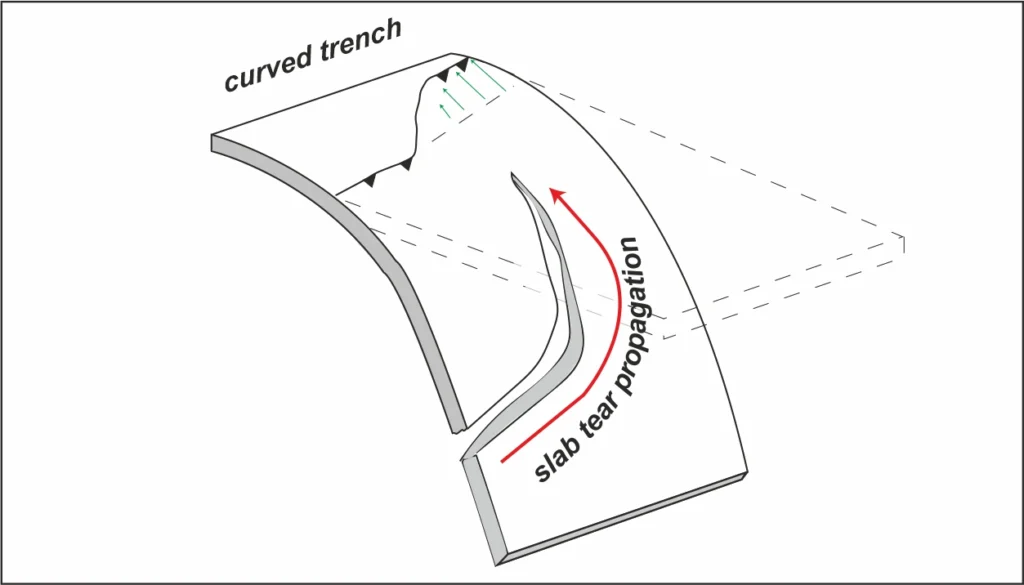
Slab tearing refers to the gradual propagation of the break-off of a subducting plate. As observed in numerous modern and ancient convergent tectonic settings, the growth of the tear “window” in the downgoing plate has strongly influenced various geologic and geodynamic processes, such as depocenter migration of foreland basins, uplift rates in mountain ranges, earthquakes, volcanism, and flow pat ...[Read More]
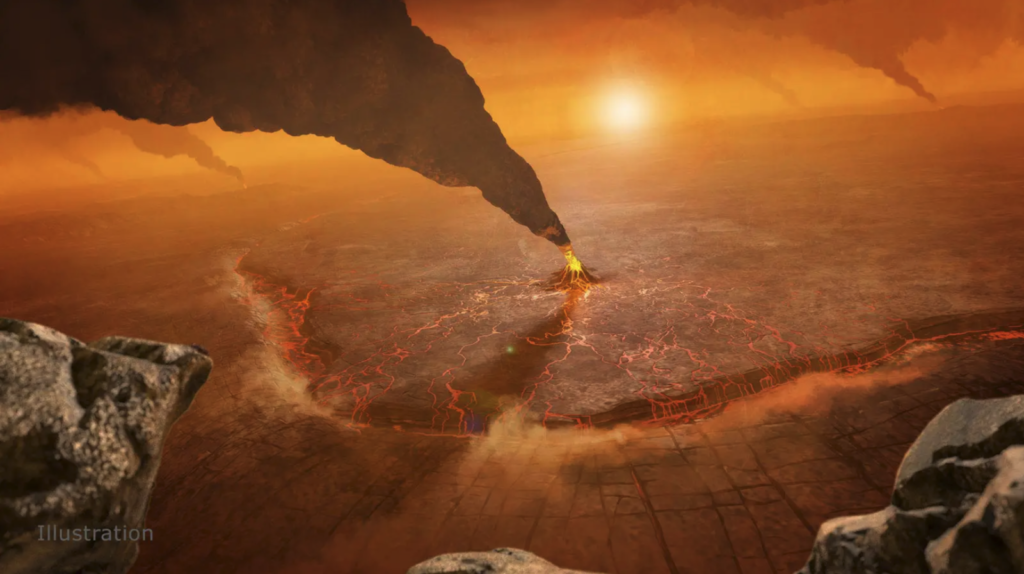
The first observational evidence for a volcanically active Venus
Our neighbouring planet Venus is gaining popularity in the terrestrial planetary sciences, especially since the selection of three new Venus missions by NASA and ESA in 2021. Now, for the first time ever, scientists have directly observed surface changes that indicate active volcanism on Venus. This discovery was made with data from NASA’s 30-year-old Magellan mission and is only a small preview f ...[Read More]
Geodynamics 101 – Viscous anisotropy
We are living in an anisotropic world. From rock-building crystals, ice, and trees growing in your garden to your favourite slice of cake many materials or objects has some anisotropic behaviour. What does this mean? Anisotropy (non-isotropy) implies that a material property depends on the direction of the measurement. In geodynamics we often talk about seismic anisotropy, originating from microsc ...[Read More]
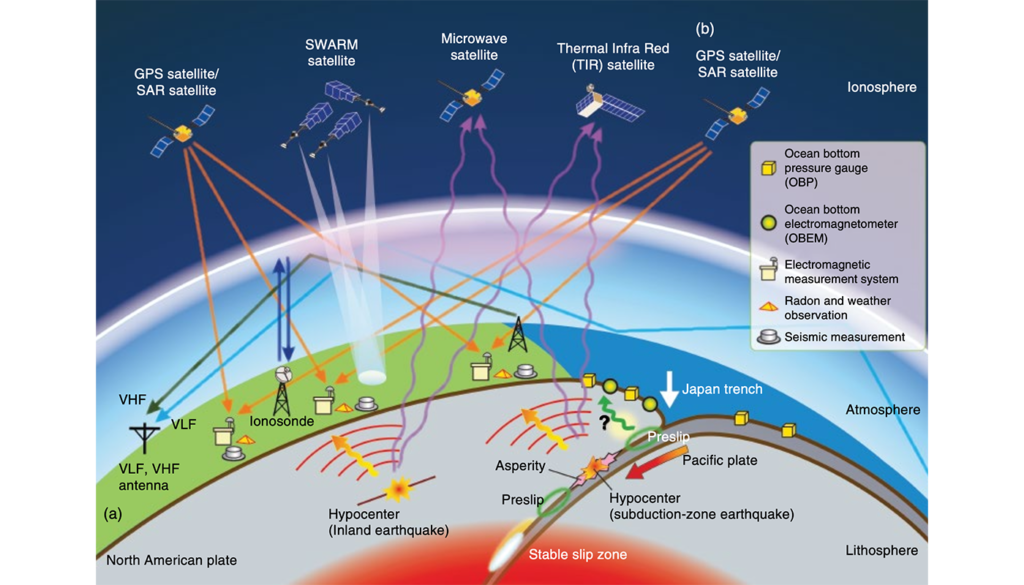
Study of the Lithospheric deformations, Earthquakes, Tsunamis, Volcanic eruptions and their imprints in Atmosphere using Space Geodetic Observations
The fundamental of Space Geodesy is the observation of the dynamics of the Earth, such as its rotation on its axis, changes in shape, and the external gravitational field etc., which allow for the monitoring of the Earth system in general. Space Geodetic techniques, such as Global Navigation Satellite Systems (GNSS) / Global Positioning System (GPS), as well as Interferometric Synthetic Aperture R ...[Read More]
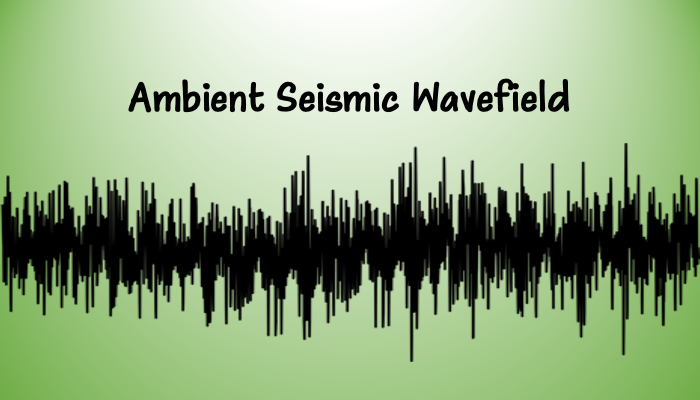
Ambient seismic wavefield: how noise can be a signal
Every now and then, the surface of our planet shakes violently during earthquakes like the recent magnitudes 7.8 and 7.5 Kahramanmaraş Earthquake Sequence in Türkiye. These vibrations are recorded by instruments called seismometers and are then processed and analyzed by seismologists to study the earthquake processes themselves as well as other deep Earth structures. Interestingly, seismometers al ...[Read More]
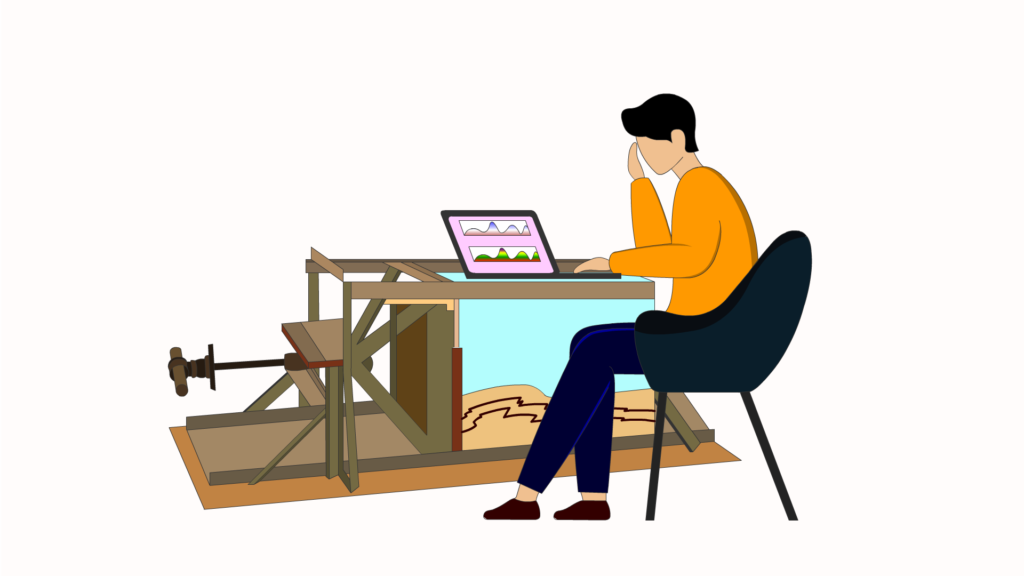
A voyage between different tectonic modelling worlds: from sandbox to supercomputer
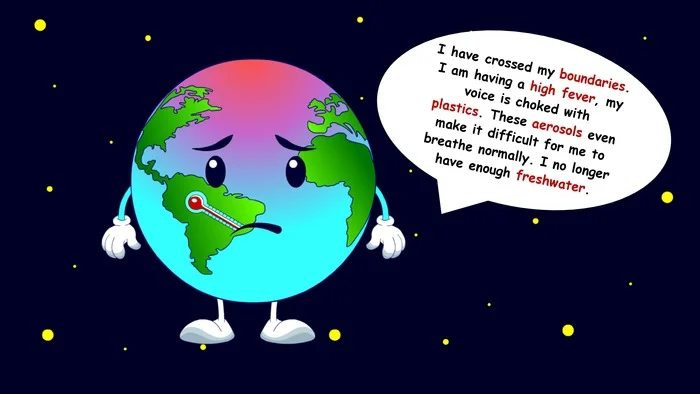
Planetary Boundaries: A Framework against Geodynamics?
How can we determine a ‘safe operating space’ for humanity? In this week’s blog, Professor Ilan Kelman from University College London shares his thoughts about Planetary boundaries, and whether this framework will be successful for the next generations to come. The planetary boundaries framework (Rockström et al. 2009ab; Steffen et al. 2015) might be useful for communicating some of humanity’s im ...[Read More]
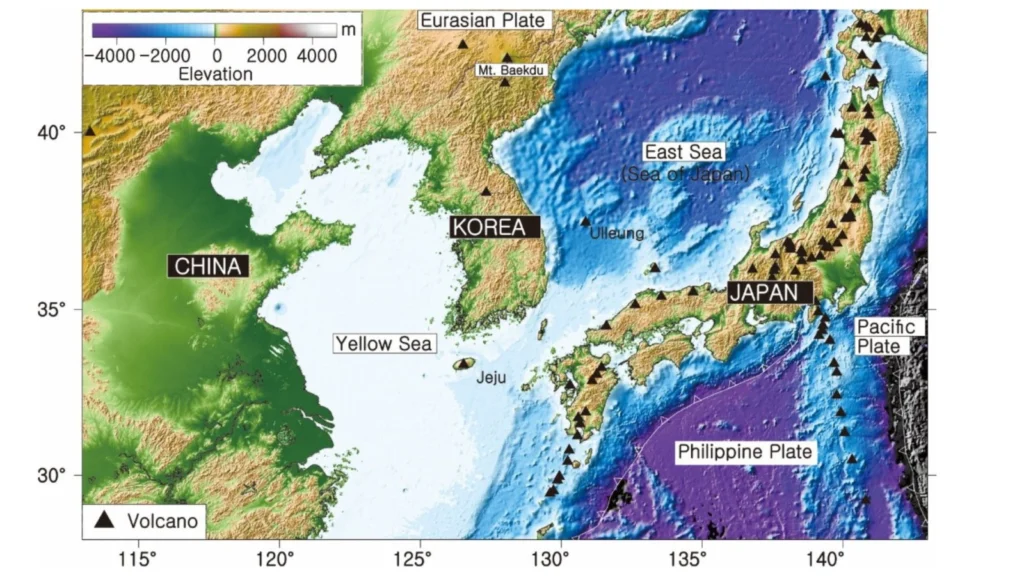
Arc and Intraplate Volcanism in Northeast Asia Since mid-Miocene: Numerical model studies
Northeast Asia may be one of the best natural laboratories to investigate both arc and intraplate volcanisms which have developed since the mid-Miocene. The arc volcanoes have occurred above the sinking young (Philippine) and old (Pacific) oceanic plates in Southwest and Northeast Japan subduction zones, respectively. The intraplate volcanoes across the Korean Peninsula and China have occurred abo ...[Read More]
Holiday movies to watch
Iris and Menno have made fantastic science movie recommendations in the past couple of years – covering the base for bad-science movies. Since the AGU frenzy is finally over and the upcoming holidays beckon us, I went in a different direction and prepared a list of some of my feel-good holiday movies. 1. The Little Prince This is a fantasy movie based on a popular children’s book. The movie is cen ...[Read More]
The Sassy Scientist – Who Let The Dogs In?
Who doesn’t want to make themselves more at home at the office? We spend a lot of time there and there is nothing wrong in making it more homey for ourselves. But you wouldn’t want your colleagues to make themselves too much at home at the office. My office mates wouldn’t want me to keep my pet tarantula at the office. That’s why I had a sweet and short answer to Bob’ ...[Read More]