
GD
Geodynamics

edited by Prachi Kar

Prachi Kar is a PhD candidate at the School of Earth and Space Exploration, Arizona State University. As a geodynamicist, her research focuses on understanding the structure, dynamics, and evolution of planetary interiors through numerical simulations. She also serves as an editor for the GD Blog team. You can contact her via email (pkar4@asu.edu).

I’M BRINGING KERNELS BACK

I’M BRINGING KERNELS BACK

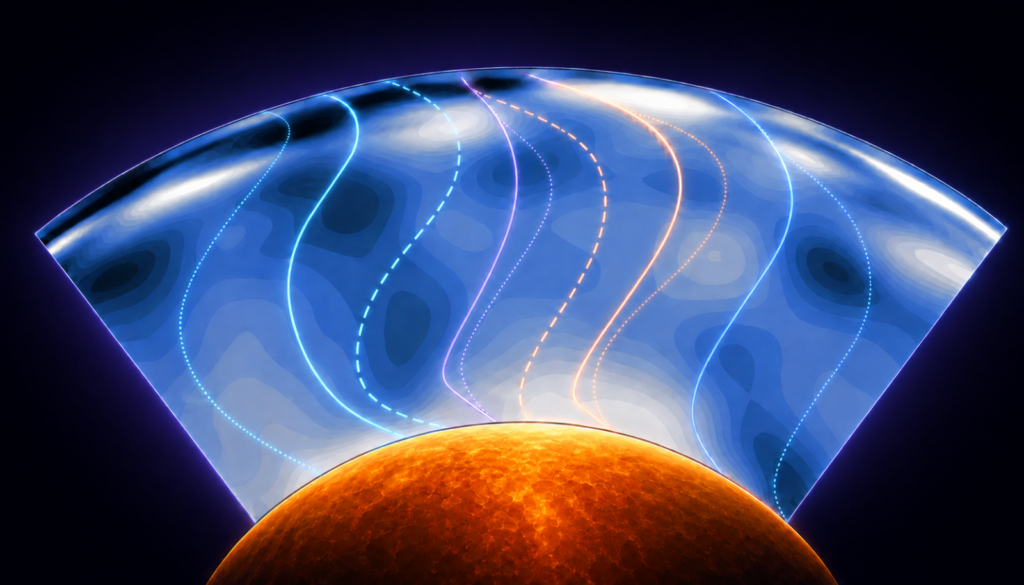
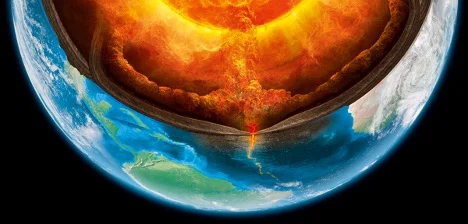
Computational geodynamic models are powerful tools for understanding Earth’s deep interior, but how do we know they are producing realistic results? In this week’s News & Views, Alina Valop, a PhD candidate from Virginia Tech, unpacks the world of geodynamic kernels and shows how these sensitivity functions provide a computationally efficient way to benchmark mantle flow models, te ...[Read More]

Melting Glaciers Move Lithospheric Plates and Fluctuate Mid-ocean Ridges’ Spreading

Melting Glaciers Move Lithospheric Plates and Fluctuate Mid-ocean Ridges’ Spreading

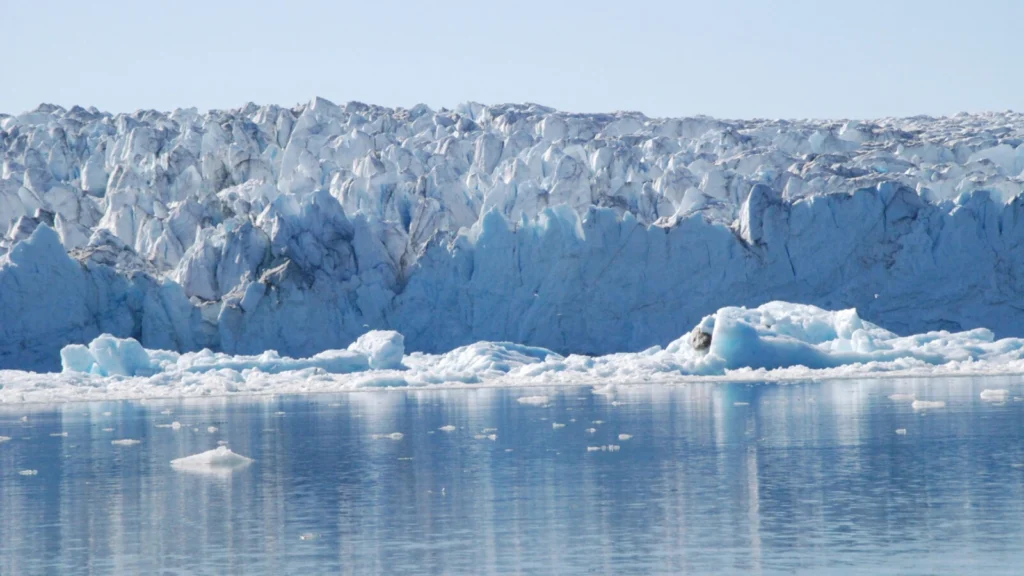
The rise and fall of massive ice sheets have shaped Earth’s surface for millions of years, but their influence may extend far deeper than previously recognized. This week in News & Views, Tao Yuan, a PhD student at the University of Colorado Boulder, explores how glacial cycles can alter lithospheric plate motions and even modulate the spreading of mid-ocean ridges. The ongoing melting of glac ...[Read More]

Reflecting on the 2025 Gordon Research Seminar (GRS) – Interior of the Earth

Reflecting on the 2025 Gordon Research Seminar (GRS) – Interior of the Earth

This week in News & Views, Heidi Krauss, a PhD student at Michigan State University, shares her experience co-chairing the 2025 Interior of the Earth Gordon Research Seminar, held at Mount Holyoke College in South Hadley, Massachusetts. Earlier this year, I had the opportunity to help co-chair the Gordon Research Seminar (GRS) on the Interior of the Earth, held just before the main Gordon Rese ...[Read More]

A whole mantle dynamical framework for Venus

A whole mantle dynamical framework for Venus

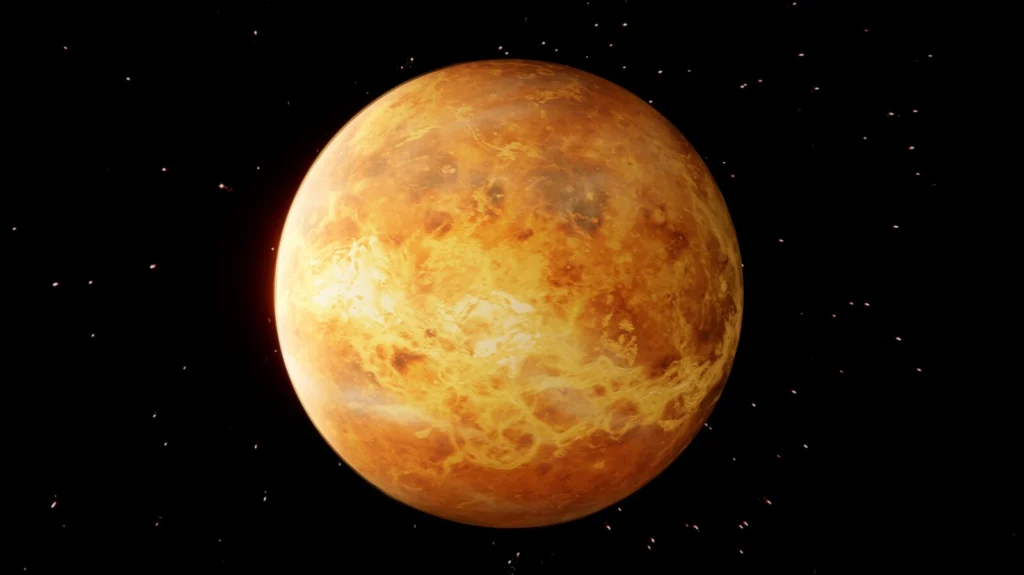
Geodynamicists have long grappled with the complexities of Earth’s mantle dynamics—modeling Venus’ interior adds an extra layer of challenge without the benefit of plate tectonics! This week in News & Views, Madeleine Kerr, a PhD candidate from the University of California, San Diego, explores how numerical modeling can shed light on mantle dynamics and the evolution of Earth’s eni ...[Read More]

How Hot our Moon Can Get: Mapping Radioactive Elements and Thermal State of the Lunar Interior

How Hot our Moon Can Get: Mapping Radioactive Elements and Thermal State of the Lunar Interior

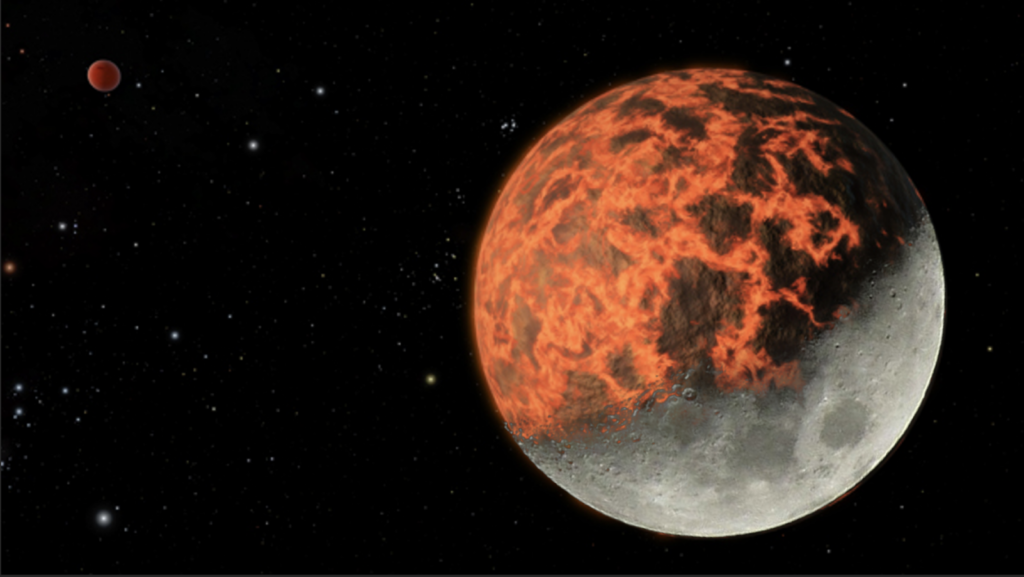
Geochemists and geophysicists, even with their favorite tools, have often scratched their heads while probing Earth’s deep interior—one  can only imagine the challenges while applying those techniques to the Moon! This week in News & Views, Arkadeep Roy, a PhD candidate from the University of Arizona demonstrates how the intersection of experimental petrology, geochemistry, and geophysic ...[Read More]

Two phase or not two phase

Two phase or not two phase

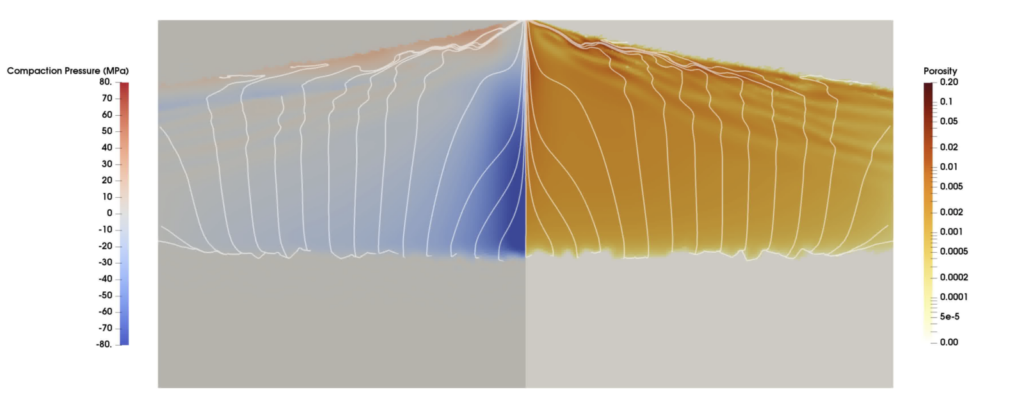
In this week’s blog Shi Joyce Sim from Georgia Institute of Technology shares the underlying science behind two-phase flow dynamics.   A talk at the Lunar and Planetary Science Conference in March got me thinking. Basically, the presenter described how boundary layers grow over time, a phenomenon that cannot be captured using one dimensional models and necessitates modeling in higher dimensi ...[Read More]

Regional viscosity variations in Earth’s mantle

Regional viscosity variations in Earth’s mantle

For understanding the dynamics and evolution of the Earth’s mantle, knowledge of mantle’s viscosity structure is very important. In this week’s blog, Kenneth Gourley from University of Arizona discusses the variation of viscosity structure in Earth’s mantle in regional scale.   In order to understand the dynamics and evolution of the Earth’s mantle, geodynamicists model mantle fl ...[Read More]

Slow Evolution of Europa’s Interior

Slow Evolution of Europa’s Interior

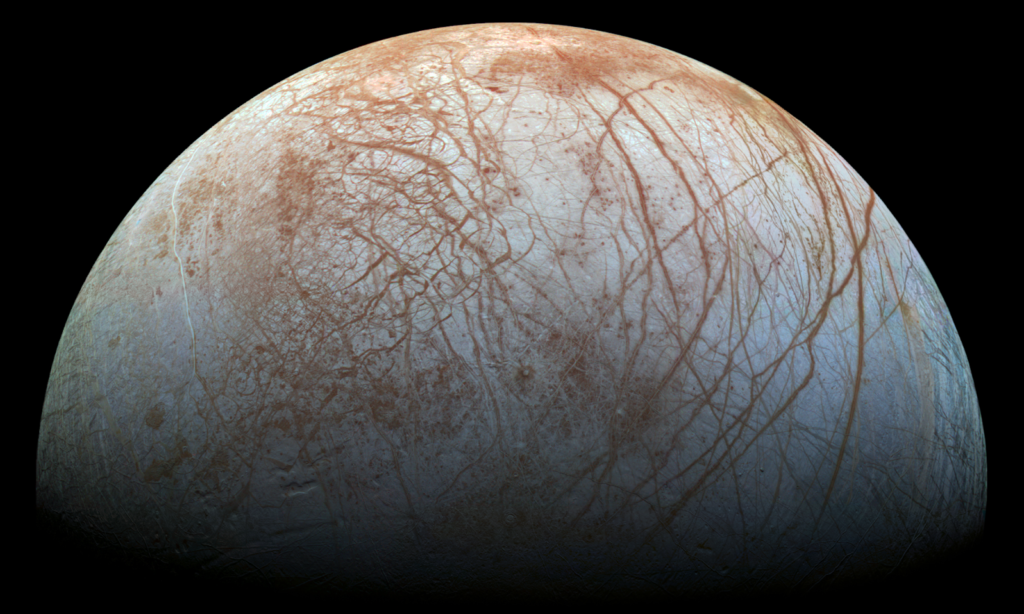
“Europa may be one of the most promising places in our solar system to find present-day environments suitable for some form of life beyond Earth.” This week in News & Views, Kevin Trinh, a PhD student at Arizona State University, discusses how his recent works on Jupiter’s moon Europa can enlighten us about the evolution of Europa’s interior. One of the most promising p ...[Read More]

Going to the mountains is going home

Going to the mountains is going home

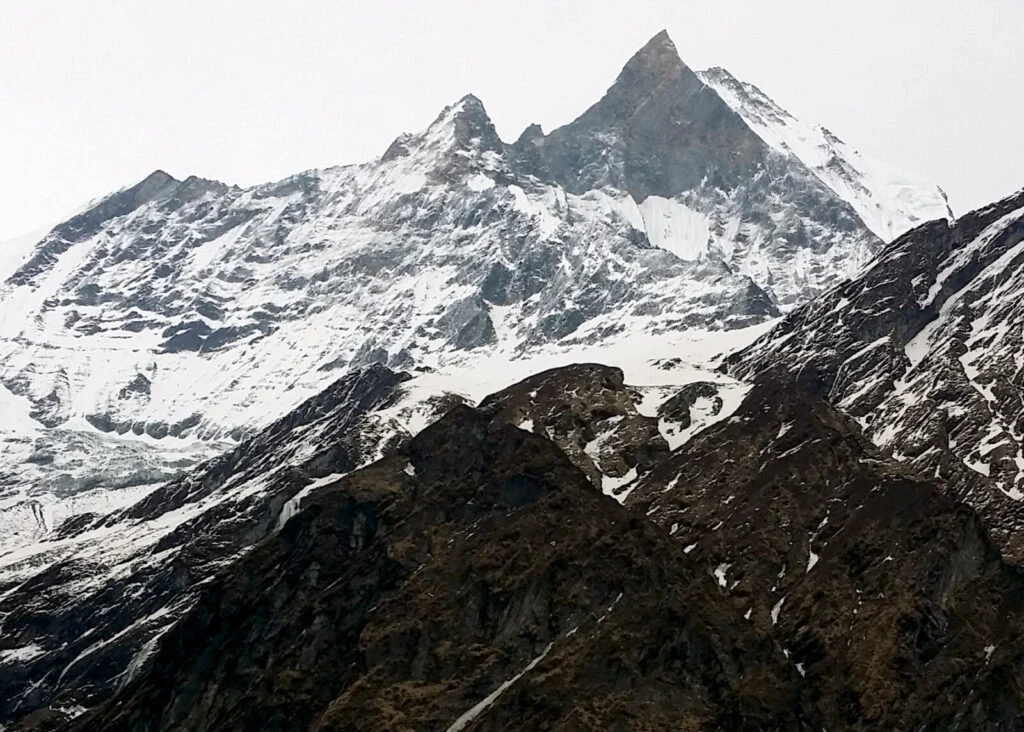
Geoscientists explore the nature from a different perspective than the commoners. In this week’s blog, Stephanie Sparks from Arizona State University shares her story how her passion for mountains gradually became her profession. Her journey through different regions in Himalaya leads her to understand the exhumation rate and the underlying geodynamic processes behind the formation of world’s high ...[Read More]