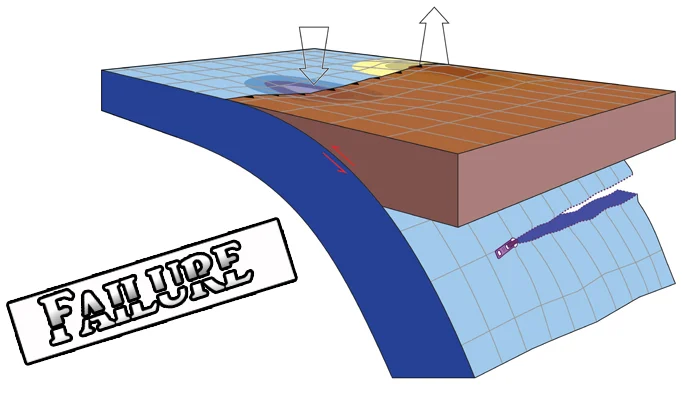
This week Daniel Douglas, who is now a PhD student at New Mexico Tech, discusses his master thesis research while at the university of Hawaii. He investigated the role of magma in the flexure of the Hawaiian lithosphere. When a topographic load is applied to the lithosphere, the lithosphere accommodates the load by flexing. The observed flexure can be measured through seismic methods, gravity anom ...[Read More]
To boldly go… deep sea exploring to study Earth’s interior
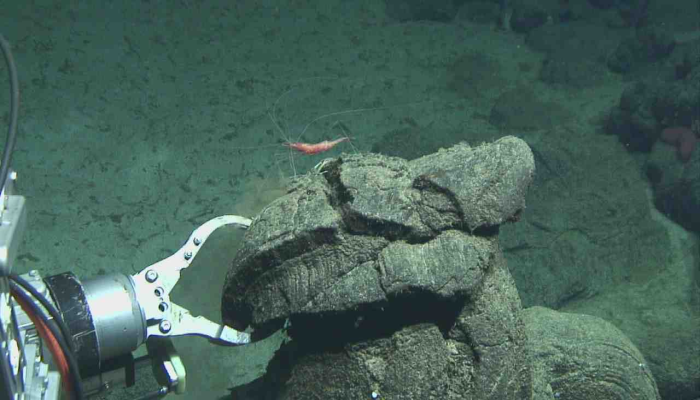
As geodynamicists, we are sometimes oblivious on how we get the geophysical constraints in our numerical models. This week Molly Anderson, a PhD student at the University of Florida, takes us on a exciting dive to study the geochemical signatures of the East Pacific Ocean seafloor! People are often surprised to hear that the seafloor is covered with volcanoes, let alone that the most extensive cha ...[Read More]
The Deccan Chronicle: Plume or no-Plume? Perspective from a Deccan dyke swarm
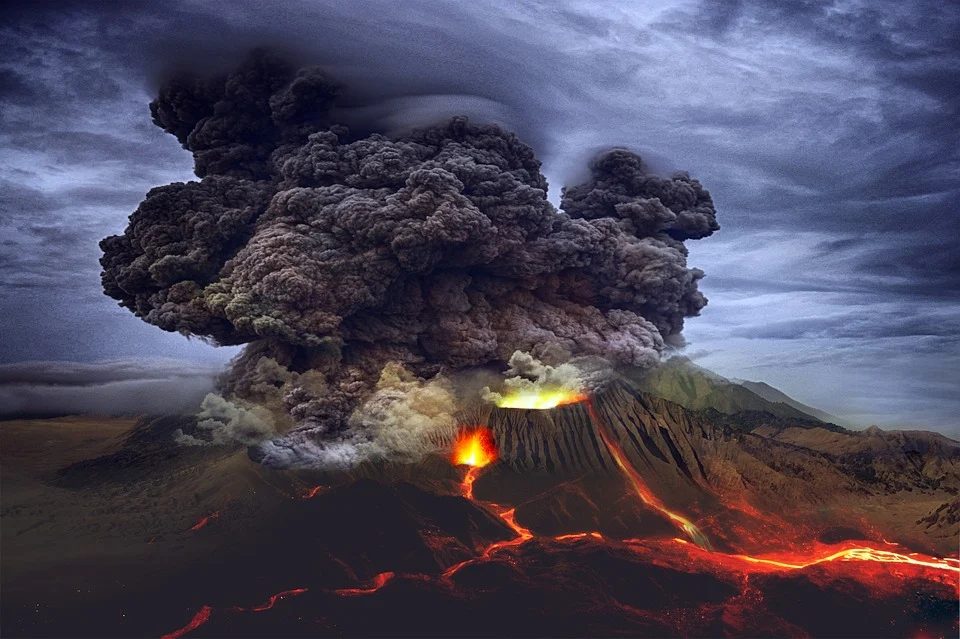
Deccan volcanism is one of the landmark events in India’s geodynamical history. Yet, its origin is still under debate regarding its association with the Réunion plume. In this week’s news and views, Ayanangshu Das, a PhD student at the Indian Institute of Science Education and Research (IISER), Bhopal, explains their recent study to understand the emplacement mechanism by observing the magm ...[Read More]
Thermodynamics and Geodynamics: The perfect couple? Part II
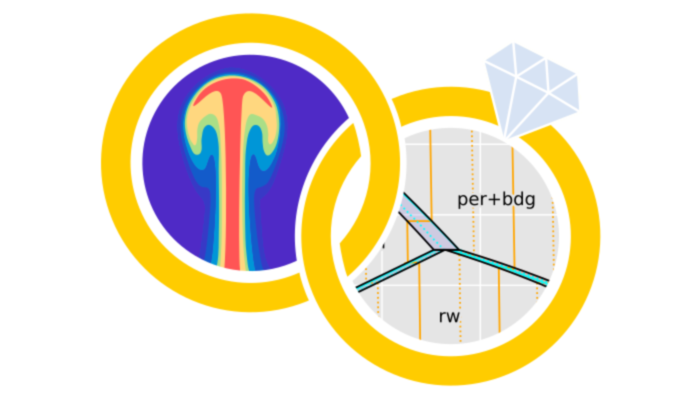
In January of this year, Bob Myhill wrote about the coupling of geodynamics and thermodynamics, and why this coupling is so valuable. This blog post, Juliane Dannberg follows up on this topic, looking at it from the geodynamics perspective. In other words, discussing the question: Where does it make a difference in geodynamic models if we include realistic thermodynamic models or not? In geodynami ...[Read More]
Repurposing a research tectonic modeling code as a community service: The case of DES3D
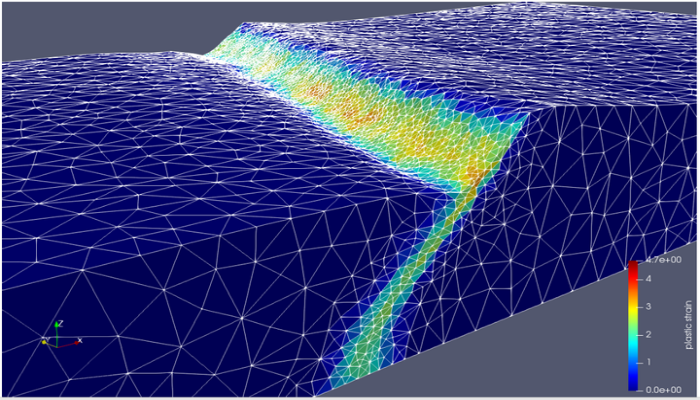
This week, Dr. Eunseo Choi, a professor at the Center for Earthquake Research and Information, the University of Memphis, talks about tectonic modelling using DES3D. *Spoiler alert* read till the end for an exciting opportunity to work on it The advent of the open-source movement and the free public software repositories such as GitHub have drastically improved the way research codes are maintaine ...[Read More]
Curious case of convex upwards topography in accretionary wedges
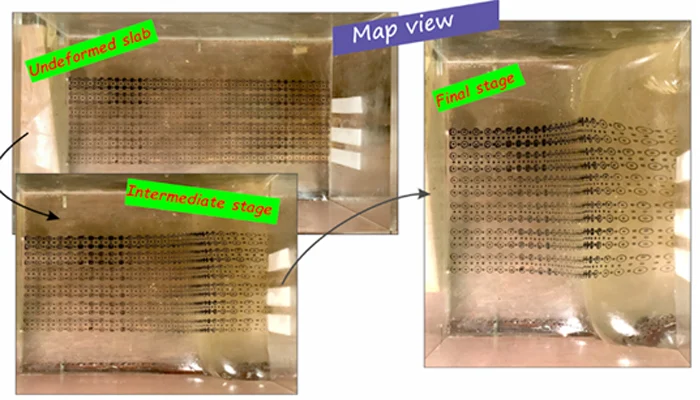
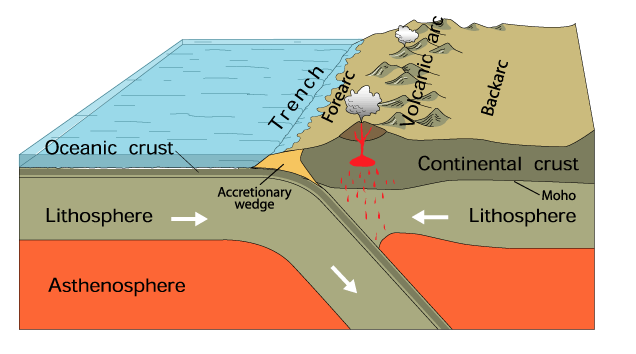
Accretionary prisms are wedge-shaped bodies of crustal rocks that are commonly known to have formed by accommodating the component of convergence along subduction margins. These prisms, primarily wedge shaped with lateral variations in topographic height from hinterland to foreland are commonly characterised by a gentle and uniform slope towards the frontal margin (for instance, the Himalayan fold ...[Read More]
When not Digging Through Code, Dig Rocks
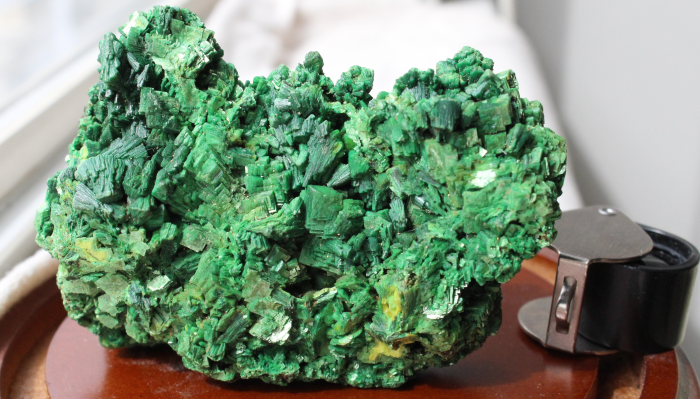
Most of us have been directly or indirectly involved in outreach activities, often relying on shiny rocks to capture people’s fascination. This week, Aaron Van Alstine, a member of the Memphis Archaeological and Geological Society, a passionate rockhounder, and moderator of the sub-reddit on radioactive rocks, shares his views on why all earth scientists need a rock collection and how to st ...[Read More]
Modelling the Thermal Evolution of Subduction Zones
Subduction zones are as complex as they are ubiquitous. To understand subduction zone dynamics and processes we first have to understand the thermal structure of subduction zones and how this evolves in time. This week Adam Holt, Assistant Professor in the Department of Marine Geosciences (MGS) at the University of Miami Rosenstiel School of Marine and Atmospheric Science (RSMAS) and Cailey Condit ...[Read More]
Earth Science Outreach in a Virtual World
Outreach is a fundamental part of science, aiming to inspire and attract the next generation of scientists. Amy Edgington from the Department of Earth Sciences at University College London gives us a glimpse behind the curtain of the GeoBus programme, a free mobile outreach programme that brings interactive Earth Science workshops into the classroom. This week, Amy tells us how the GeoBus had to ...[Read More]
ASPECT 2021 hackathon
Last year we introduced the ASPECT hackaton on this geodynamics blog. It was the first hackathon which went virtual which brought a whole set of new challenges. This year was the 8th version of the yearly hackathon, and it was still virtual (unfortunately). Fortunately lessons where learned from the previous virutal hackathon and generally from working more than a year online. Therefore a short bl ...[Read More]