GD
Geodynamics

News & Views

Conferencing during a pandemic: lessons learned

Conferencing during a pandemic: lessons learned

Conferences are a vital part of academic life but with many conferences moving online due to the pandemic, the virtual conference hall can be a minefield! After a year of conferencing from afar, Kiran Chotalia shares the tips and tricks to make the conference experience live from your living room a breeze! It would be an understatement to say it has been quite the year. Travel restrictions put a f ...[Read More]

EGU medals and awards

EGU medals and awards

The deadline for submitting nominations is arriving soon. So it is the perfect time for EGU Geodynamics President Jeroen van Hunen to explain what awards there are and how easy it is to nominate you colleague for it! This is my first-ever EGU GD blog (in fact, this is the first time I am writing a blog at all). I feel like stepping into a new world. The topic of this blog is EGU medals and awards. ...[Read More]

Whole solid-Earth numerical simulation: Towards an understanding of mantle-core interactive dynamics

Whole solid-Earth numerical simulation: Towards an understanding of mantle-core interactive dynamics

Due to huge difference between the time scale of the mantle convection and the outer core convection, they are modelled separately. In this week’s News and Views, Masaki Yoshida from the Volcanoes and Earth’s Interior Research Center, Japan Agency for Marine-Earth Science and Technology (JAMSTEC), Japan, put forward the recent development on the modeling of the whole solid-Earth. The E ...[Read More]

Expand your toolbox: Three new programming languages to try out

Will you add a new programming lanuage to your toolbox?

Geodynamists usually do at least a bit of programming, but in many cases a lot of programming, although that might just be my academic bubble. Most of that programming is done in programming languages that have been around at least since the 80’s (Fortran, C and C++) or early 90’s (Python). These programming languages have of course evolved considerably over time, but new languages keep popping up ...[Read More]

Finding stillness in chaos: The emergence of stable cratons in a hectic young Earth

Finding stillness in chaos: The emergence of stable cratons in a hectic young Earth

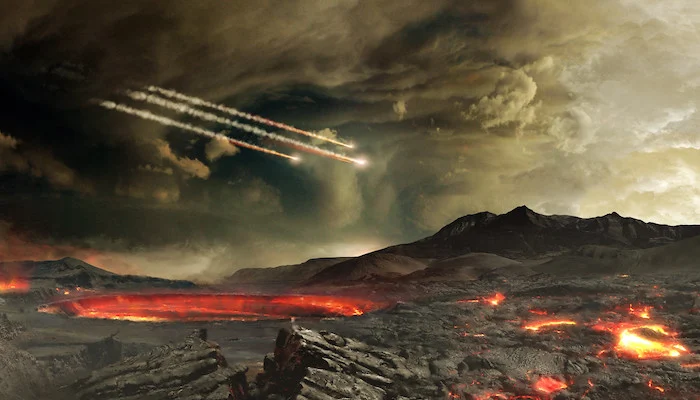
Today we know the Earth as a tectonically busy planet, shaped by mantle convection and plate tectonics. But this is nothing compared to the earlier phases of planetary evolution. This week, Fabio Capitanio (ARC Future Fellow and Associate Professor at the School of Earth, Atmosphere and Environment at Monash University, Australia) takes us on a modelling tour back to a time when the Earth’s tecton ...[Read More]

Modelling the deformation in the Indian plate and the India-Eurasia collision zone

Modelling the deformation in the Indian plate and the India-Eurasia collision zone

A complete fluid dynamical approach of modeling the Earth’s deformation can not provide a complete picture due to presence of rigid lithospheric plates. In this week’s news and views, Srishti Singh, scientist at National Geophysical Research Institute, India, explains how coupled models of lithosphere dynamics and mantle convection are developed.  The ongoing collision of the Indian plate wi ...[Read More]

The Indian Ocean Geoid Low at a plume-slab overpass

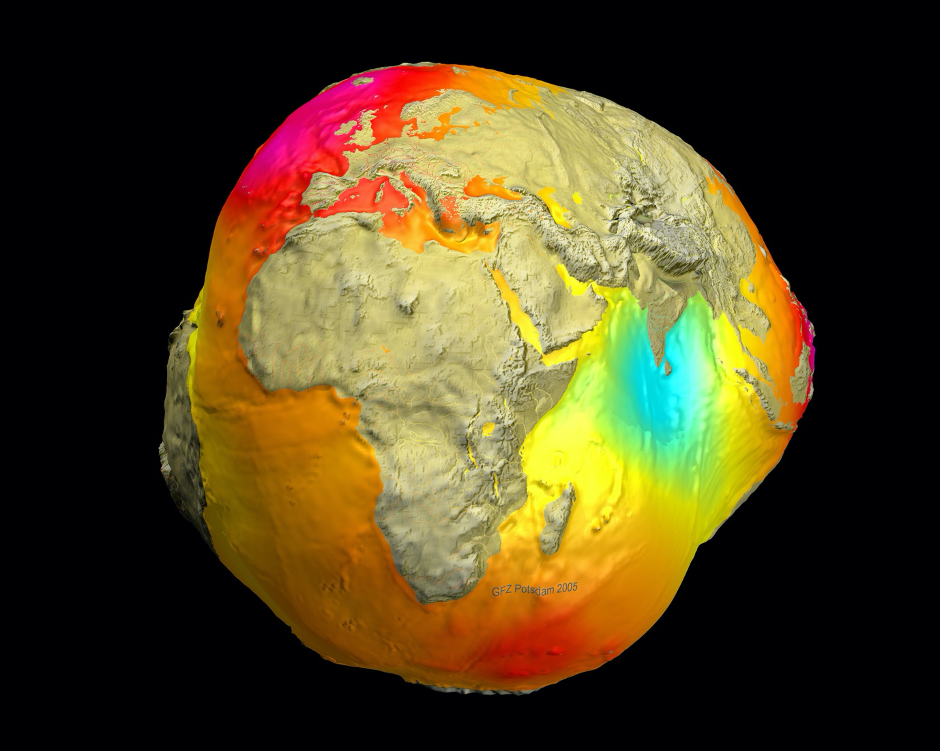
The Potsdam gravity potato

In this week’s News & Views, Postdoc Elodie Kendall from GFZ Potsdam shares with us recent work on the mantle structures that could explain the Indian Ocean Geoid Low.           What is the geoid, what does it look like and what can it tell us about mantle structure? The geoid is a model of the shape of the oceans’ surface if only gravity and Earth’s rotation act ...[Read More]

Carbon in the cloud

Carbon in the cloud

If I asked you about what your carbon footprint is, your mind might jump to the food choices you make when at the supermarket, or how many conferences you fly to when you could get a train (well, not now, but you know, back in ye olden days). In this week’s post, Eoghan Totten, a PhD student at the University of Oxford, discusses the potential “hidden” impacts on your contributio ...[Read More]

Thermodynamics and Geodynamics: The perfect couple?

till heat death do us part?

In preparation for Valentines day, Bob Myhill explores the potential for close partnership (and even love?) between the geodynamics and thermodynamics communities. Much of Earth and planetary science relies in some way on thermodynamics. This is not a surprise; the elegance1 of its premises makes thermodynamics a robust starting point for many investigations, and the number of thermodynamic applic ...[Read More]

2021: 100th year of the craton concept and beyond

2021: 100th year of the craton concept and beyond

One hundred years back, Leopold Kober first introduced the term “Kratogen”. With time, the concept of kratogen has evolved, and they are now known as cratons. In this week’s news and views, Jyotirmoy (@GeophyJo), a PhD student from the Indian Institute of Science revisits the history of craton science: how the craton concept has evolved and what are the modern problems related to them.   &nbs ...[Read More]