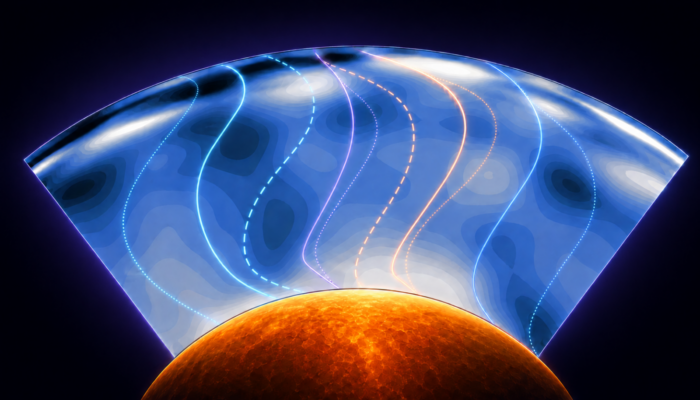
Computational geodynamic models are powerful tools for understanding Earth’s deep interior, but how do we know they are producing realistic results? In this week’s News & Views, Alina Valop, a PhD candidate from Virginia Tech, unpacks the world of geodynamic kernels and shows how these sensitivity functions provide a computationally efficient way to benchmark mantle flow models, te ...[Read More]
Mobilidiocy
Guess who’s back? Back again! Sassy’s back, tell your colleagues! This week I am going to shoot the elephant in the room by answering Will’s question “Is Mobility a plus or a must for a research career?” Now I know I have already answered a similar question some time ago, but a changing world requires an updated saucy answer. Disclaimer: The reflections presented here reflect my perspective ground ...[Read More]
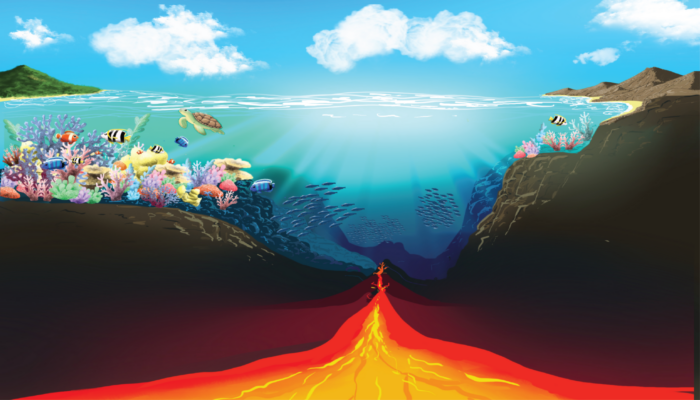
From rifts to reefs: the geodynamic origins of shallow coral reef habitats at passive continental margins
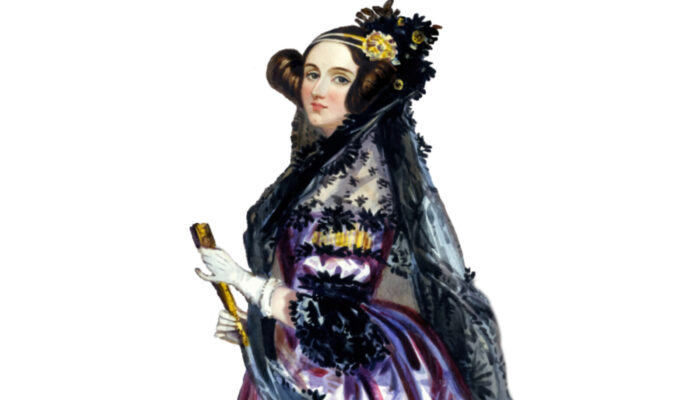
Ada Lovelace’s spirit at Lake Seč
From 21 to 26 June, the 2026 Ada Lovelace Workshop on Modelling of Mantle and Lithosphere Dynamics brought together the geodynamics community in Seč, Czech Republic. In this week’s blog post, Vojtěch Patočka, Assistant Professor in the Department of Geophysics at Charles University in Prague and a member of the organising committee, offers an offbeat take on the workshop. Every two years, a ...[Read More]
Help us shape the GD programme for EGU General Assembly 2027
The Geodynamics programme of the General Assembly starts with your ideas. With the call for session proposals for the 2027 EGU General Assembly approaching, the Geodynamics Division President Laetitia Le Pourhiet shares her thoughts on what makes a successful session proposal, and how to help shape next year’s scientific programme. Dear GD community, It is already time to start thinking abo ...[Read More]
Introducing the new blog team!
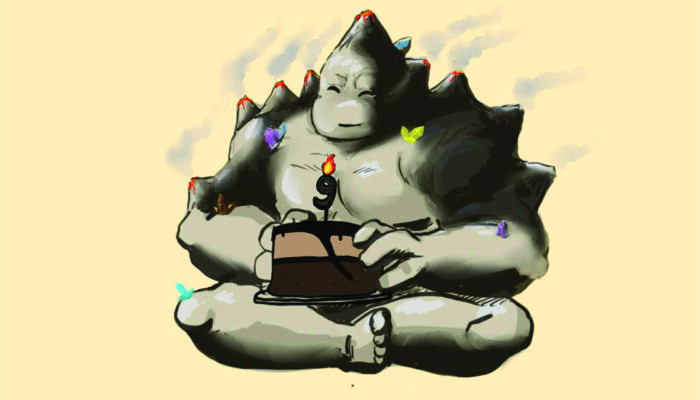
Hello blog readers! It’s Jean-Baptiste and Alexis. With EGU26 now behind us and summer approaching fast, we wanted to announce the start of the 9th blogging season for the Geodynamics division and introduce the team for the 2026–2027 year. We both have the privilege and the daunting challenge of succeeding Constanza and Michael as Editors-in-Chief of the Geodynamics Blog. Over the past three years ...[Read More]
Modeling the full spectrum of observed seismicity: Insights from friction laws, fault instability, and fault-zone mechanics
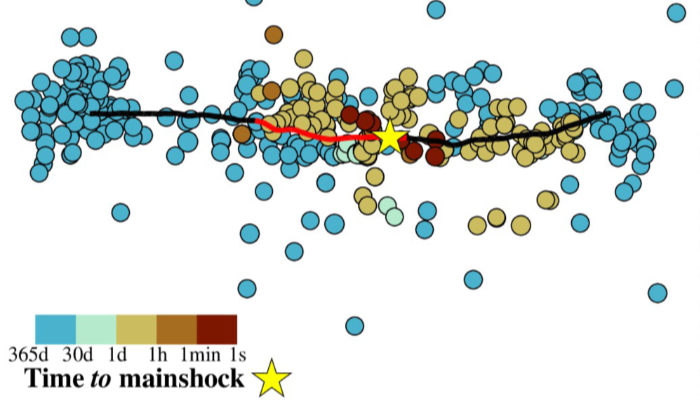
Introduction Despite advances in our understanding of rock mechanics, the frictional behavior of rocks, and the physics of instability in geological materials, the coexistence of slow and fast earthquakes, as well as various types of fault-zone seismic radiation such as tremor, remains enigmatic. Can fault mechanics and friction laws reproduce the full spectrum of observed seismicity? In this week ...[Read More]
Melting Glaciers Move Lithospheric Plates and Fluctuate Mid-ocean Ridges’ Spreading
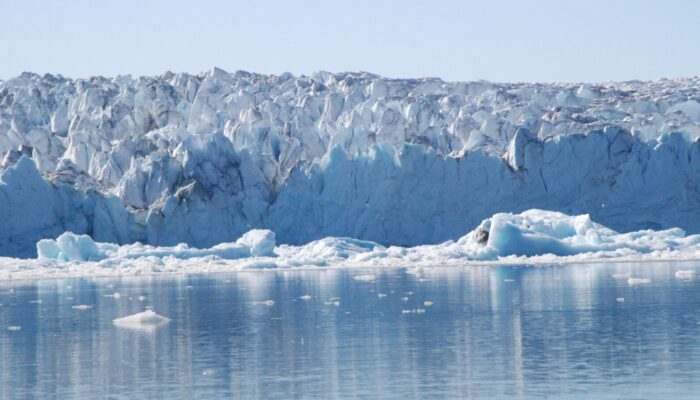
The rise and fall of massive ice sheets have shaped Earth’s surface for millions of years, but their influence may extend far deeper than previously recognized. This week in News & Views, Tao Yuan, a PhD student at the University of Colorado Boulder, explores how glacial cycles can alter lithospheric plate motions and even modulate the spreading of mid-ocean ridges. The ongoing melting of glac ...[Read More]
The AI Revolution in Mining: Overhyped, Understood and Absolutely Unavoidable
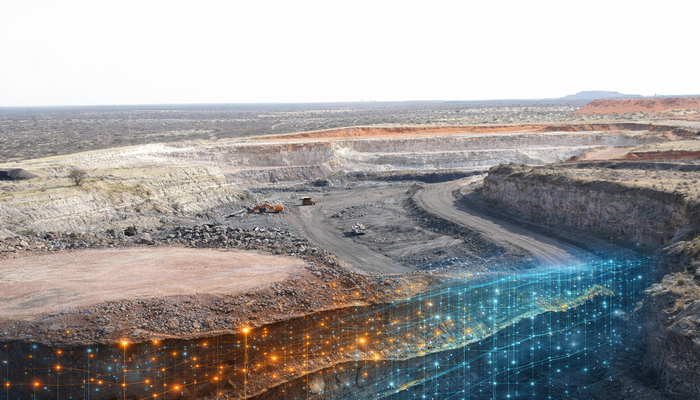
Artificial Intelligence has dominated the world across various sectors. However, it is yet to be decided whether the use of AI in Mineral Exploration (and more broadly in Geosciences) will diminish the expertise and know-how of Geologists or instead provide a valuable tool for the years ahead. In this week’s blog, Dr. Nicholas Vafeas shares his perspective on AI technology in the mining industry a ...[Read More]
“You belong here”: reflections on gender inequality in Academia
Academia is often imagined as a space driven by merit, curiosity, and scientific collaboration. Still behind publications, conferences, and research achievements, many women in STEM continue to navigate environments shaped by subtle exclusion, normalized inequalities, and power imbalances that are not always openly discussed. In Earth Sciences, where collaboration and field-based research are fund ...[Read More]