GD
Geodynamics

News & Views

To go or not to go (to my PhD graduation)?

To go or not to go (to my PhD graduation)?

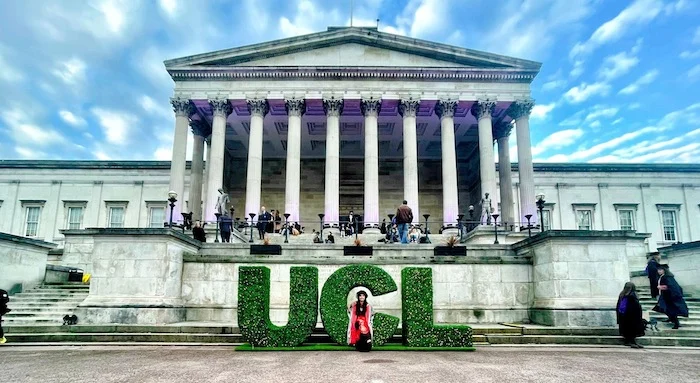
You’ve come to the end of your PhD and after years and years of hard work, one last question remains: “Should I go to my PhD graduation?”. This week, we have one of our editors Kiran Chotalia sharing her two cents after she finally attended her in-person graduation this year after it was delayed by the pandemic (TLDR; definitely go!). In March 2020, after four and a half years of hard work, meetin ...[Read More]

Journey of the Indian plate

Journey of the Indian plate

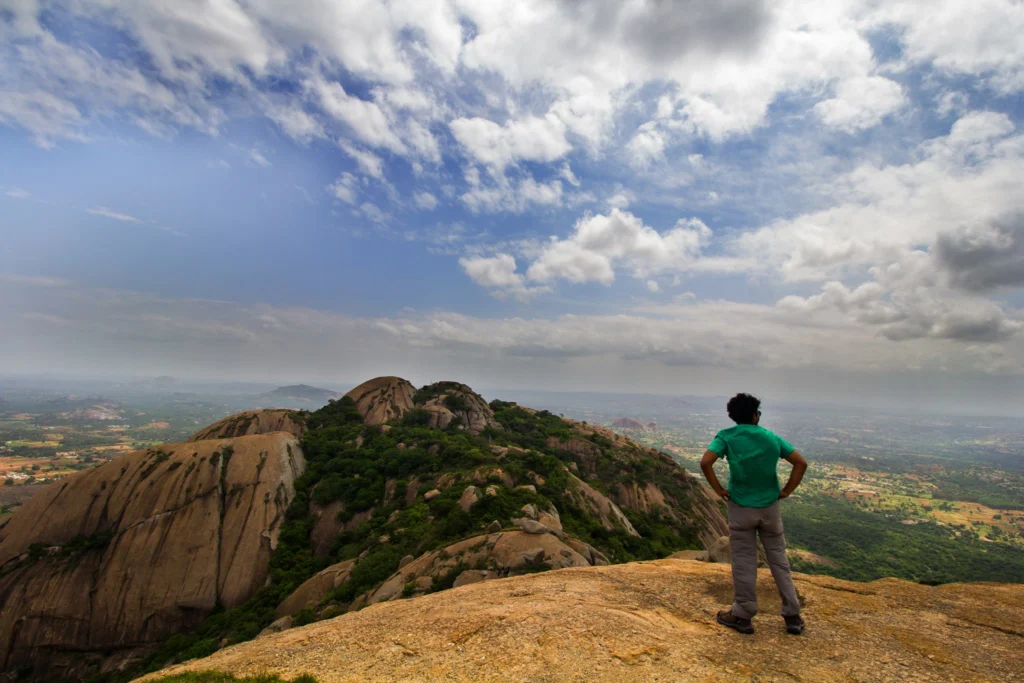
Plume craton interaction is a fascinating geological phenomenon. The Indian plate, which has experienced several plume eruptions underneath it, is one of the best locations to study the effect of plume craton interaction. In this week’s news and view, I will provide an overview of the controversy and hypotheses related to the plume craton interaction within the Indian plate since the mid-Cre ...[Read More]

There’s more to Geoscience than just oil and gas

There’s more to Geoscience than just oil and gas

When most people hear Geology, they might think ‘rocks’, ‘diamonds’ or ‘oil and gas’, and these perceptions of the Geosciences vary from country to country. This week, we have PhD student Ayuni Ina Mohamaad from the University of Florida to tell us more about the Malaysian view of geoscientists. Fresh out of high school in 2009, I was still unclear with how I would like to move forward in life, ca ...[Read More]

Do lower mantle slabs contribute in generating the Indian Ocean geoid low?

Do lower mantle slabs contribute in generating the Indian Ocean geoid low?

The Indian Ocean Geoid Low is an enigmatic phenomenon in geodynamics. Many brain-storming hypotheses have been proposed in the last few decades to explain this geoid low. One popular idea argues that the high density lower mantle slabs contribute to this geoid low. Recent discoveries have shown that low-density anomalies from the African LLSVP region could have a more substantial influence on crea ...[Read More]

GeoLchat: el experimento de divulgación científica bilingüe hecho por tres geocientíficas colombianas

GeoLchat: el experimento de divulgación científica bilingüe hecho por tres geocientíficas colombianas

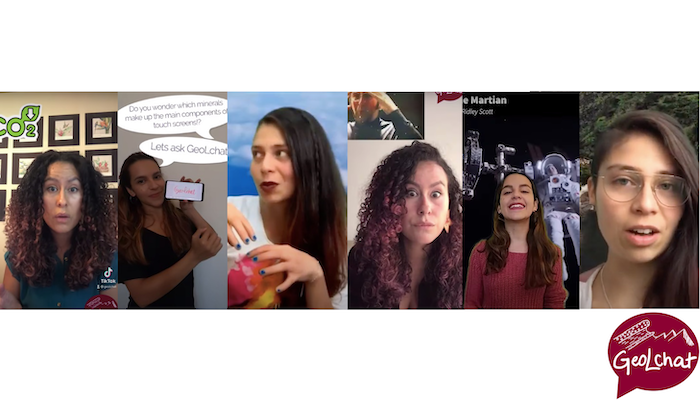
GeoLchat: A Bilingual Science Communication Experiment of Three Colombian Geoscientists Una de las cosas más importantes que se les enseña en la academia a los estudiantes de ciencia alrededor del mundo es aprender a usar el lenguaje científico. Sin embargo, nunca se les enseña a hablar acerca de ciencia en un lenguaje sencillo, y tampoco a comunicar y divulgar sus investigaciones en lenguajes dif ...[Read More]

Catching up with Iris van Zelst on everything outreach, science communication, and vlogging

Catching up with Iris van Zelst on everything outreach, science communication, and vlogging

Following from last week’s post on the Science Sisters series, this week we sit with outreach extraordinaire and EGU GD blog editor-in-chief Iris van Zelst to talk about all things scicom, vlogging and a new geological time game that you do not want to miss out on! Hi Iris, thanks for chatting with us! First things first tell us a little bit about yourself and what you do!  Thank you very much for ...[Read More]

The toxic and wondrous world of academia with Science Sisters

The toxic and wondrous world of academia with Science Sisters

Good morning, dear readers, this is your editor-in-chief speaking. We are currently experiencing some difficulties in academia, but we ask you to stay calm and remain in your seats with the seatbelt fastened. In the event of loss of pressure, make sure to publish your own paper first (to increase the pressure on your peers). Yes, it’s me! Your favourite (and only) editor-in-chief! And because runn ...[Read More]

Changing mid-degree: How did this Travelin’ Geo get here?

Changing mid-degree: How did this Travelin’ Geo get here?

It can be tough realising you’re not on the path you want to be on. This week, we have Leiaka Welcome from the Colorado School of Mines showing us how a change of heart led her to start her PhD journey. Currently on social media (Instagram Reel, TikTok), there is a video trend where users are editing a video of themselves in a scenario with an audio sound where you can hear a classic record scratc ...[Read More]

Navigating the Increasingly Computational Science World – Tools and Ideas to Help!

Navigating the Increasingly Computational Science World – Tools and Ideas to Help!

This week Dunyu Liu a computational scientist at the Institute of Geophysics at the University of Texas at Austin, shares his tips, tricks, and best practices for painless code development. The scientific world is becoming more and more computational, with numerical methods and models being critical to many disciplines such as geodynamics, earthquake dynamics and climate modelling to name a few. M ...[Read More]

Lithospheric failure at subduction zones

Lithospheric failure at subduction zones

Observing the Earth’s changing surface is the only thing solid Earth scientists can do; we simply cannot drill deep enough into the Earth and look at the processes that occur at very high temperatures and pressures. We must combine surface measurements from various disciplines to infer that specific surface imprints are caused by specific processes at depth. The sinking of oceanic plates into the ...[Read More]