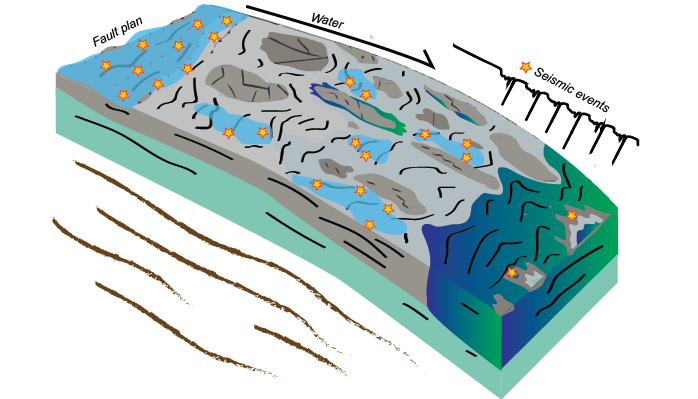
What is the role of fluids in seismic cycles ?
News & Views
Unravelling the geological past of the Sierra del Nevado, in South Andes, Argentina
Have you ever wondered to learn more about the geological setting of the Nevado volcano in Central-West Argentina? In this week’s blog, we have Georgina Rubiano Lorenzoni, a Ph.D. Geologist student from the Universidad Nacional de La Pampa in Argentina, who will guide us through her thesis aims, which are the identification and investigation of the petrogenesis and geochronology of the mountain ra ...[Read More]
Effects of decelerating India-Eurasia convergence on the crustal flow and topographic evolution of the Tibetan Plateau
The Tibetan Plateau is the most extensive elevated surface on the Earth, stretching ~1,000 km north to south and 3,200 km east to west, with a mean elevation of greater than 4.5 km and located north of the Indian subcontinent. The formation of this Plateau has profoundly influenced the variations and evolution of Asian climate, strengthening of the South-Asian Monsoon, development of the large Asi ...[Read More]
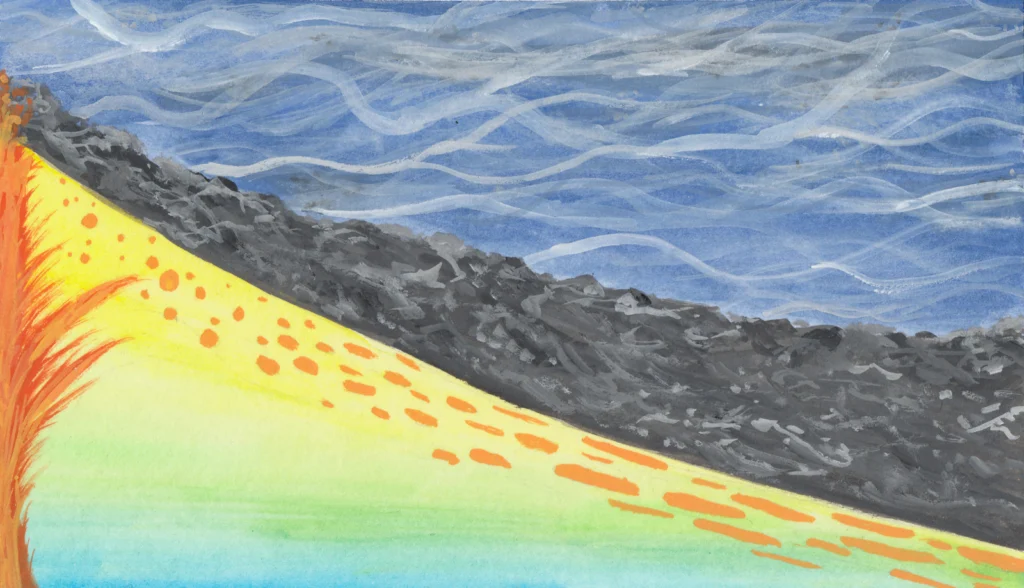
Meet the blog illustrators: Trud Antzée
Communicating research to a broad audience is always difficult for scientists. Because of their ability to translate ideas into visuals that can be used to communicate information to a wide range of audiences, scientific illustrators are critical to the communication of scientific information. In this week’s blog, we are introducing Trud Antzée, one of our blog illustrator. Trud Antzée is a former ...[Read More]
Why do seismic images vary beneath different ocean floors?
Mantle flow and deformation beneath tectonic plates
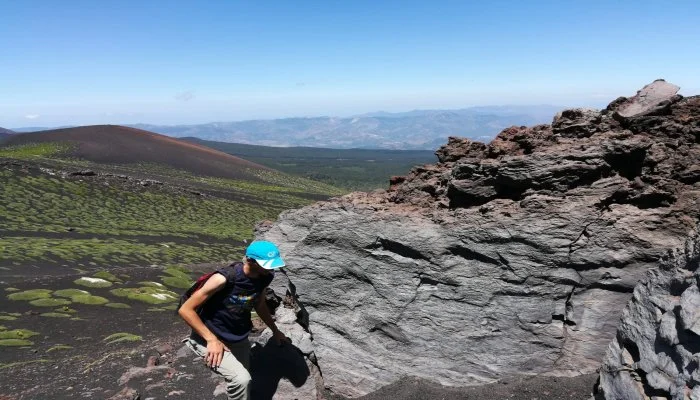
The “Geo-journey” of a PhD Candidate Geophysicist from Sicily to Uppsala.
Does the sound of pursuing a Ph.D. terrify you? Well, fear not because this week we have Samuel Zappalà from Uppsala University to tell us more about his inspiring story as a Ph.D. student at the Department of Earth Science in Uppsala. And, who knows maybe you will be inspired to pursue a Ph.D. in the future? How many times have you wondered if it is worth taking the risk to pursue a Ph.D. abroad, ...[Read More]
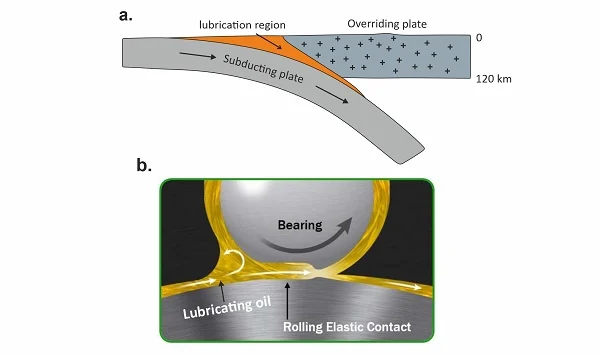
Application of lubrication theory in understanding subduction interface dynamics
Plate interface lubrication is essential for stabilization and continuation of subduction process for million of years. The magnitude of plate interface lubrication determines transfer of stress between two converging plates, topography of mountain belts, transportation of volatiles to the mantle, and return flow of high to ultra-high pressure rocks to the earth’s surface. In this week’s blog, I ...[Read More]
Geodynamics: It’s in the air we breathe!
Have you ever wondered how Earth became habitable. In this week’s news and views, we have Fabio Capitanio, Associate Professor at Monash University sharing insights into the role Geodynamics in the evolution of Earth and life on it. Our planet has unique features which make it suitable for life. Understanding how the Earth became habitable is necessary to answer the most fundamental question ...[Read More]
How to find your next job in Earth sciences?
An open and free platform for vacancy pages in Earth Sciences for academics
Democratising the concept of risk: The Tomorrow’s Cities Decision Support Environment
Curious to gain an insight into how we can battle the rapid urbanisation and reduce the disaster risk for the poor people in the future? This week, Dr. Roberto Gentile, Lecturer in Catastrophe Risk Modelling at the Institute for Risk and Disaster Reduction – University College London, talks about the Tomorrow’s Cities Decision Support Environment for risk-informed, pro-poor urban planning, and des ...[Read More]