NH
Natural Hazards
Avatar photo

Giulia Roder

Giulia Roder contributed to the Natural Hazards Division blog between 2017 and 2022, during which time she worked as a Research Associate at the Institute for the Advanced Study of Sustainability at the United Nations University in Tokyo (Japan). She worked on topics related to the 'Water for Sustainable Development' project which aims to stimulate sustainable development in the Asia Pacific. She holds a PhD from the University of Padova (Italy) related to flooding and human interactions through the analysis of flood dynamics in anthropogenic landscapes, risk perception and preparedness studies in different communities worldwide. Her interest in these topics raised in the remote Central Mountain Range in Taiwan when she was been hosted by one of the oldest indigenous communities. She joined the EGU Early Career Scientists of Natural Hazards Division in 2017. In addition to contributing to the blog, she assisted the NH Division with several activities during the Assembly.

Who’s afraid of Natech?

Who’s afraid of Natech?

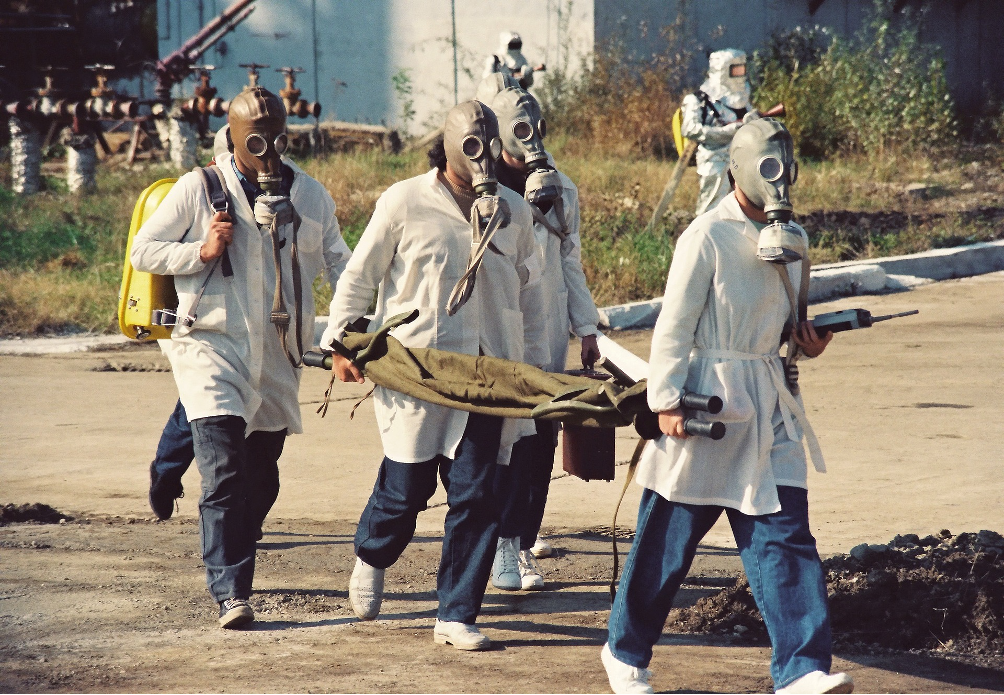
Natural hazards that impact industrial sites and result in technological accidents, causing the release of hazardous substances, are referred to as Natech events. In the popular imagination, Natech accidents are triggered by major natural hazard events. However, experience tells us that low magnitude natural events, such as lightning or heavy rains, are sufficient to cause enormous adverse effects ...[Read More]

Geoscience communication series: navigating the light and dark sides of social media

Geoscience communication series: navigating the light and dark sides of social media

We are thrilled to present the last episode of the EGU WEBINARS: Digitalk: online (geo)science communication series. In this episode, we will explore the light and the dark sides of using social media for science communication by a special guest, Roberto Guardo.  Roberto wished to engage in science communication just after completing his PhD. “I have never liked writing scientific papers,” he said ...[Read More]

Geoscience communication series: the perfect vlogging recipe

Geoscience communication series: the perfect vlogging recipe

Last year, we left you with an inspiring post about scientific blogging, where Giulia Roder, one of the authors of the EGU-NH blog, shared her ‘blogging survival kit’. Today we continue the series of EGU WEBINARS: Digitalk: online (geo)science communication exploring ‘the best vlogging recipe’ with Iris van Zelst, a researcher at the German Aerospace Center with a great passion for geoscience comm ...[Read More]

Geoscience communication series: a blogging survival kit

Geoscience communication series: a blogging survival kit

Science communication is the practice of informing and inspiring the public about scientific knowledge. It comes in different forms, from documentaries, books, academic publishing, mass media journalism, to public talks. These days, digital communication, including blogging, vlogging, podcasting, and social media, has become an increasingly popular form of science communication, reaching a wide au ...[Read More]

The road to successful scientific writing for early-career scientists

The road to successful scientific writing for early-career scientists

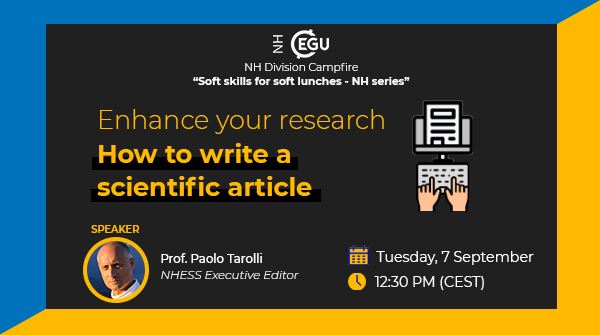
The world of research is highly competitive, and early career scientists face many challenges while trying to carve out a successful career path. Writing scientific articles is one of those challenges. Prof. Paolo Tarolli (University of Padova) shared his personal experience on “How to write a scientific article” with 130 attendees last 7th September, during the first Campfire event, & ...[Read More]

Artificial intelligence for disaster management: that’s how we stand

Artificial intelligence for disaster management: that’s how we stand

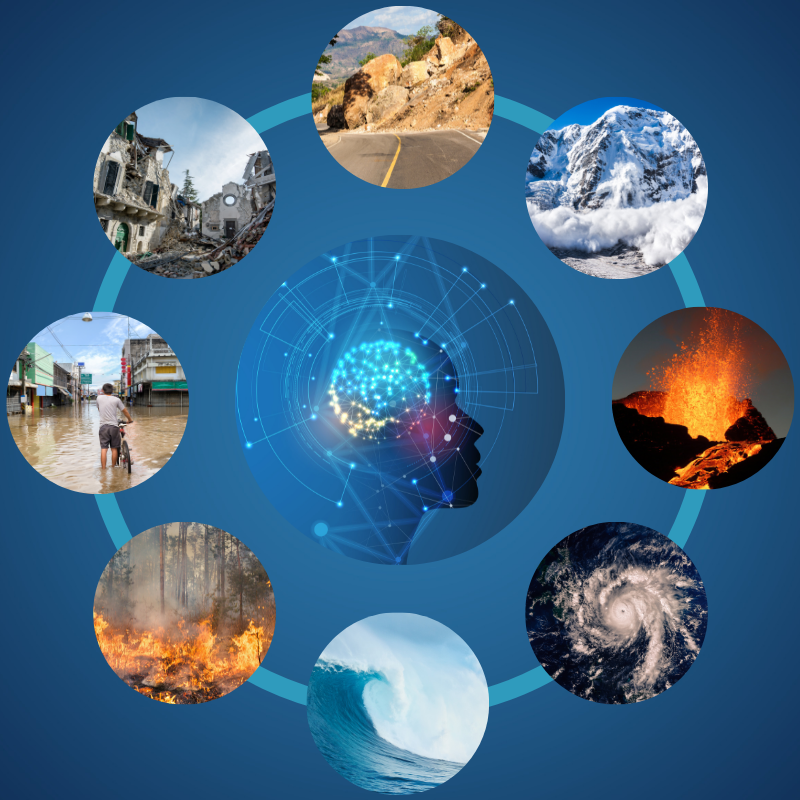
On the 23rd of June, I participated in the Second Workshop for AI (Artificial Intelligence) for Natural Disaster Management that hosted around 400 scientists, UN advisors, practitioners and policymakers from all over the world interested in machine learning for supporting disaster prediction and early warning. AI is not my research area; however, I have always been interested in the new advances t ...[Read More]

Floods in the Anthropocene: the good, the bad and the ugly

Floods in the Anthropocene: the good, the bad and the ugly

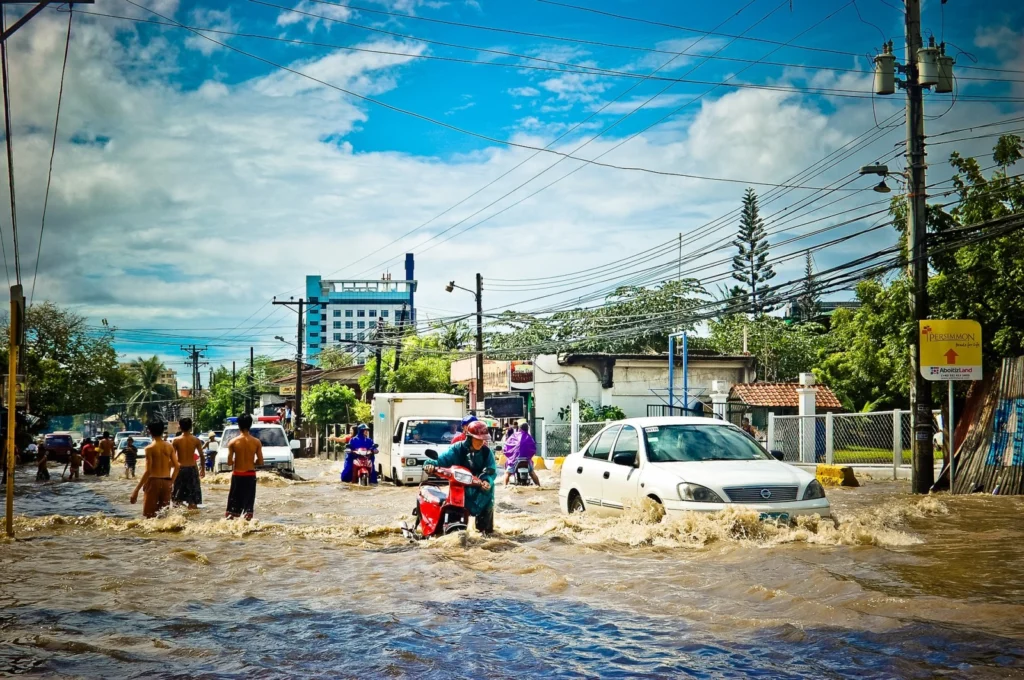
The interplay between human societies and floods dates back to Old World civilizations. Floodplains have provided the potential for prosperous agriculture and for the development of organised communities and urban cultures. Contextually, flood events have caused millions of fatalities and invaluable economic losses throughout history. Over the past decades, human activities have increasingly alter ...[Read More]

Natural Hazards 101: The disaster cycle

Natural Hazards 101: The disaster cycle

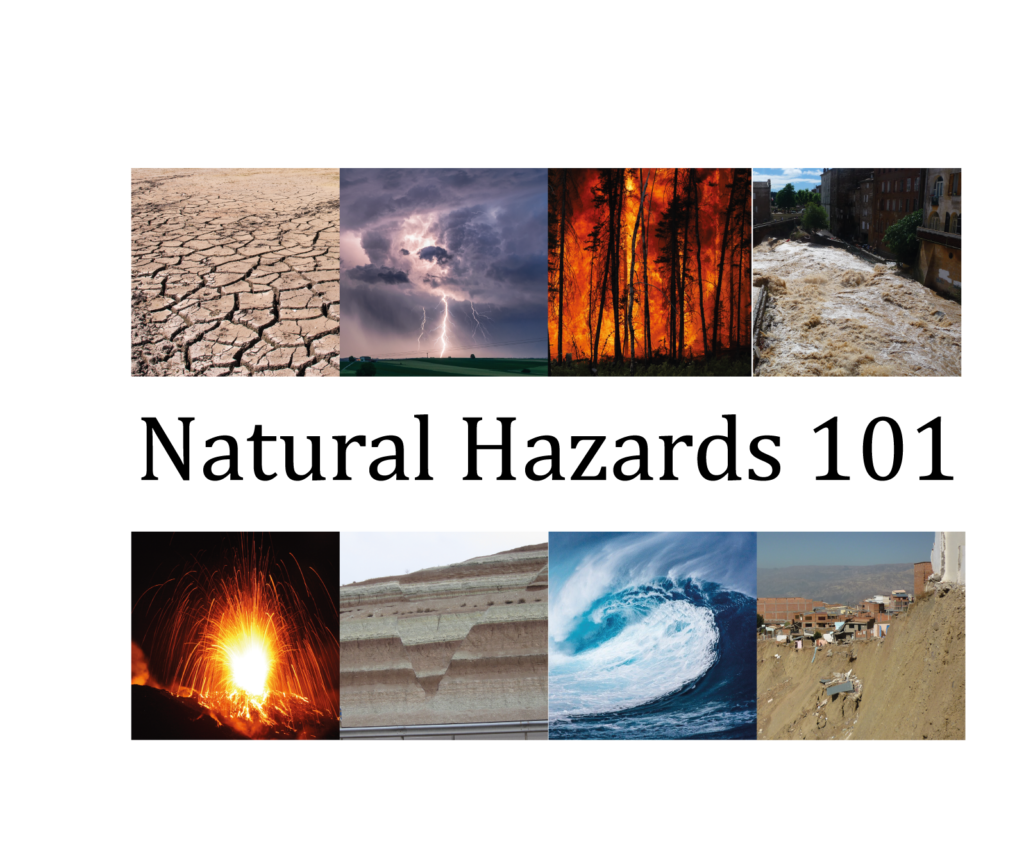
With the Natural Hazards 101 series, we meant to bring our readers closer to the terminology often used in the field of natural hazards, but that may not be so familiar. We started defining the very concept of hazard and natural hazard. We moved then to the concept of risk, which brought us to define exposure and vulnerability.  In this episode, we will digest the disaster terminology provided by ...[Read More]

To be or not to be a ‘natural’ disaster: that is the question

To be or not to be a ‘natural’ disaster: that is the question

The story of science is replete with theories that only become accepted by the scientific community after long and protracted uphill battles, said Howard Wolinsky in his commentary in Science and Society in 2008. Sometimes they are rejected, ridiculed, or they take time to be validated, digested, and likely accepted. However, in my opinion, the scientific discussion over new hypotheses is at the h ...[Read More]

Vitor Silva: 2020 Natural Hazards division medallist story

Vitor Silva: 2020 Natural Hazards division medallist story

In today’s interview, we talk with Dr Vitor Silva, who was awarded the 2020 Natural Hazard Division Outstanding Early Career Scientist Award for his fundamental contributions to the research on earthquake risk assessment. Seismic risk is the probable building damage and the number of people that are expected to be hurt or killed if a likely earthquake on a particular fault occurs. Disaster risk ca ...[Read More]