In this essay, Jean-Baptiste Koehl reflects on the origin of a 100-year-old divide within the geoscience community and explores how tectonics and paleontology may be brought closer together through the concept of orogenic bridges.
Disclaimer: The reflections presented here reflect my perspective grounded in my own research and experience.
One of the most iconic interdisciplinary achievements in the geosciences is the integration of the fossil record, igneous and sedimentary rock units, fold-and-thrust belts, and even past glaciations on continents now separated by wide oceans, which helped lay the foundations of continental drift and, eventually, modern plate tectonics.
Paleontology is a highly specialized field at the intersection of the geosciences and biology, requiring advanced understanding of anatomy, evolution, sedimentology, and ecology (learn more on the EGU SSP blog). Tectonics is an interdisciplinary field that investigates the deformation and evolution of Earth’s lithosphere using tools and concepts from structural geology, geophysics, seismology, geochronology, geochemistry, petrology, geomorphology, stratigraphy and sedimentology, volcanology, mineralogy, and planetary sciences.
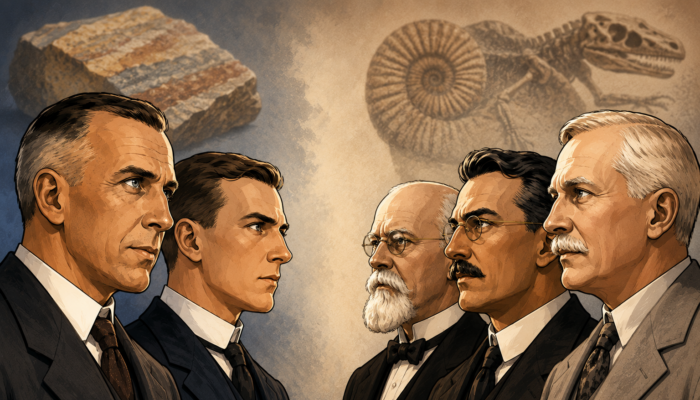
While tectonicists and paleontologists are exchanging in some aspects of the geosciences (e.g., dating of sedimentary strata and deformation episodes using paleostratigraphy), these interactions are limited and it seems to me that paleontologists do their thing and tectonicists do theirs, as if separated by an invisible rift, like an old wound that never healed. Have you noticed a similar pattern?
Let us rewind a little to understand the potential cause to this divide.
Land bridges versus continental drift
In the early 20th Century, paleontologists discovered comparable terrestrial fossils in hundred-million-year-old sedimentary rocks on continents now separated by large oceans. Their solution to this problem was to propose that narrow, now sunken land bridges once connected the continents and allowed terrestrial organisms to migrate between them (Fig. 1; Gregory, 1929; Schuchert, 1931; von Ihering, 1931).
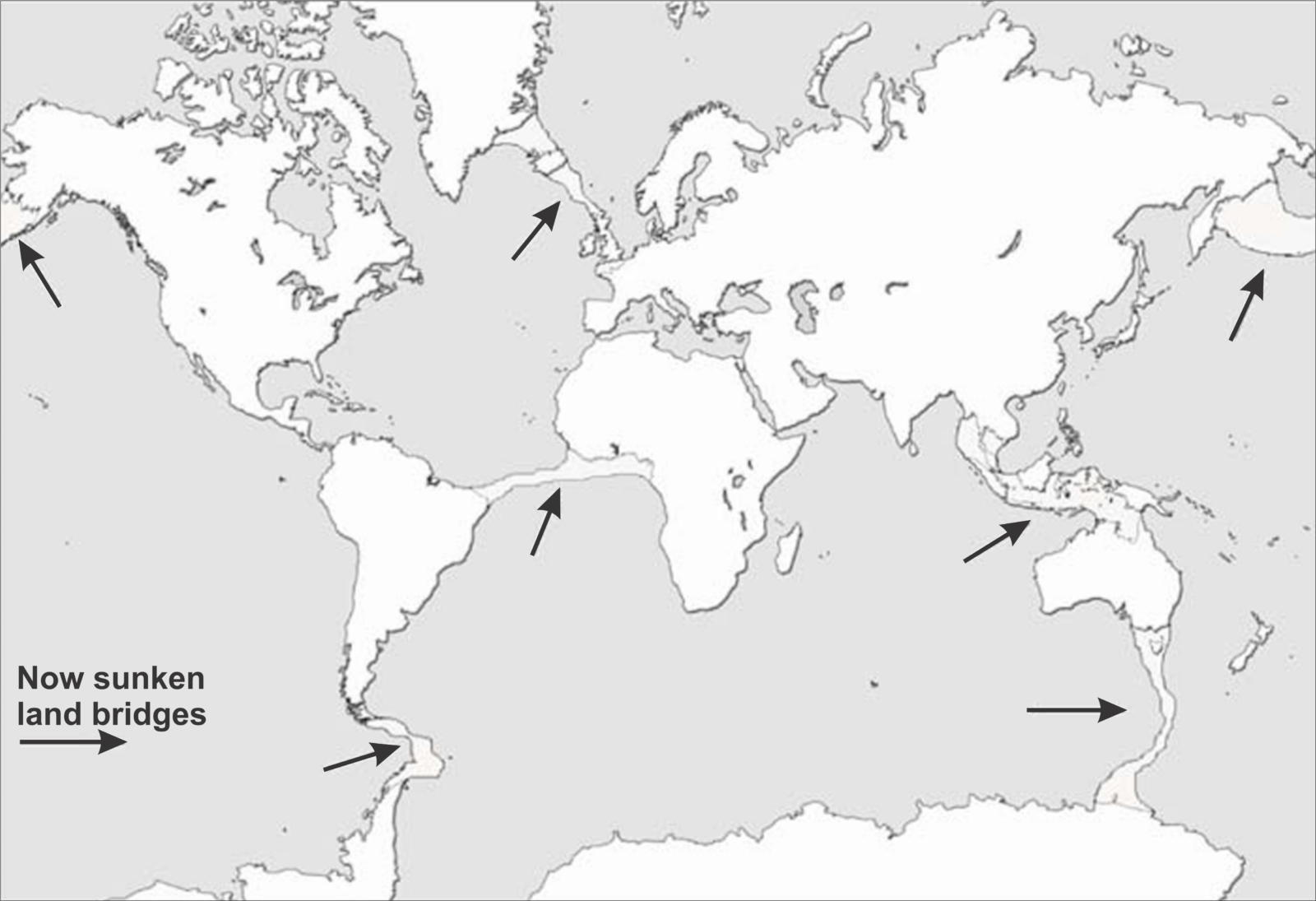
Figure 1: Map of the so-called land bridges proposed by paleontologists in the early 20th Century. Modified after Dolphin (2009).
Coincidentally, Alfred Wegener proposed his hypothesis of continental drift (Wegener, 1929), which was at first rejected by the geoscience community (especially paleontologists; Gregory, 1929; Schuchert, 1931; von Ihering, 1931). Although others gradually added weight to Wegener’s hypothesis (e.g., du Toit, 1927), it is only upon the discovery of mid-ocean ridges and seafloor spreading (Hess, 1962; Vines & Matthews, 1963) that Wegener’s idea became widely accepted. In contrast, land bridges were completely dismissed from then on and, although it may sound intuitively correct, psychology suggests that it might have been too hasty.
Psychological bias(es): the Black-and-White dilemma
Do you remember rejecting an idea at first only to accept it later and completely dismiss what you first believed? Or have you ever made one little mistake and started believing yourself incompetent? Or ever thought that you had ruined your diet and health by eating this one doughnut? Does sticking to your diet only 99% of the time mean to you that you are failing and that you might as well eat whatever you want? Then you might be prone to dichotomous thinking.
Dichotomous thinking bias, also known as “black-and-white” or “all-or-nothing” thinking bias, is a cognitive bias through which one thinks in absolute extremes with no middle ground (Bonfá‐Araujo et al., 2021). Not only does this distort reality, but it also hinders problem solving and may typically lead (among others) to interpersonal conflicts and loss of self-confidence.
Upon discovery of seafloor spreading, land bridges and parts of the fossil record that did not fit continental drift were completely dismissed. Some of these included the migration of primates from western Africa to South America at ca. 40–35 Ma (Montheil et al., 2026), i.e., well after the presumed opening of the South Atlantic Ocean at ca. 125–100 Ma. Another example is the convergence of Late Cretaceous dinosaur tracks towards the Gulf of Guinea–northeastern Brazil corridor (Jacobs et al., 2024). Both fossil records suggest a terrestrial connection between South America and western Africa after the opening of the South Atlantic.
However, instead of revisiting some concepts of continental drift to find a compromise, paleontologists have been exploring migration via long-distance rafting on floating island of vegetation debris (Montheil et al., 2026). While such events are possible, they require a demanding chain of conditions: small animals and/or plants on a raft of mangrove detached from riverbanks or coastlines during a storm or flood, floating thousands of km across the ocean with no fresh water and no food for one to two weeks (Houle, 1998), at the mercy of strong currents and waves, not knowing how to swim. How likely is it that they would (1) survive the journey, (2) swiftly adapt to the new environment (climate, food chain), (3) survive long enough to find potential mates (who, just like them, survived the crossing) to reproduce, and (4) that a sufficiently diverse genetic cohort of individuals survived the crossing to ensure species survival? Pretty low I would say.
Up to now, tectonicists and paleontologists have been looking at the opposite ends of the same elephant, thinking of land bridges and continental drift as incompatible frameworks (Fig. 2). Reality is not “all black” or “all white” and some concepts underlying Land Bridge Theory may be reconciled with Continental Drift and modern plate tectonics.
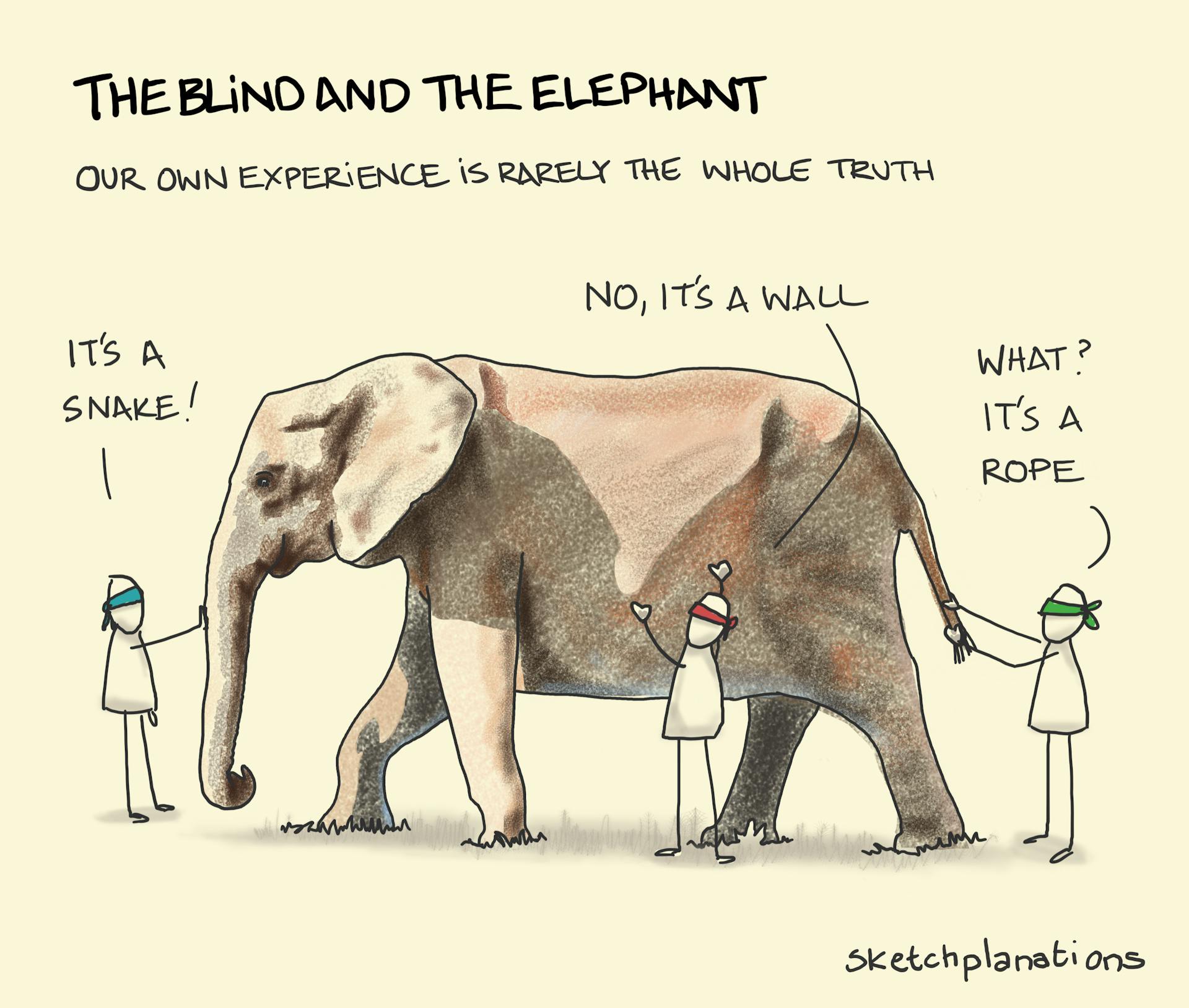
Figure 2: The elephant and the blind parable illustrating how limited, subjective experience shapes individual realities and, potentially, interpersonal conflicts. From Hey (2024).
The compromise: moving away from “all-black” and “all-white”
If Continental Drift Theory was 100% correct and Land Bridge Theory 100% erroneous, only oceanic crust should be found on the ocean floor between the rifted continents, which is not the case. Looking more closely at the location of inferred land bridges (Fig. 1), a pattern emerges. All the land bridges inferred by paleontologists (e.g., Gregory, 1929; Schuchert, 1931; von Ihering, 1931) coincide with major transform faults, microcontinents, regions of anomalously thick (c. 15–40 km thick; i.e., not entirely oceanic) crust offshore, and continental salients (i.e., broad regions of continental crust jutting outward into oceanic domain – e.g., Rio Grande Rise and Walvis Ridge in the South Atlantic; Fig. 3), which laid the foundation of Orogenic Bridge Theory (Koehl & Foulger, 2025).
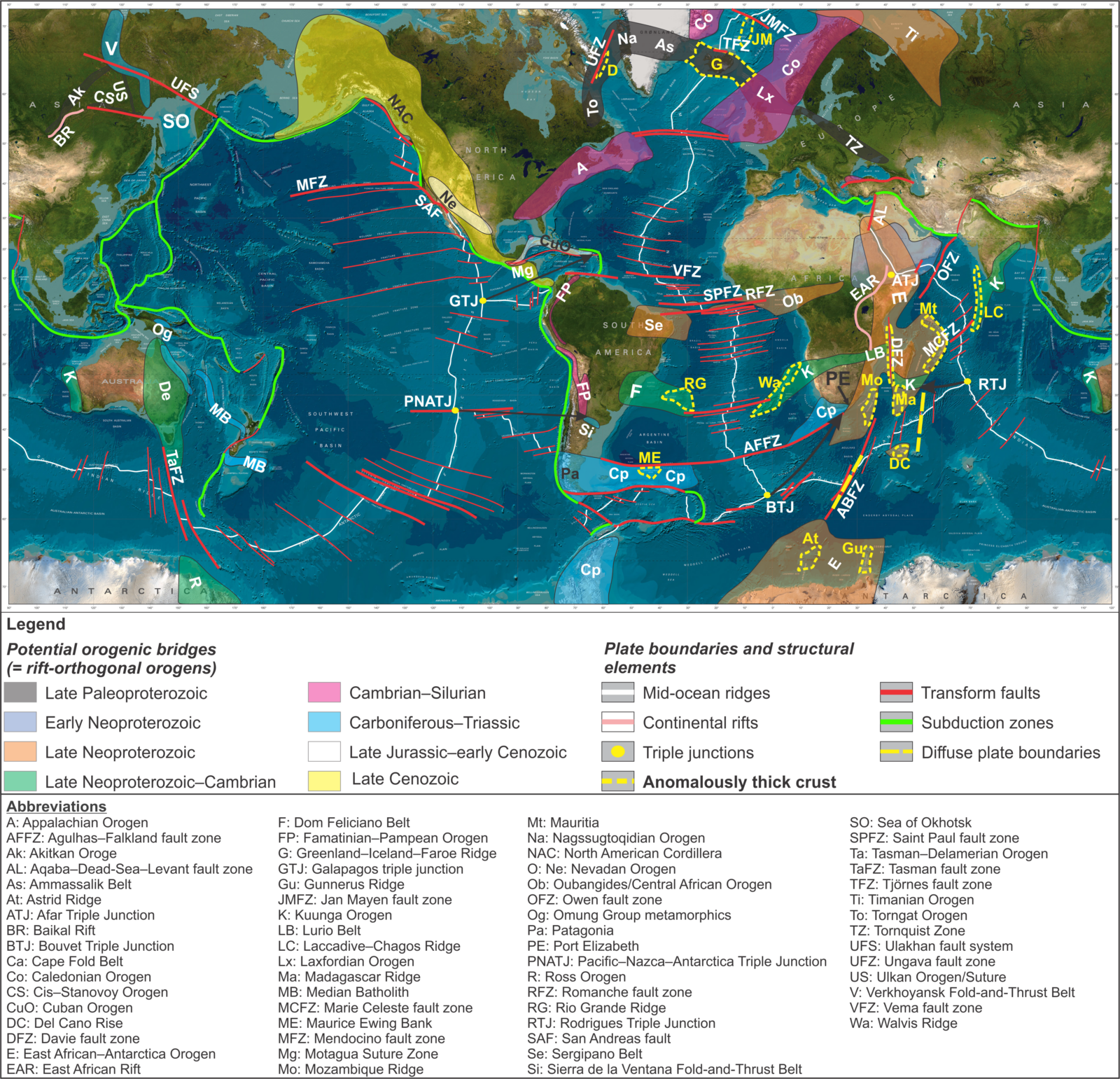
Figure 3: Global correlation of presumed land bridges, major transform faults, anomalously thick offshore crust, microcontinents, and rift-orthogonal orogens. Modified after Koehl & Foulger (2025).
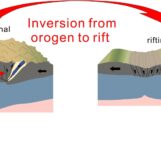
We propose a framework that reconciles the tectonic and paleontological records, suggesting that narrow, emerged corridors and groups of islands may have locally connected the rifted continents beyond initial breakup, including at the location of the so-called land bridges (Fig. 4; Koehl & Foulger, 2025). During rifting, continental crust is not thinned uniformly and some barriers (e.g., old orogens) oriented obliquely to the propagating rift may locally delay breakup and facilitate the formation of transform faults and microcontinents (e.g., Koehl, 2025; Koehl & Mottram, 2025; Longley et al., 2024).
A potential formation mechanism for orogenic bridges is through enhanced friction between the asthenosphere and lithosphere (basal shear), which occurs preferentially along N–S- and E–W-trending axes (e.g., Doglioni et al., 2015; Vérard et al., 2012). Extension-parallel orogenic structures in the lower crust and upper mantle are stretched for extended periods through ductile shearing, thus creating differential plate movements with adjacent orogenic structures parallel to the extension direction and, thus, in the formation of major transform faults and delayed breakup. Potential causes of basal shear include Earth’s axial spin and/or tidal forces (e.g., Moon and Sun gravitational pull; Doglioni et al., 2015; Zaccagnino & Doglioni, 2022).
Orogenic bridges provide potential migration routes for terrestrial species for some time after the onset of seafloor spreading where the crust has been thinned quicker, e.g., westwards migration of rodents, primates, and lizards (Montheil et al., 2026) and eastward migration of hoatzins (birds with weak flight capabilities; Mayr et al., 2011), Turdidae (passerine birds; Dantur et al., 2026), and Asteraceae (plant of daisy family; Katinas et al., 2013; Fig. 4). When considered together with island hopping or short-distance rafting on vegetation islands, “orogenic bridges” could be a powerful compromise to reconcile the fossil and tectonic records.
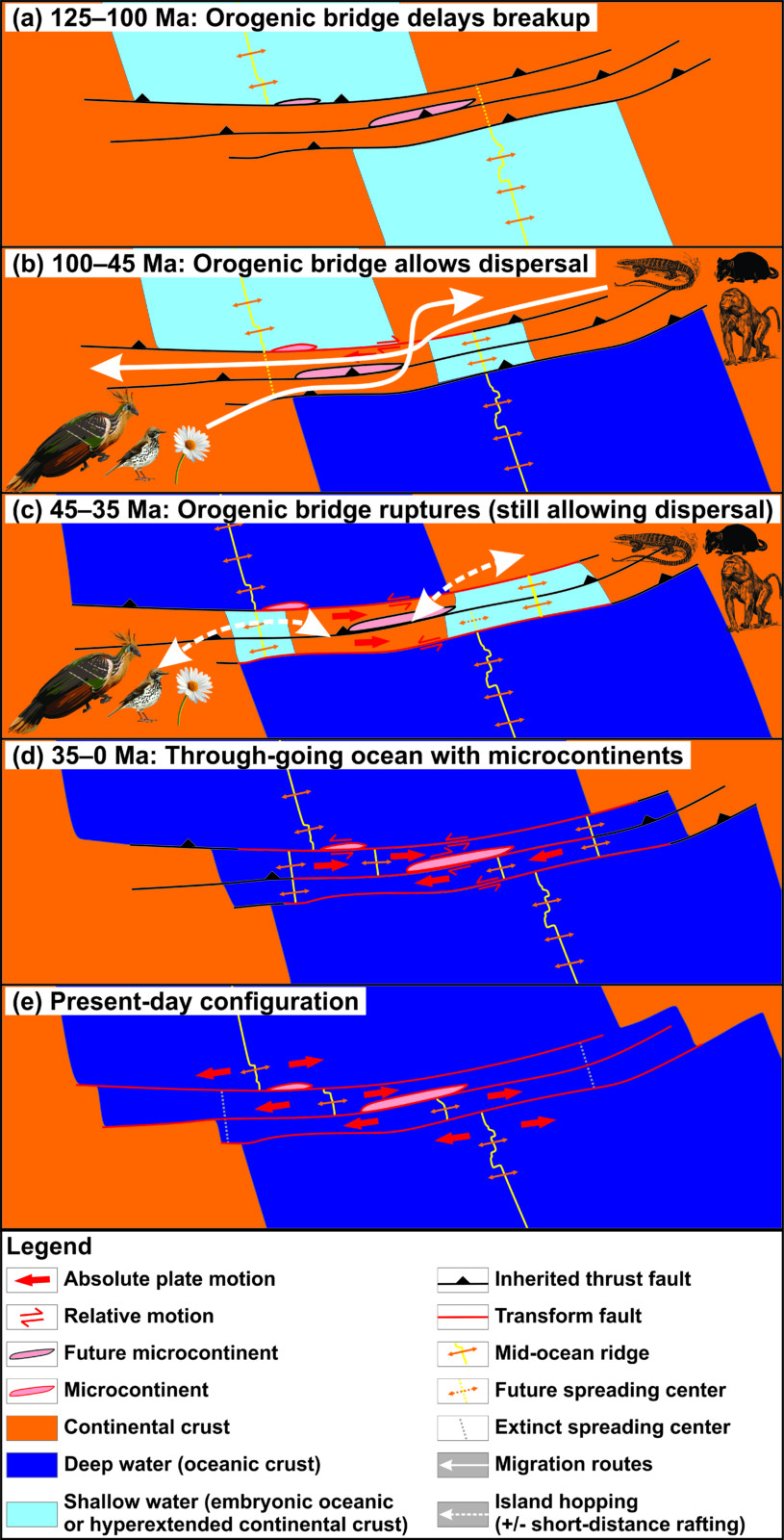
Figure 4: Formation of transform faults and microcontinents between northeastern Brazil and western Africa along inherited rift-orthogonal thrusts. From Koehl & Foulger (2026).
A more recent case further illustrates the concept of “orogenic bridges”. In the Bay of Mount St Michel in northwestern France, the Bishop of Coutances regularly walked from the mainland to Jersey during the Middle Age. Jersey is now separated from the mainland by a 20 km wide shallow sea. Structural studies have revealed that, back then, the island was connected to coastal villages by a narrow strip of land above a now submerged Alpine thrust (Lefort et al., 2021). Despite differences in timescale, this anecdote shows that inherited thrusts can temporarily enable the dispersal of terrestrial species across generally submerged terrains and that compromises are key to scientific progress.
Much work remains to further test and constrain existing orogenic bridges. Promising avenues include synergies between industries and researchers on the interpretation of recent seismic reflection and geophysical data and IODP initiatives at the proposed orogenic bridges and geodynamic modelling to constrain potential key controlling parameters. Fancy joining the fun? I am only an email away!
References

Bonfá‐Araujo B, Oshio A, Hauck-Filho N: Seeing Things in Black-and-White: A Scoping Review on Dichotomous Thinking Style. Jpn Psychol Res. 2021;64(4):461–472. 10.1111/jpr.12328

Dantur AG, Bertelli S, Cunha Almeida F, et al.: Reconstructing the global radiation of Turdidae (Aves: Passeriformes) using explicit geographic ranges under two different palaeogeographic scenarios. Cladistics. 2026:1–14. 10.1111/cla.70040

Doglioni C, Carminati E, Crespi M, et al.: Tectonically asymmetric Earth: From net rotation to polarized westward drift of the lithosphere. Geosci Front. 2015;6:401–418. 10.1016/j.gsf.2014.02.001

Du Toit AL: A geological comparison of South America with South Africa. With a Palaeontological Contribution by F. R. Cowper Reed, Carnegie Institution of Washington, 381, Washiington,1927. https://paleoarchive.com/literature/DuToit1927-GeologicalComparisonSouthAmericaSouthAfrica.pdf

Gregory JW: Proceedings of the Geological Society of London. 1929;86. 10.1144/gsl.jgs.1930.086.01-04.01

Hess HH: History of Ocean Basins. In: Petrologic Studies: a volume to honor A. F. Buddington. Edited by: Engel, A. E. J., James, H. L. & Leonard, B. F., Geological Society of America, New York, New York, USA, 1962;12:599–620. https://www.mantleplumes.org/WebDocuments/Hess1962.pdf

Hey J: Big Ideas, Little Pictures: Explaining the world one sketch at a time. Media Lab Books, New York, New York, USA. 2024. https://sketchplanations.com/the-blind-and-the-elephant

Houle A: Floating Islands: A Mode of Long-Distance Dispersal for Small and Medium-Sized Terrestrial Vertebrates. Divers Distri. 1998;4(5/6):201–216. http://www.jstor.org/stable/2999827

Jacobs LL, Flynn LJ, Scotese CR, et al.: The Early Cretaceous Borborema-Cameroon dinosaur dispersal corridor. In: Vertebrate paleoichnology: a tribute to Martin Lockley. Edited by: Taylor, L. H., Raynolds, R. G. and Lucas, S. G. New Mexico Museum of Natural History and Science Bulletin,2024;95:199–212. https://igeo.ufrj.br/inc/isc/3/03_139_Jacobs%20etal.pdf

Katinas L, Crisci JV, Hoch P, et al.: Trans-oceanic dispersal and evolution of early composites (Asteraceae). PPEES. 2013;15(5):269–280. 10.1016/j.ppees.2013.07.003

Koehl JBP: The myth of the De Geer Zone. Open Res Europe. 2025;4:1. 10.12688/openreseurope.16791.2

Koehl JBP, Foulger GR: Orogenic bridge theory: towards a predictive tool for past and future plate tectonics. Open Res Europe. 2025;4:76 awaiting peer review. 10.12688/openreseurope.17238.2

Koehl JBP, Foulger GR: Black and white: the bias that shaped plate tectonics and the ongoing > 100 years old divide of the geoscience community. Geophys Res Abstr, EGU General Assembly, Vienna, Austria, 3–8th May 2026. 2026;EGU26-507. 10.5194/egusphere-egu26-507

Koehl JBP, Mottram CM: Proof of concept for Orogenic Bridge Theory in the Fram Strait using U–Pb geochronology of syn-kinematic carbonates. Open Res Europe. 2025;5:231. 10.12688/openreseurope.21057.1

Lefort JP, Chambers P, Danukalova G: L'évêque de Coutances pouvait-il réellement se rendre à pied sec sur Jersey pendant le Moyen-âge? [Could the bishop of Coutances really go by feet on Jersey during the Middle Ages?] Bull Soc géol minéral Bretagne. 2021;D(19):33–42. https://bretagne-environnement.fr/sites/default/files/notices_documentaires/files/Serie-D-n%C2%B019-2021.pdf

Longley L, Phethean JJJ, Schiffer C: The Davis Strait proto-microcontinent: The role of plate tectonic reorganization in continental cleaving. Gondwana Res. 2024;133:14–29. 10.1016/j.gr.2024.05.001

Mayr G, Alvarenga H, Mourer-Chauviré C: Out of Africa: Fossils shed light on the origin of the hoatzin, an iconic Neotropic bird. Naturwissenschaften. 2011;98:961–966. 10.1007/s00114-011-0849-1

Montheil L, Licht A, Beard KC, et al.: Across ancient oceans: Eocene dispersal routes of Asian terrestrial mammals to Europe, Afro-Arabia and South America. Earth Sci Rev. 2026;273:15352. 10.1016/j.earscirev.2025.105352

Schuchert C: Gondwana land bridges. GSA Bulletin. 1932;43(4):875–916. 10.1130/GSAB-43-875

Vérard C, Hochard C, Stampfli G: Non-random distribution of euler poles: is plate tectonics subject to rotational effects? Terra Nova. 2012;24(6):467–476. 10.1111/j.1365-3121.2012.01085.x

Vine FJ, Matthews DH: Magnetic anomalies over oceanic ridges. Nature. 1963;199:947–949. 10.1038/199947a0

Von Ihering H: Land-Bridges across the Atlantic and Pacific Oceans during the kainozoic Era. Q J Geol Soc. 1931;87:376–391. 10.1144/GSL.JGS.1931.087.01-04.14

Wegener AL: Die Entstehung der Kontinente und Ozeane [The Origin of Continents and Oceans]. Braunschweig Druck und Verlag von Friedr. Vieweg & Sohn Akt.-Ges. 4th edition, Braunschweig, Germany. 1929. https://archive.org/details/Entstehung1929/page/15/mode/2up

Zaccagnino D, Doglioni C: Earth’s gradients as the engine of plate tectonics and earthquakes. Riv Nuovo Cimento. 2022;45:801–881. 10.1007/s40766-022-00038-x