

Star Wars is one of the most influential science-fiction worlds created in our time. The central theme revolves around the struggle between the tyrannical Galactic Empire and the rebels trying to bring it down. Star Wars has many reasons to pull you in: iconic lightsaber duels, technological advancements such as hyperspace travel, and perhaps most importantly for a geologist: a remarkable number of habitable planets in the galaxy. The planets in the Star Wars galaxy also has diverse flora and fauna. Planets with lava, ice, forests, deserts, inhabited by various species like large, cunning wookiees and crafty Anzellans. But how realistic are these planets they inhabit?
To try and answer that question, today we go on a “planetary” quest around our solar system or the Milky Way galaxy and try to find twins of Star Wars planets, but we don’t yet have the technology of hyperspace travel. Therefore, today we turn towards our own planet, Earth, which has undergone dramatic geological changes, and see if different stages of its evolution can match conditions of some planets in the Star Wars galaxy.
So let’s begin our “geodynamic” quest by travelling back to the beginning of Earth’s history. The young Earth was not the blue and green planet it is today.
Mustafar: Revenge of the Sith and the Hellish Earth.
Mustafar is a volcanic planet in Star Wars. It is shown as glowing bright red and is covered in volcanic fields and lava flows. It is the backdrop of the iconic duel between Obi-Wan Kenobi and Anakin Skywalker.
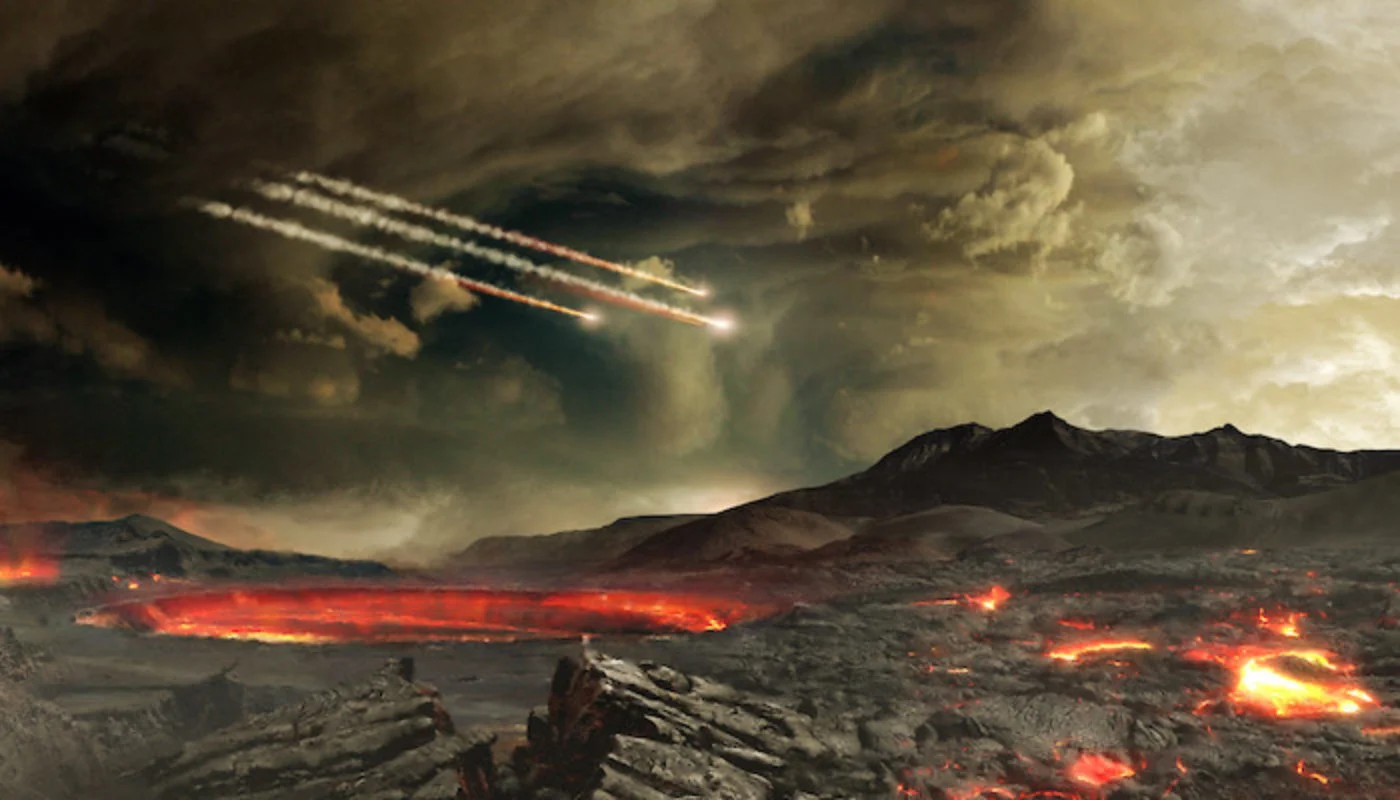
Artist’s impression of the early Hadean Earth, when intense volcanism and widespread lava fields may have made our planet look surprisingly like Mustafar (Image Credit: NASA’s Goddard Space Flight Center Conceptual Image Lab).
The hellish condition that Obi-Wan had to endure at Mustafar could possibly be found 4.5 billion years ago on Earth. This geologic interval is called the Hadean, when Earth had intense volcanism. The surface of the Earth probably had similar lava fields with traces of stable crust. The atmosphere during that time would have been significantly different. It was probably thicker, with more CO2 and sulphur. The surface temperature might also have been fairly hot. So, kudos to Obi-Wan Kenobi for surviving there!
Let’s move on from all the volcanic planets. It’s getting Hoth out there.
The Phantom Menace of Plate Tectonics
At some point in Earth’s history, plate tectonics began to operate, which shaped the planet in multiple ways. Tectonic plates are created in mid-oceanic ridges and are destroyed at subduction zones. Over millions of years, this movement of tectonic plates cause continents to come together and later break apart.
Supercontinents can break apart through continental rifting, often accompanied by an increased volcanic activity. This volcanism releases CO2 into the atmosphere, which strengthens the greenhouse effect and potentially warms Earth. During different phases of the supercontinent cycle, either during rifting and breakup or mountain building during collision, a lot of fresh, unweathered rocks are exposed. Chemical weathering of these rocks removes CO2 from the atmosphere, which can also cause cooling.
If CO2 removal becomes greater than the amount being supplied by volcanism, the climate can cool. As ice cover expands, it reflects more sunlight into space, causing further cooling through the ice-albedo feedback.
The Empire Strikes Back: Hoth and Snowball Earth
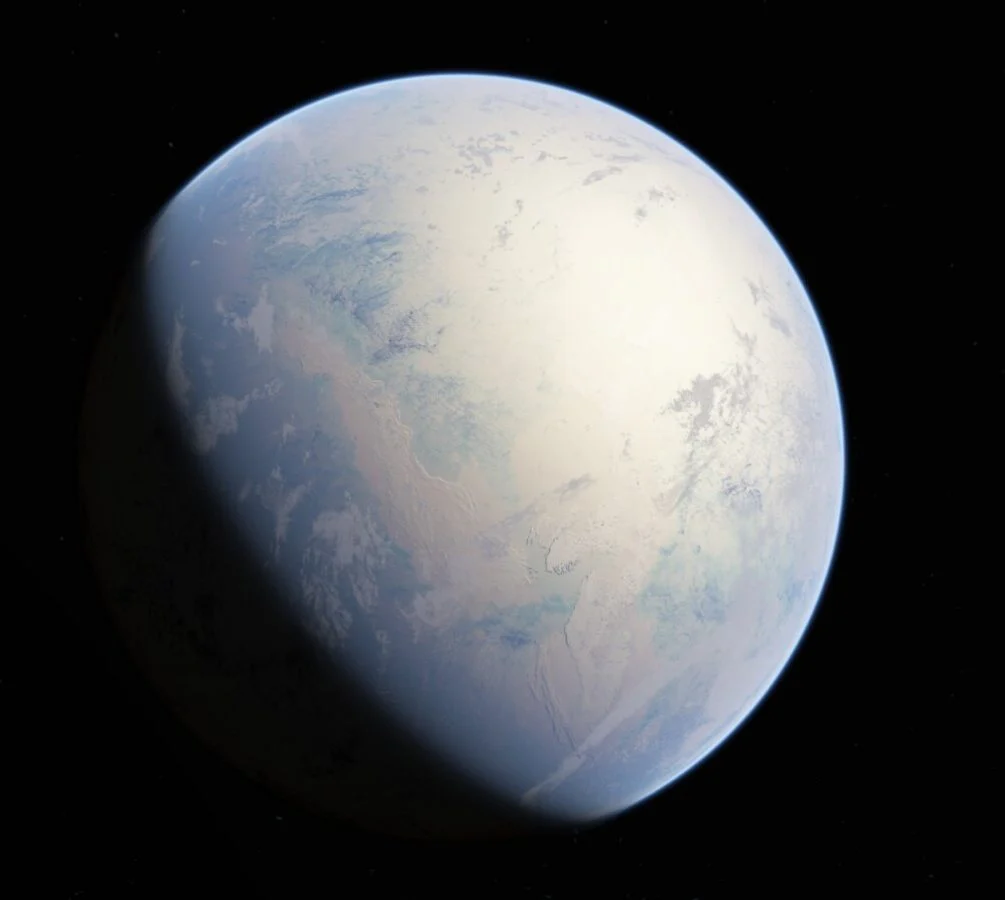
Artist’s impression of a Snowball Earth, when ice may have covered much of the planet during the glaciation periods, making it similar to Hoth (Image credits: Oleg Kuznetsov).
Hoth is a rocky planet covered by ice and glaciers. Temperatures on Hoth were always frigid and are known to drop to -60oC. Hoth hosted the Echo rebel base and was the temporary headquarters of the Rebel Alliance. This base was attacked by the Galactic Empire in the Battle of Hoth. A major defeat for the Rebels it was!
The conditions on Hoth remind me of snowball Earth, a condition when a large section of Earth’s surface was covered by ice. Earth has experienced such episodes in its history. Between roughly 720 and 635 million years ago, Earth experienced a large-scale cooling event during the breakup of the supercontinent Rodinia.
But Snowball Earth would not last forever. The ice-covered surface would reduce weathering, and therefore the removal of CO2 from the atmosphere would be significantly less. Eventually there would be enough CO2 in the atmosphere to increase the greenhouse effect and melt the ice.
Return of the Jedi: Endor, and a Warmer Earth
Endor is actually a moon in a very remote part of the galaxy. It is covered in dense woodlands, tall mountains, and is home to the Ewoks. It has a warm climate. Due to its remote location, it was a perfect place for the Galactic Empire to establish a shield generator, intended to protect the incomplete Death Star, also known as the planet destroyer. In the Battle of Endor, the Rebel Alliance and Ewoks destroyed the shield generator. The Death Star was also destroyed along with Emperor Palpatine and Darth Vader. It was a monumental victory.
Earth has also experienced periods that were much greener and warmer than today owing to the greenhouse effect. During such greenhouse periods, such as the Cretaceous, Earth had high CO2 and the oceans were warmer. These conditions can very well represent the geology and atmospheric conditions of Endor.
So, we have seen that plate tectonics can dramatically shape a planet’s climate and morphology. But will it continue forever? What happens when, in a “geologically” distant future, plate tectonics ceases to exist?
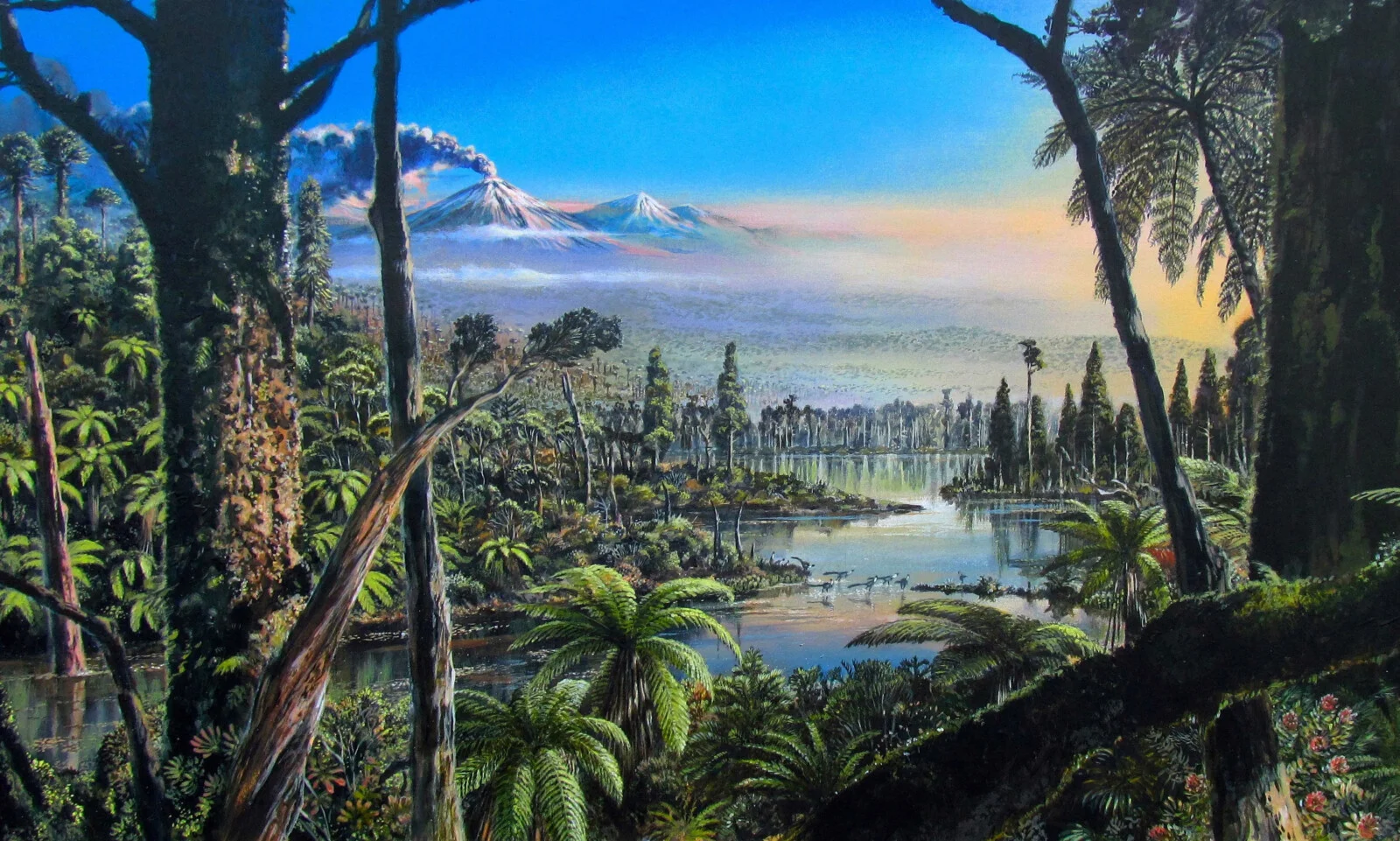
Reconstruction of a warm, forested Earth during warm periods analogous to Endor.(Image credit: Alfred-Wegener-Institut/J. McKay)
No Hope at Tatooine?
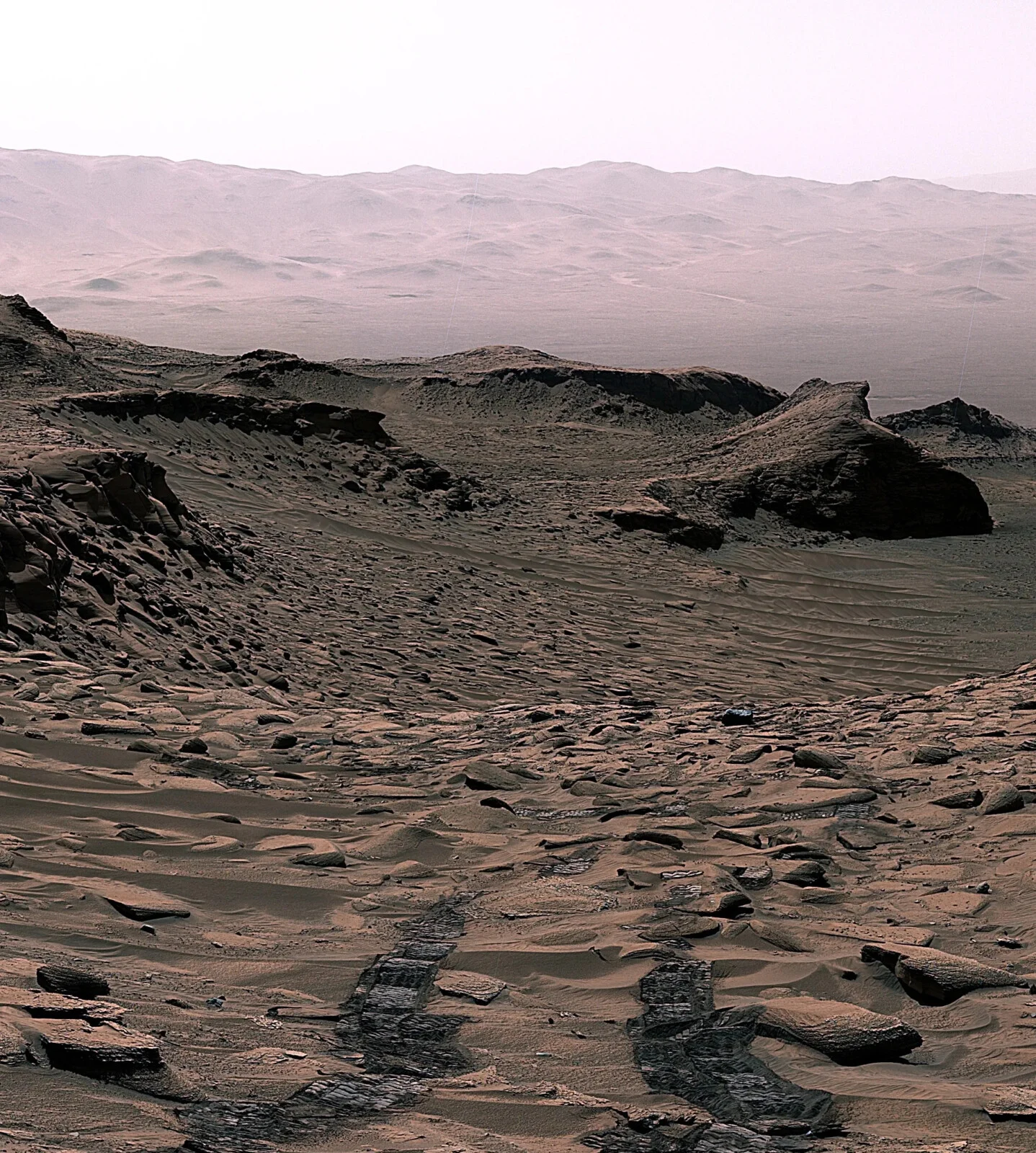
The dry and barren landscape of Mars offers a glimpse of what a Tatooine like world might look like in our own Solar System (Image credit: NASA/JPL-Caltech/MSSS).
Tatooine is a desert planet, orbiting two suns. The landscape is covered with sand dunes, mountains, and canyons. There is no water at the surface, and the planet’s residents have to farm water from the atmosphere. It is a very harsh planet to live in.
I think Earth devoid of plate tectonics would look a lot more like Tatooine. The Earth’s declining internal heat would gradually reduce tectonic activity, weakening the climate-tectonic forcing. Earth would become geologically quieter, and depending on how its climate evolved, some regions could become increasingly arid and desert-like.
Let’s put our thinking caps on now and explore another possible future Earth might have. On a planet inhabited by “intelligent” life, Nature is not the only force capable of shaping the environment. Humans themselves can alter climate and ecosystems. Sometimes for the better, sometimes for worse.
Coruscant and a Dystopian future?
Now we turn to Coruscant to get a glimpse of what this alternate future might be. Coruscant is a planet which is the political and administrative centre of the Galactic Republic and the Empire. Unlike Hoth, Mustafar or Tatooine, there is no Nature left on Coruscant. The entire planet is covered by one enormous city.
If we squeeze Earth’s 4.5-billion-year history into a single hour, modern humans would appear only in the very last fraction of a second. Yet we have had an enormous impact on Earth. The word Anthropocene comes from anthropos, meaning human, and kainos, meaning new. It is the proposed geological epoch where human activity is becoming an increasingly dominant force shaping Earth’s climate and ecosystems, at a rate which is extreme on a geologic timescale. But of course, Earth becoming one gigantic city is still a science fiction scenario, but comparison with Coruscant raises an interesting question: if humanity survives for millions of years, how much of the planet will still be shaped by nature, and how much will be shaped by us?
A final question: How does Luke Skywalker manage to breathe on every planet he visits? Perhaps the Force is really strong with him!
References:
1. Bressan, D. (2022, May 4). The geology of star wars – bressan-geoconsult. Bressan-Geoconsult.Eu. http://www.bressan-geoconsult.eu/the-geology-of-star-wars/
2. Lemon, K. (2015, December 17). Jedi geology or sith science: The force was calling. Blogspot.Com. https://britgeopeople.blogspot.com/2015/12/jedi-geology-or-sith-science-force-was.html
3. Earth as the inspiration for star wars planets. (2026). Banthaskullcom. https://www.banthaskull.com/story/news_earth_as_the_inspiration_for_star_wars_planets