NH
Natural Hazards

Tsunami hazard

Hunting for historical Adriatic meteotsunamis

Hunting for historical Adriatic meteotsunamis

Before modern instruments, our only clues about past sea events came from written records and folklore. Along the eastern Adriatic coast, stories of sudden floods and “tidal waves” (locally called šćiga) have been passed down for generations. These waves, described as rapid rises and falls of the sea that could flood or empty harbours within minutes, were carved into Adriatic coastal life as rare ...[Read More]

Modern Solutions for Ancient Hazards: Speaking with Jacopo Selva, the 2024 EGU Plinius Medalist

Modern Solutions for Ancient Hazards: Speaking with Jacopo Selva, the 2024 EGU Plinius Medalist

Jacopo Selva is an associate professor at the University of Naples Federico II, Italy, and a former researcher at the Istituto Nazionale di Geofisica e Vulcanologia (INGV), Italy. His research on seismic, volcanic, and tsunami hazards has been instrumental in advancing our understanding of these natural phenomena, particularly by developing probabilistic methods for hazard assessment and forecasti ...[Read More]

Stromboli: The Lighthouse of the Mediterranean

Stromboli: The Lighthouse of the Mediterranean

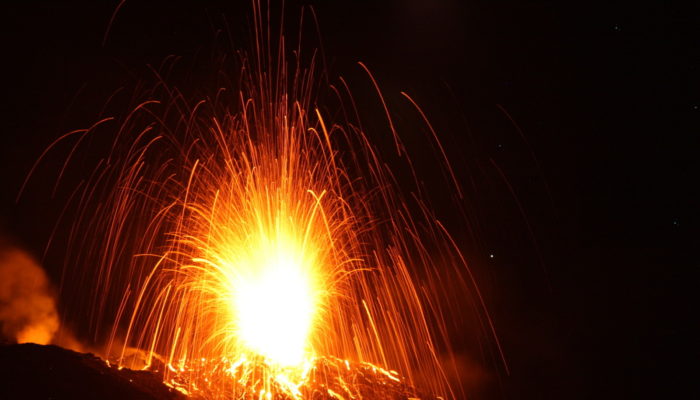
In the last months two paroxysmal explosive eruptions took place at Stromboli volcano: the first one, totally unexpected, on 3rd July (Video 1) that sadly cost the life of a person and the second and, currently, last one about three weeks ago, on the 28th August (Video 2). Today we try to answer a couple of questions about Stromboli and its eruptions. Are these paroxysmal eruptions common or rare ...[Read More]

The collapse of Anak Krakatau volcano: a scenario envisaged

The collapse of Anak Krakatau volcano: a scenario envisaged

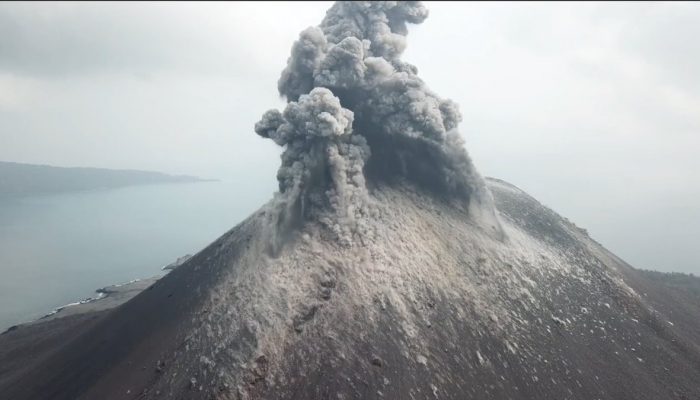
The volcano ID Krakatoa or Krakatau, in Indonesia, is part of the Ujung Kulon National Park, a UNESCO World Heritage property, and among the most (in)famous volcanoes in the world. From a geological point of view, it is part of the Indonesian island arc system generated by the north-eastward subduction of the Indo-Australian plate (Figure 1). Krakatau is now a caldera type of volcano thanks to the ...[Read More]