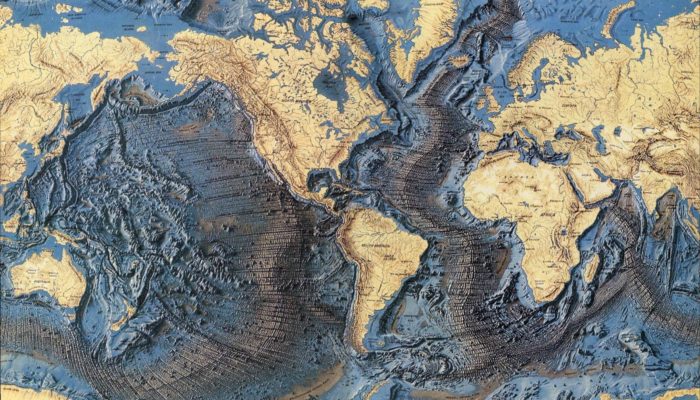
This weeks post is all about the importance of boundaries. Plate boundaries that is. Jean-Christophe Wrobel-Daveau and Graeme Nicoll tell us why we should care where plate boundaries are and how they evolve through time, when attempting to reconstruct past plate motions. Global plate tectonic models are an incredible way to synthesise geological knowledge to gain both direct and indirect insight i ...[Read More]
Modelling the deformation in the Indian plate and the India-Eurasia collision zone
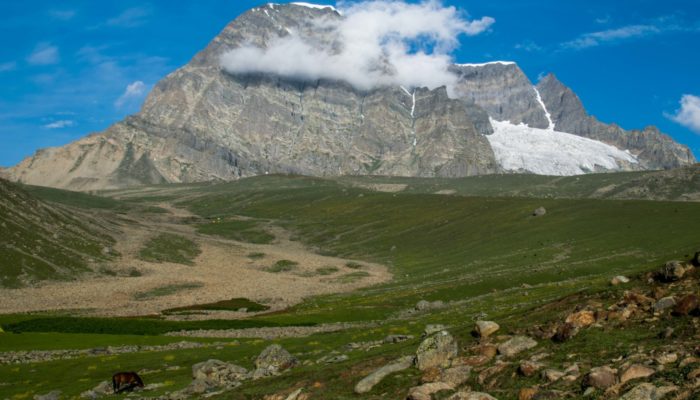
A complete fluid dynamical approach of modeling the Earth’s deformation can not provide a complete picture due to presence of rigid lithospheric plates. In this week’s news and views, Srishti Singh, scientist at National Geophysical Research Institute, India, explains how coupled models of lithosphere dynamics and mantle convection are developed. The ongoing collision of the Indian plate wi ...[Read More]
2021: 100th year of the craton concept and beyond
One hundred years back, Leopold Kober first introduced the term “Kratogen”. With time, the concept of kratogen has evolved, and they are now known as cratons. In this week’s news and views, Jyotirmoy (@GeophyJo), a PhD student from the Indian Institute of Science revisits the history of craton science: how the craton concept has evolved and what are the modern problems related to them. &nbs ...[Read More]
The Sassy Scientist – The Story of Plate Tectonics
As a new coping mechanism with reality, Sascha has been digging into some science history and asked: How did scientists discover plate tectonics? Dear Sascha, I do enjoy a good walk on the memory lane of scientific discoveries. You might know by now that great insight is gained when we look at data with fresh eyes. Hence, lots of advances in certain narrow scientific fields come from outsiders. In ...[Read More]