GD
Geodynamics

numerical modelling

Modelling the deformation in the Indian plate and the India-Eurasia collision zone

Modelling the deformation in the Indian plate and the India-Eurasia collision zone
A complete fluid dynamical approach of modeling the Earth’s deformation can not provide a complete picture due to presence of rigid lithospheric plates. In this week’s news and views, Srishti Singh, scientist at National Geophysical Research Institute, India, explains how coupled models of lithosphere dynamics and mantle convection are developed.  The ongoing collision of the Indian plate …[Read More]

Rayleigh-Taylor instability in geodynamics

Rayleigh-Taylor instability in geodynamics

Flow against gravity is a common feature in the geodynamic phenomenon. In this week’s Geodynamics 101, Dip Ghosh from Jadavpur University Geodynamics Lab will explain the fundamentals of Rayleigh-Taylor instability: A key to understanding the anti-gravity flow. It has long been realized that most of the geodynamic processes can be described in terms of slow …[Read More]

Carbon in the cloud

Carbon in the cloud

If I asked you about what your carbon footprint is, your mind might jump to the food choices you make when at the supermarket, or how many conferences you fly to when you could get a train (well, not now, but you know, back in ye olden days). In this week’s post, Eoghan Totten, a …[Read More]

Rift linkage and rotating microplates

Rift linkage and rotating microplates

2020 left your head spinning? This week Derek Neuharth from GFZ Potsdam introduces us to the spinning microplates that can be found in extensional plate boundaries such as the East African Rift System and the East Pacific Rise. Divergent plate boundaries Microplates are enigmatic features that form in the boundaries between tectonic plates. Generally, plate …[Read More]

2021: 100th year of the craton concept and beyond

2021: 100th year of the craton concept and beyond

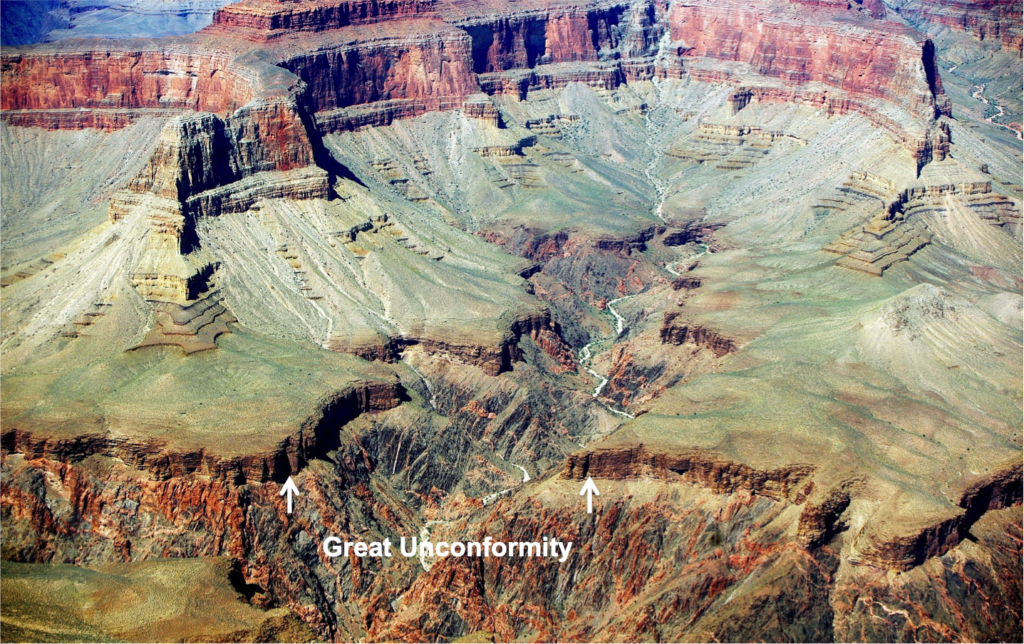
One hundred years back, Leopold Kober first introduced the term “Kratogen”. With time, the concept of kratogen has evolved, and they are now known as cratons. In this week’s news and views, Jyotirmoy (@GeophyJo), a PhD student from the Indian Institute of Science revisits the history of craton science: how the craton concept has evolved and …[Read More]

What controls Victoria microplate rotation in the East African Rift?

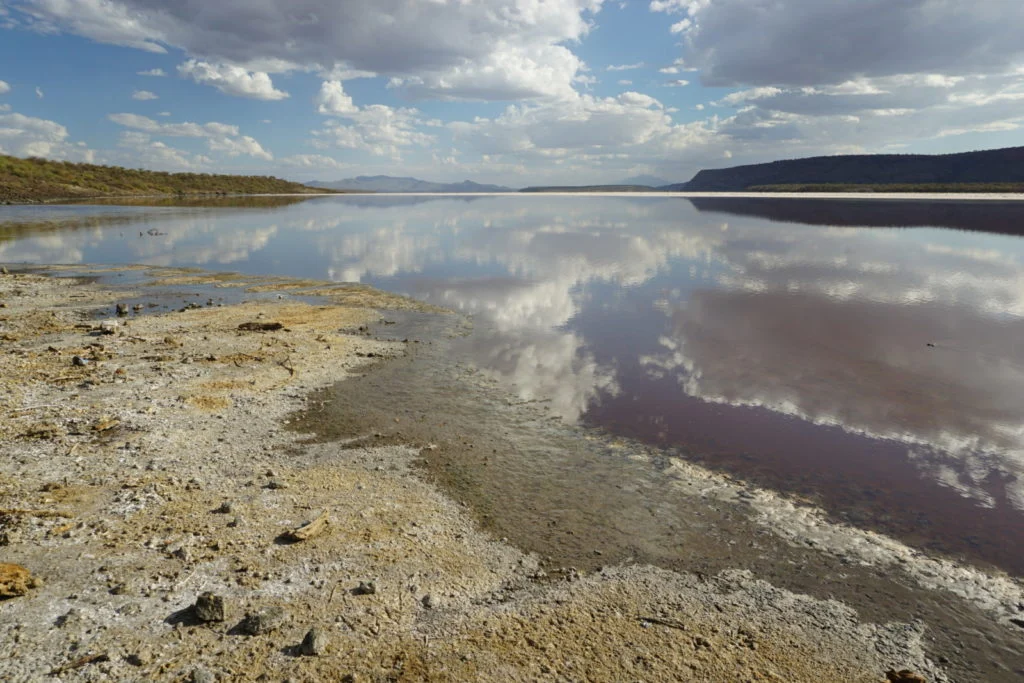
Lake Magadi, Kenya.

This week in News & Views, Anne Glerum, postdoc at GFZ Potsdam, discusses how her numerical models support a lithosphere-driven mechanism for the rotation of large continental microplates, like Victoria in the East African Rift System. The East African Rift System (EARS) is a newly forming divergent boundary between the Nubian and Somalian plates (Fig. …[Read More]

Understanding intraplate earthquakes

Understanding intraplate earthquakes

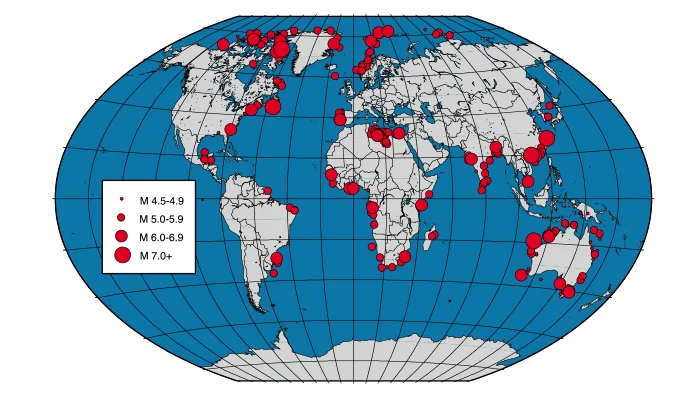
  One of the basic tenets of plate tectonics states that deformation occurs along plate boundaries while plate interiors remain almost undeformed. Intraplate earthquakes  defy this principle and hence are quite enigmatic.  In this week’s News and Views, Prof. Attreyee Ghosh from the Centre for Earth Sciences, Indian Institute of Science, tries to explain the …[Read More]

Can plume-lithosphere interaction initiate a modern subduction zone?

Plume-induced subduction inititation?

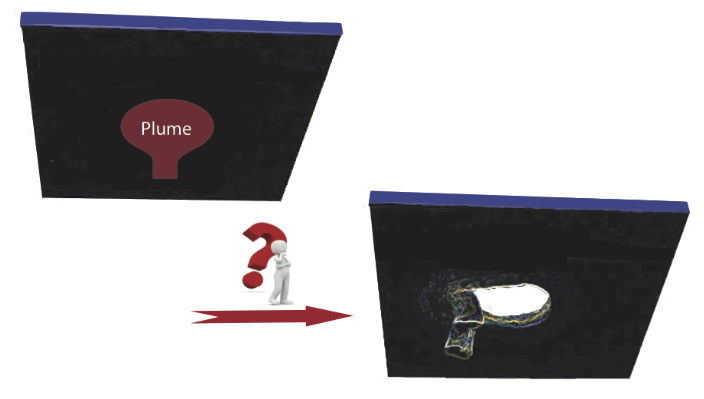
This week in News & Views, dr. Marzieh Baes from GFZ Potsdam introduces us to the mechanisms behind subduction initiation. Moreover, she discusses the different types of subduction initiation in reaction to plume-lithosphere interaction that she observed in her recent 3-d numerical modelling study. Possible scenarios of subduction initiation According to plate tectonics, oceanic plates …[Read More]