GD
Geodynamics

modelling

Magnetic field generation and its reversal in dynamo models
Magnetic field generation and its reversal in dynamo models
Generation and reversal of the Earth’s magnetic field have remained one of the most controversial topics. In this week’s geodynamics 101, Debarshi Majumder, a PhD student from the Indian Institute of Science, gives a brief overview of the theory of geodynamo reversal and discusses some of the preliminary results obtained from numerical modelling. A planetary magnetic reversal is one of ...[Read More]

The boundaries of plate modelling

The boundaries of plate modelling

This weeks post is all about the importance of boundaries. Plate boundaries that is. Jean-Christophe Wrobel-Daveau and Graeme Nicoll tell us why we should care where plate boundaries are and how they evolve through time, when attempting to reconstruct past plate motions. Global plate tectonic models are an incredible way to synthesise geological knowledge to gain both direct and indirect insight i ...[Read More]

Modelling the deformation in the Indian plate and the India-Eurasia collision zone

Modelling the deformation in the Indian plate and the India-Eurasia collision zone

A complete fluid dynamical approach of modeling the Earth’s deformation can not provide a complete picture due to presence of rigid lithospheric plates. In this week’s news and views, Srishti Singh, scientist at National Geophysical Research Institute, India, explains how coupled models of lithosphere dynamics and mantle convection are developed.  The ongoing collision of the Indian plate wi ...[Read More]

Rift linkage and rotating microplates

Rift linkage and rotating microplates

2020 left your head spinning? This week Derek Neuharth from GFZ Potsdam introduces us to the spinning microplates that can be found in extensional plate boundaries such as the East African Rift System and the East Pacific Rise. Divergent plate boundaries Microplates are enigmatic features that form in the boundaries between tectonic plates. Generally, plate boundary dynamics are divided into three ...[Read More]

Thinking inside the (sand)box

Thinking inside the (sand)box

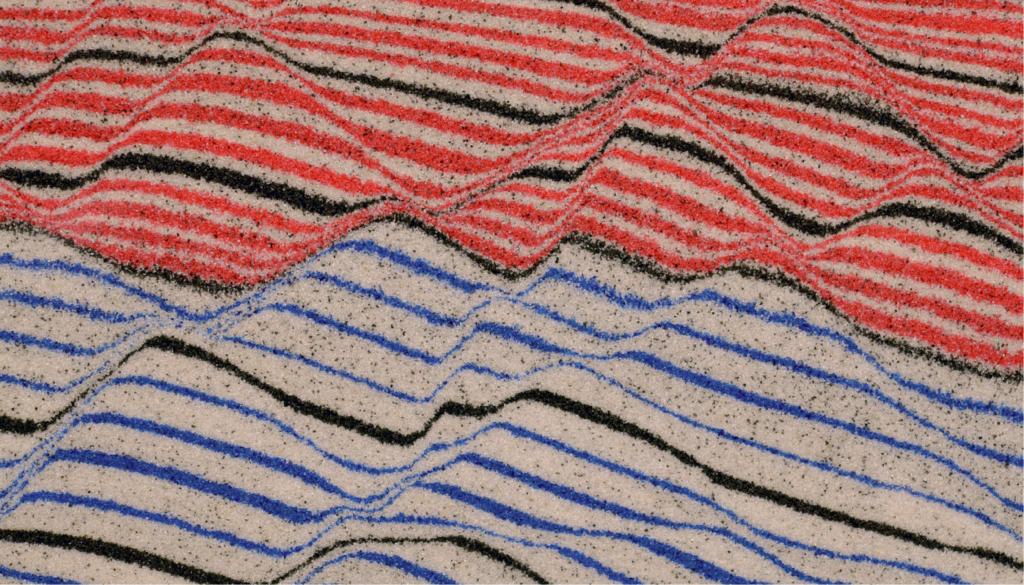
Ahhh analogue models… Those beautiful little (or not so little) worlds inside a box, captivatingly beautiful, impossibly detailed… (sorry, getting carried away, am I?). This week, Alex Hughes gives us the insider’s report on what actually goes on in analogue modelling labs when the “Experiment running, do not disturb!!” sign is on the door. Analogue models have been a ...[Read More]

The Sassy Scientist – Of Codes And Cares

The Sassy Scientist – Of Codes And Cares

On the matter of code choices, Alexa could have asked Siri, but instead chose an old-fashioned medium of enquiry compatible across all operating systems and wrote in to ask: Should I perform my research with an in-house code, an open source code or a commercial code? Dear Alexa, As a famous novel does not quite begin, it is a truth universally acknowledged that a geodynamicist in possession of a g ...[Read More]

Meet the incoming GD President – Jeroen van Hunen

Meet the incoming GD President – Jeroen van Hunen

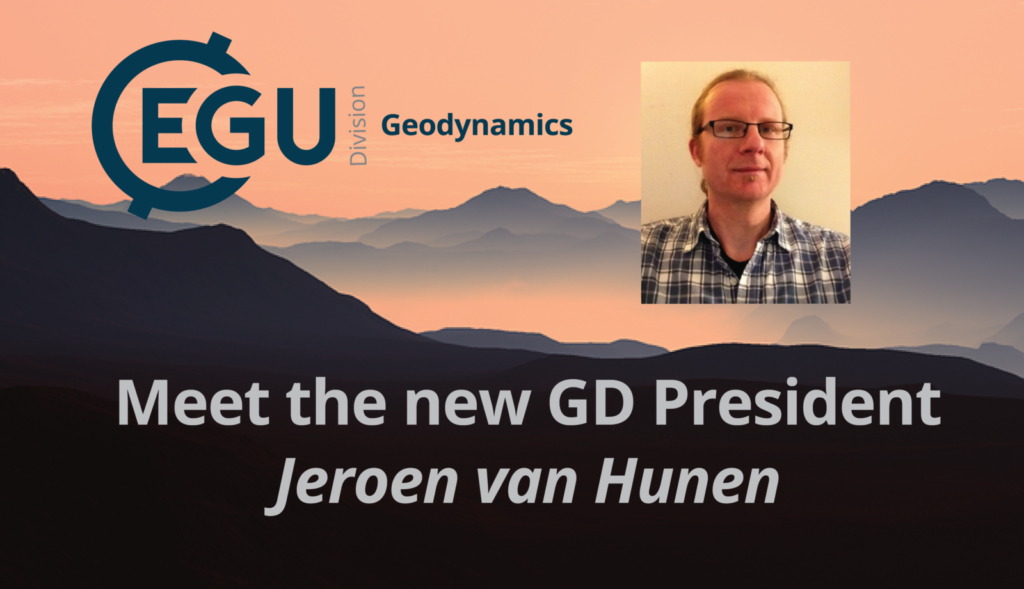
This week on the EGU GD Blog, we interview the newly elected incoming Geodynamics Division President, Jeroen van Hunen (Durham University). Jeroen takes on the role for 2021-2023, from Paul Tackley (ETH Zürich). Jeroen is a Professor within the Department of Geosciences, including the Geodynamics, Geophysics, and The Solid Earth research groups. He is originally from the Netherlands, having studie ...[Read More]

Can plume-lithosphere interaction initiate a modern subduction zone?

Plume-induced subduction inititation?

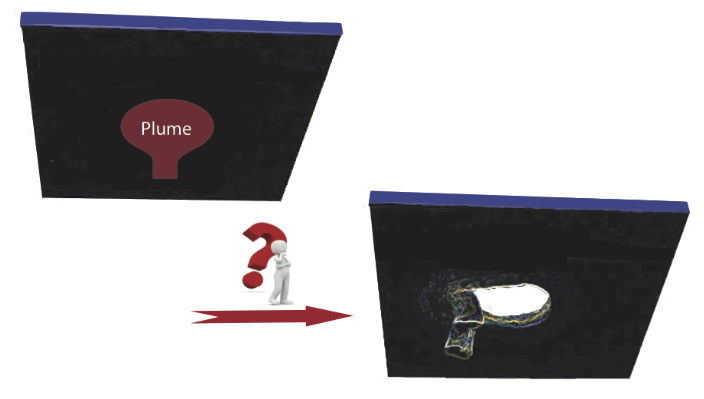
This week in News & Views, dr. Marzieh Baes from GFZ Potsdam introduces us to the mechanisms behind subduction initiation. Moreover, she discusses the different types of subduction initiation in reaction to plume-lithosphere interaction that she observed in her recent 3-d numerical modelling study. Possible scenarios of subduction initiation According to plate tectonics, oceanic plates are for ...[Read More]

Enigmas at depth

Enigmas at depth

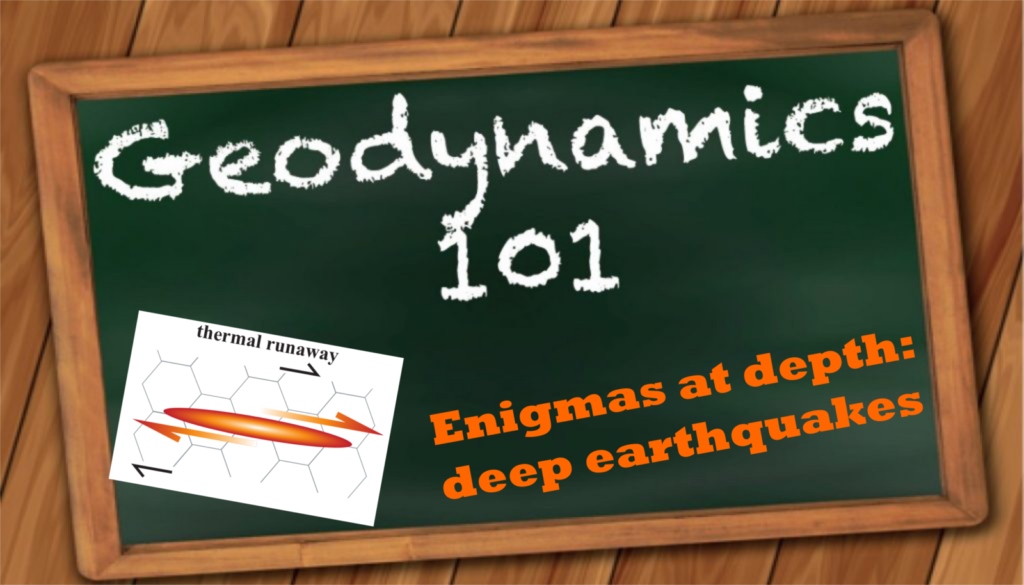
The Geodynamics 101 series serves to showcase the diversity of research topics and/or methods in the geodynamics community in an understandable manner. In this week’s Geodynamics 101 post, Marcel Thielmann, Senior Researcher at the University of Bayreuth, discusses the possible mechanisms behind the ductile deformation at great depths that causes deep earthquakes.  Earthquakes are one of the expre ...[Read More]

What controlled the evolution of Plate Tectonics on Earth?

Great Unconformity - Immensity River, Grand Canyon

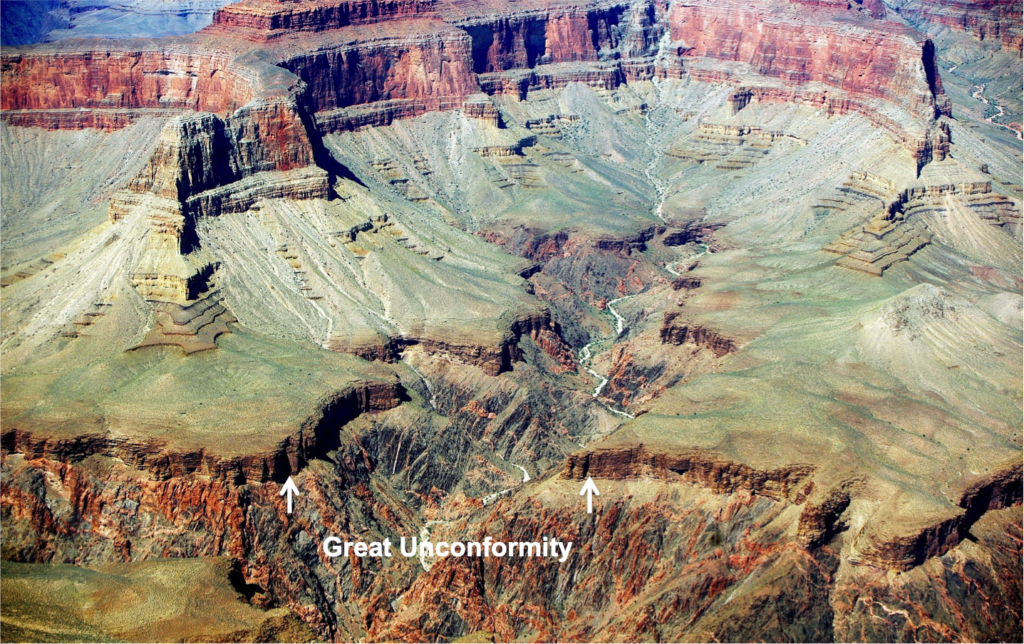
Plate tectonics is a key geological process on Earth, shaping its surface, and making it unique among the planets in the Solar System. Yet, how plate tectonics emerged and which factors controlled its evolution remain controversial. The recently published paper in Nature by Sobolev and Brown suggests new ideas to solve this problem…. What makes plate tectonics possible on contemporary Earth? It is ...[Read More]