GD
Geodynamics

modelling

Building the Earth in a sandbox
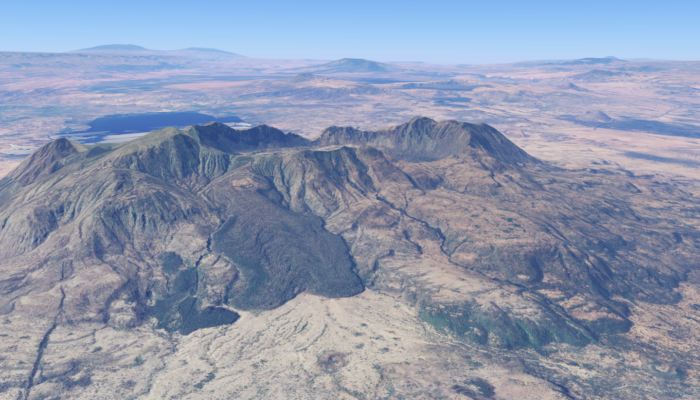
Fentale Volcano

  Building the Earth in a sandbox   The Main Ethiopian Rift stretches for hundreds of kilometers through Ethiopia, a massive fracture where Africa is slowly tearing apart to birth a new ocean. However, the processes driving this continental breakup remain hidden deep beneath layers of volcanic rock and millions of years of geological history. Today, in a laboratory in the heart of the be ...[Read More]
What’s the role of hotspot and oceanic transform faults at ultraslow spreading ridge?

What’s the role of hotspot and oceanic transform faults at ultraslow spreading ridge?

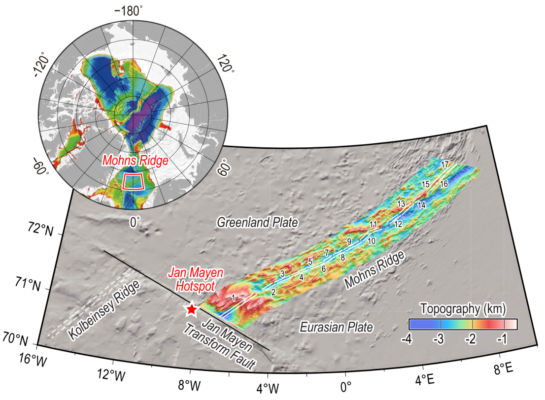
  Mid-ocean ridges (MOR) and hotspots are two types of magmatic activity occurring in the ocean. The MORs are typically associated with another tectonic feature—oceanic transform faults. While numerous studies have focused on the interactions within MORs, hotspots, and transform faults, there has been limited research on cases where a hotspot and a transform fault are located at the same end ...[Read More]

Geekology #1: Matplotlib for geosciences, tips and tricks

Geekology #1: Matplotlib for geosciences, tips and tricks

This week inaugurates a new series of posts: Geekology, fusion of geek and geology. In this section, we will try to unravel tips and tricks of programming applied to geodynamics, from new innovative libraries to good programming practices, interviews with geologists who code and more! To kick off the series, this week’s article is written in collaboration with Baptiste Bordet, doctoral resea ...[Read More]

Modeling the Early Earth: Idealization and its Aims II

Modeling the Early Earth: Idealization and its Aims II

This week we have the second part of Junjie Dong’s insightful blog on modeling the early Earth. Following the discussion (“Modeling the Early Earth: Idealization and its Aims I”) about the major early Earth questions and challenges in modeling early Earth, Junjie now explores  the imprtance of modeling as a scientific endeavor. He presents how one could more effectively model the ...[Read More]

Modeling the Early Earth: Idealization and its Aims I

Modeling the Early Earth: Idealization and its Aims I

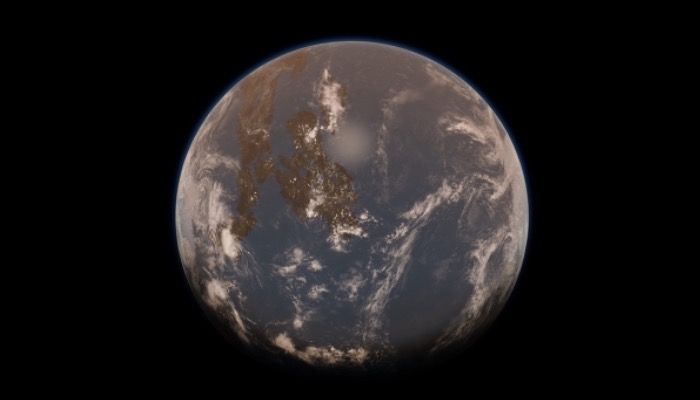
The question of how we came to be is closely tied with how the Earth became what it now is. What was the early Earth like? How did it evolve to become a habitable world? Given a fragmentary rock record, how can we investigate the early Earth and its evolution? Dr. Junjie Dong from Caltech writes about modeling the early Earth in a two-part blog.  For the first part, he introduces the approach to e ...[Read More]

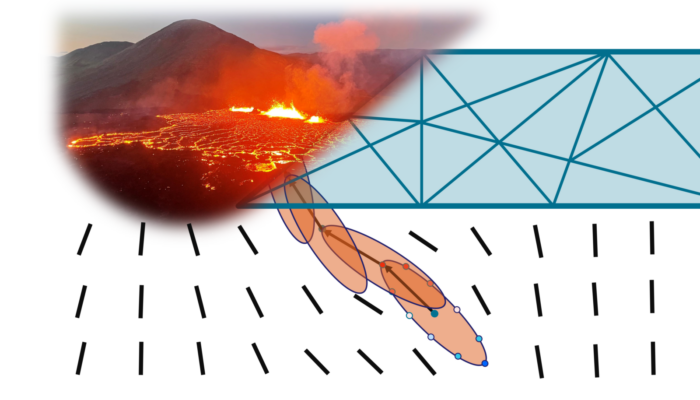
Modelling Magma Propagation in Three Dimensions – Or: How I Learnt to Stop Worrying and Love Simplicity

Modelling Magma Propagation in Three Dimensions – Or: How I Learnt to Stop Worrying and Love Simplicity

The crisis unfolding these days in Grindavík, Iceland reminds us of how important it is to forecast volcanic activity. Predicting the outcomes of volcanic unrest, or a magmatic intrusion making its way towards the surface, essentially amounts to three questions. Will there be an eruption? How much time before it starts? Where exactly will the eruption occur? Answering any of these questions is a d ...[Read More]

Biogeodynamics

Biogeodynamics

Would you like to participate in the development of a completely new research field? Here is the opportunity – Biogeodynamics! Biogeodynamics is an emerging field with exciting research opportunities. In this blog post professors Taras Gerya, Loïc Pellissier, and Robert Stern talk about what is Bio-Geo-Dynamics, how this field is developing, and what are the challenges and opportunities ahead. A n ...[Read More]

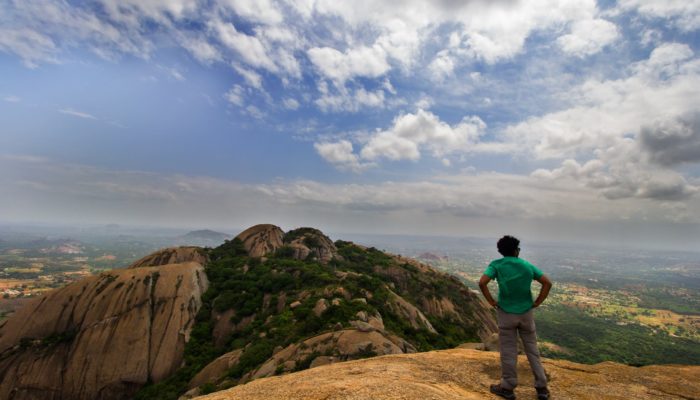
Journey of the Indian plate

Journey of the Indian plate

Plume craton interaction is a fascinating geological phenomenon. The Indian plate, which has experienced several plume eruptions underneath it, is one of the best locations to study the effect of plume craton interaction. In this week’s news and view, I will provide an overview of the controversy and hypotheses related to the plume craton interaction within the Indian plate since the mid-Cre ...[Read More]

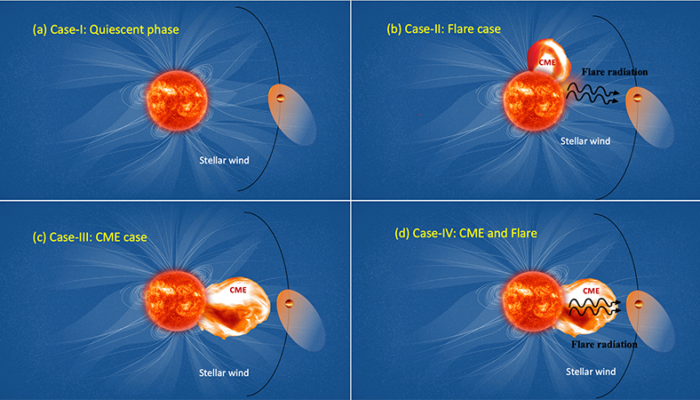
Stellar storms in other worlds: implications for the stability of exoplanetary atmospheres

Stellar storms in other worlds: implications for the stability of exoplanetary atmospheres

Stellar storms modify the atmospheric evolution of planets. ‘Hot Jupiter’ planets being very close to their host star, are often affected by such storms. In this week’s peculiar planet, Gopal Hazra, a post-doctoral fellow at the School of Physics, Trinity College Dublin, discusses effect of stellar storms on those planets using his self-consistent hydrodynamic models of planetary ...[Read More]

The geophysicist’s toybox

The geophysicist’s toybox

Simplified models or toy models explain the complex Earth processes fairly well, even though they are far from reality. In this week’s Geodynamics 101, Adam Beall, Research Associate at Cardiff University, discusses some of his favourite geophysical toy models! I remember being excited to first hear about scientists doing Earth modelling and imagined impressive computer visualisations of tec ...[Read More]