The advance of Artificial Intelligence is impacting all spheres of human activity, and Geosciences are no exception. In this week’s post, Denise Degen from RWTH Aachen University, Germany, gives us a glimpse of what this means for Geodynamics. Discussing the advantages and caveats of different approaches, she shows how physics-based Machine Learning may help us …[Read More]
geodynamics
Goodbye to 6 years of blogging
Dearest reader, on this day, six years ago, we published our very first blog post, stating our geodynamission: our plans for this new geodynamics division blog. From that day onwards, I have had the absolute privilege of being your Editor-in-Chief. But all good things must end and so does my term of being the Editor-in-Chief. …[Read More]
The Geodynamics Division @ EGU23
With the EGU General Assembly (GA) less than a month away, it’s time for attendees to start planning their schedule to get the most out of the week. In today’s blog, Geodynamics (GD) Division Early Career Scientist (ECS) representative Megan Holdt highlights the networking events for the GD Division, provides an overview of key events …[Read More]
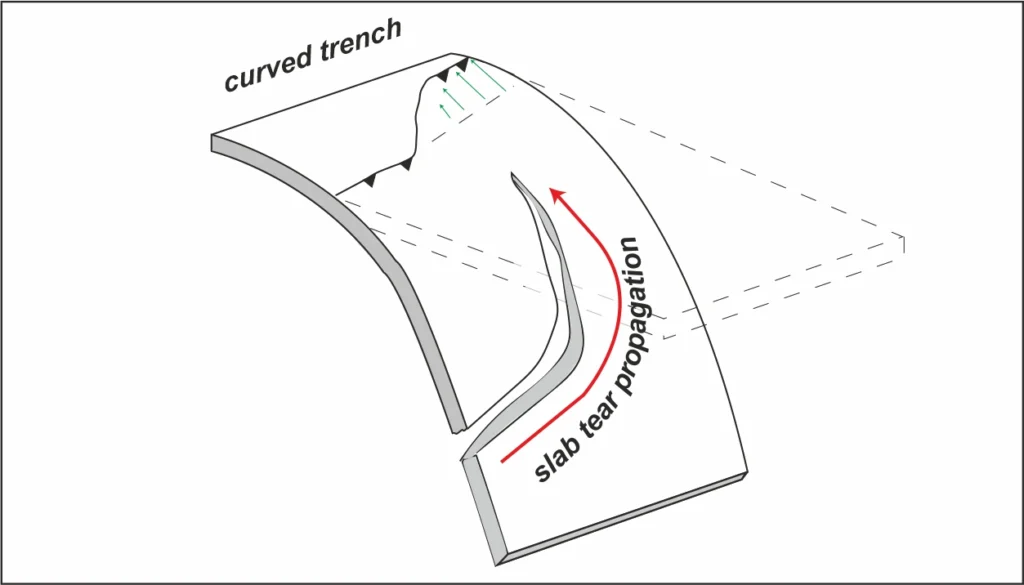
How does slab tearing evolve?
Slab tearing refers to the gradual propagation of the break-off of a subducting plate. As observed in numerous modern and ancient convergent tectonic settings, the growth of the tear “window” in the downgoing plate has strongly influenced various geologic and geodynamic processes, such as depocenter migration of foreland basins, uplift rates in mountain ranges, earthquakes, …[Read More]
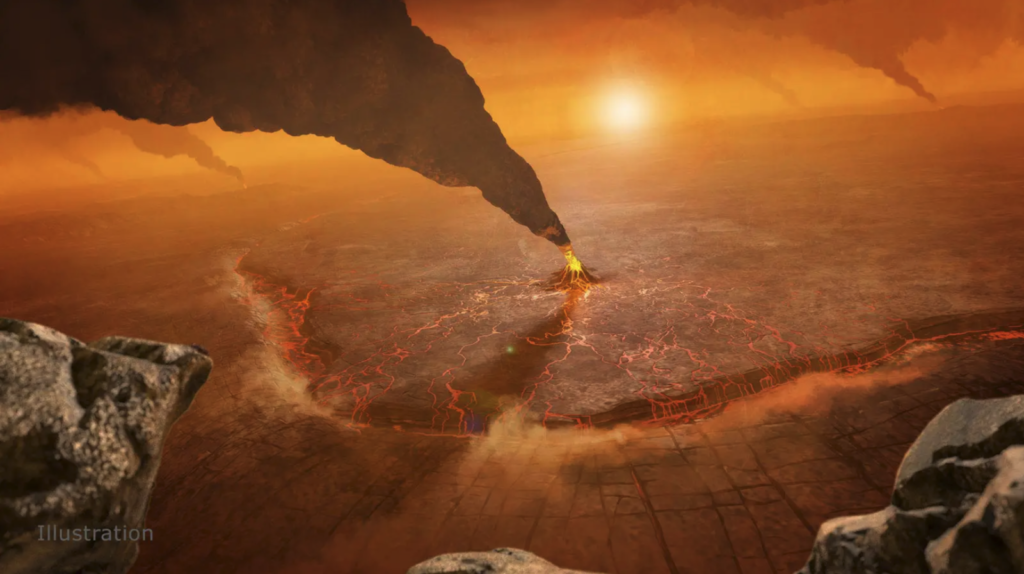
The first observational evidence for a volcanically active Venus
Our neighbouring planet Venus is gaining popularity in the terrestrial planetary sciences, especially since the selection of three new Venus missions by NASA and ESA in 2021. Now, for the first time ever, scientists have directly observed surface changes that indicate active volcanism on Venus. This discovery was made with data from NASA’s 30-year-old Magellan …[Read More]
Planetary Boundaries: A Framework against Geodynamics?
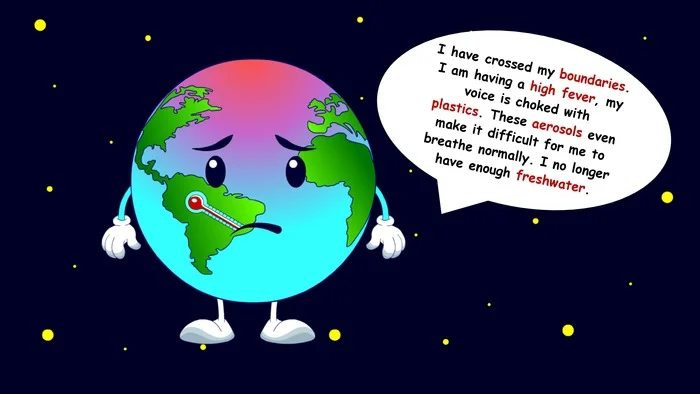
How can we determine a ‘safe operating space’ for humanity? In this week’s blog, Professor Ilan Kelman from University College London shares his thoughts about Planetary boundaries, and whether this framework will be successful for the next generations to come. The planetary boundaries framework (Rockström et al. 2009ab; Steffen et al. 2015) might be useful …[Read More]
Arc and Intraplate Volcanism in Northeast Asia Since mid-Miocene: Numerical model studies
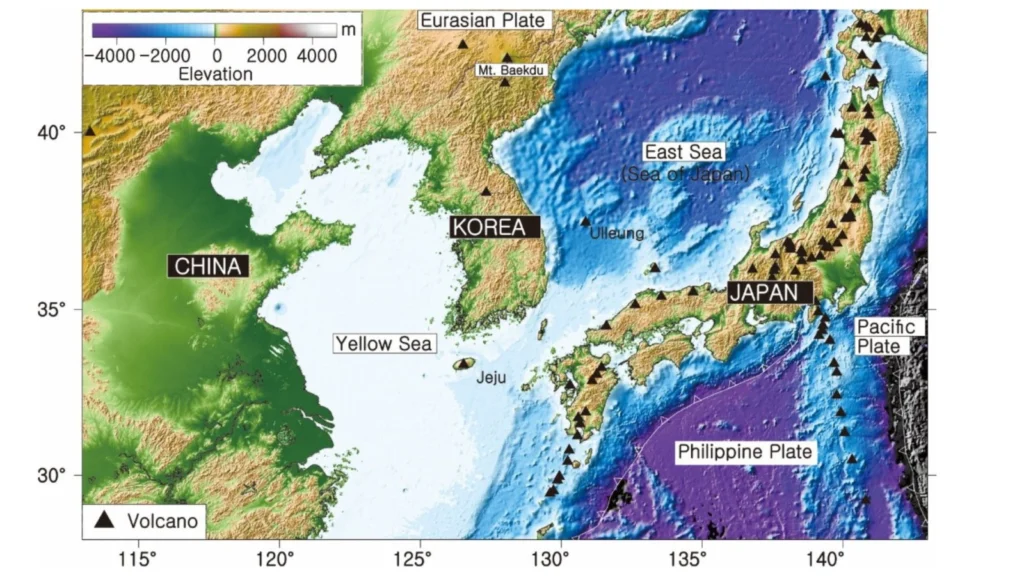
Northeast Asia may be one of the best natural laboratories to investigate both arc and intraplate volcanisms which have developed since the mid-Miocene. The arc volcanoes have occurred above the sinking young (Philippine) and old (Pacific) oceanic plates in Southwest and Northeast Japan subduction zones, respectively. The intraplate volcanoes across the Korean Peninsula and China …[Read More]
G-ADOPT: a next generation computational modelling framework for geodynamics
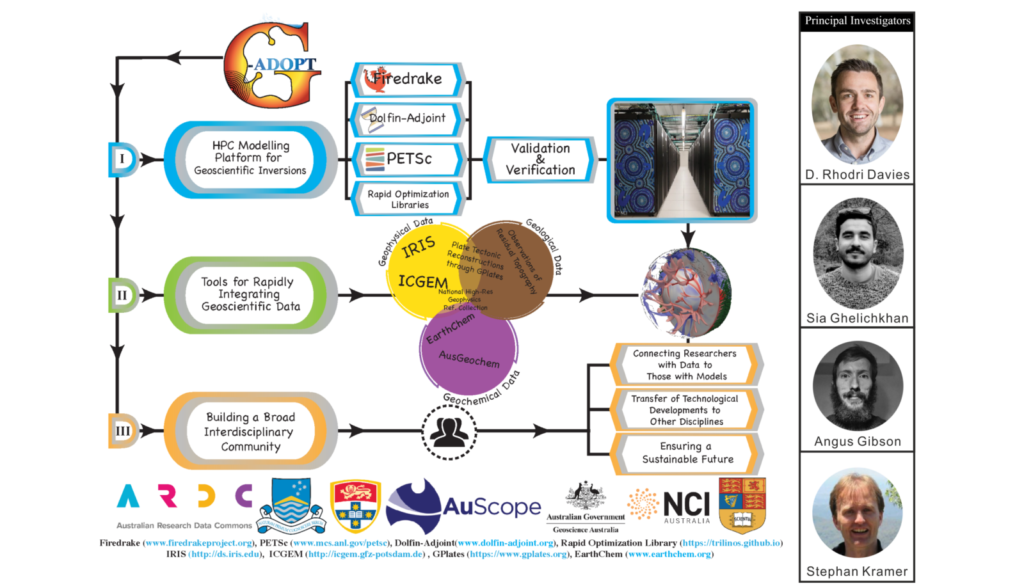
Schematic illustrating core components of G-ADOPT, an Australian based cross-NCRIS project, principally developed at the Australian National University (ANU), with partners at the University of Sydney and Imperial College London. G-ADOPT is supported by the Australian Research Data Commons (ARDC), with co-investment from AuScope, the National Computational Infrastructure (NCI) and Geosciences Australia. The Geodynamic ADjoint …[Read More]
Back-arc systems: arguably the most influential tectonic feature in the oceanic domain
Dr. Anouk Beniest, an Assistant Professor in Tectonics at the Vrije Universiteit Amsterdamat, is an interdisciplinary earth scientist, bringing together geology, geophysics and geodynamics to help us understand complex geological problems. Her research revolves predominantly around plate tectonics, with a focus on extensional systems and she has kindly put together this blog post to convince …[Read More]
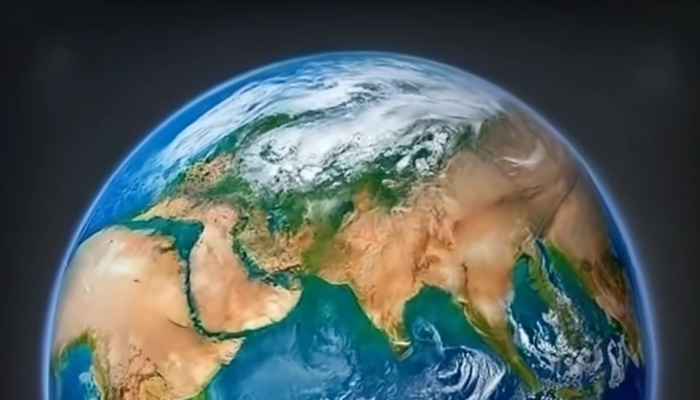
Effects of decelerating India-Eurasia convergence on the crustal flow and topographic evolution of the Tibetan Plateau
The Tibetan Plateau is the most extensive elevated surface on the Earth, stretching ~1,000 km north to south and 3,200 km east to west, with a mean elevation of greater than 4.5 km and located north of the Indian subcontinent. The formation of this Plateau has profoundly influenced the variations and evolution of Asian climate, strengthening …[Read More]