Just came back from holidays and found yourself staring at your calendar that’s full of conferences? I can almost hear the inner debate you’re having. Instead of keeping this internal dialogue to yourself, Reese decided to ask this question out loud: Should I go to every conference? Dear Reese, No. What are you? An olympic …[Read More]
Geodynamics
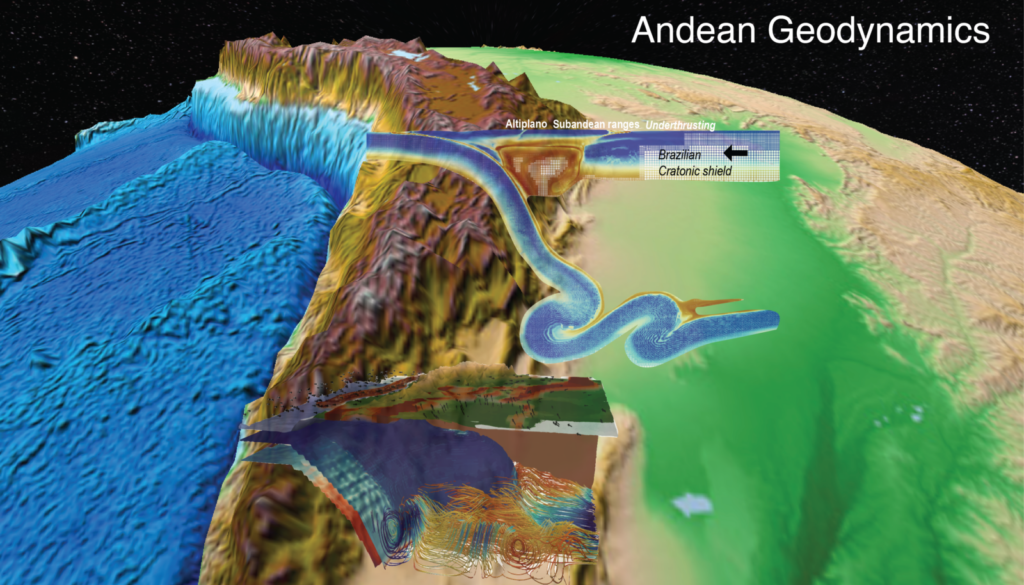
The nature of the shortening in the Central Andes : Part 1
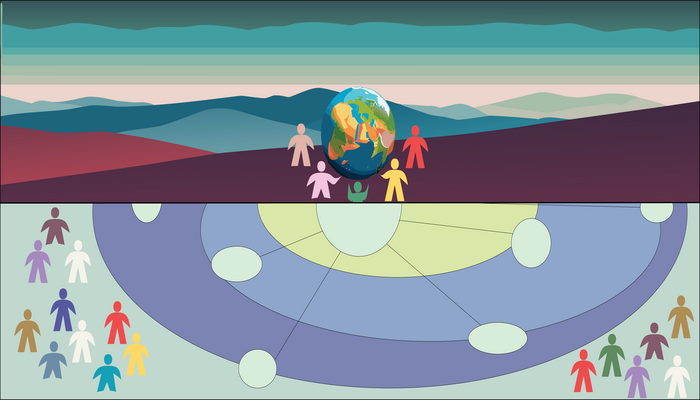
Climate and DRR Education as a Case for Lifelong Learning
We live in a society where climate change has already shown its impact across the world with devastating consequences. The alarming frequency of extreme weather events leading to tremendous disasters leaves us all perplexed and anxious about what will be coming next without taking any immediate action. Bearing that in mind, Dr. Joshua L. DeVincenzo …[Read More]
Ice Ice Baby! Modelling the thermal evolution within the ice shell of Ganymede, Jupiter’s moon.
Ganymede, one of the Galilean moons of Jupiter and the largest in the Solar System, has caught the scientists’ attention due to its potential for hosting life. The JUICE mission, launched from the Guiana Space Centre in French Guiana on 14 April 2023, is on its way to orbit and conduct experiments on the Galilean …[Read More]
The Sassy Scientist – Raiders of the Lost *What*?
Is it hot? Is it cold? I don’t know anymore. I really need holidays or better: early, very early, retirement. Anyway, what we need is a bit of sassiness in the mix. So let’s make July a bit sassy. Yikes, it sounds like an election campaign. I don’t like it, never mind. What were we …[Read More]
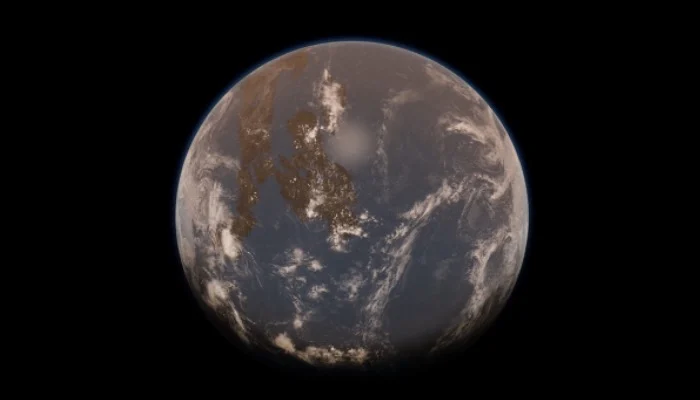
Modeling the Early Earth: Idealization and its Aims II
This week we have the second part of Junjie Dong’s insightful blog on modeling the early Earth. Following the discussion (“Modeling the Early Earth: Idealization and its Aims I”) about the major early Earth questions and challenges in modeling early Earth, Junjie now explores the imprtance of modeling as a scientific endeavor. He presents how …[Read More]
An Arctic enigma: Can a single plume explain a massive and long-lived ancient volcanic eruption?
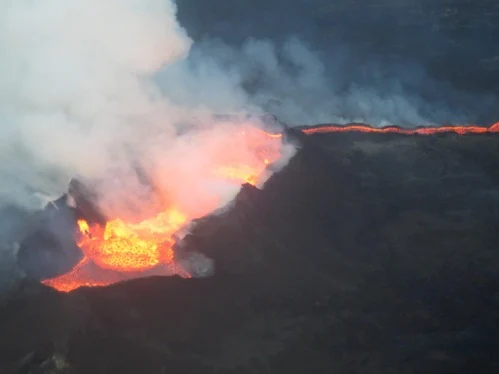
Across the Arctic lies evidence for a massive past volcanic event, called the High Arctic Large Igneous Province (HALIP). This ancient volcanic event is particularly unusual in that it appears to have lasted for over 50 million years. Could a single deep-seated mantle plume cause such wide-spread and long-lived volcanism? In a recent study …[Read More]
Modeling the Early Earth: Idealization and its Aims I
The question of how we came to be is closely tied with how the Earth became what it now is. What was the early Earth like? How did it evolve to become a habitable world? Given a fragmentary rock record, how can we investigate the early Earth and its evolution? Dr. Junjie Dong from Caltech …[Read More]
The uncertain tomographic lenses
Geodynamicists often try to answer scientific questions related to the Earth interior, but direct observations of such depths are rather limited–unless you are character in a Jules Verne’s novel or a prominent scientist in the movie The Core–. A way to deal with this issue is to rely on indirect methods, with seismic tomography being …[Read More]
The Sassy Scientist – Gotta Bake ‘Em All
Is it summer already? Have we come to the horrendous deadline period before the holidays? I know it’s impossible, but when you close your eyes, do you imagine the sea or the mountains? (Choose your fighter: Lapras or Machamp.) Luckily, we have a question that will give you a break from all this and act …[Read More]