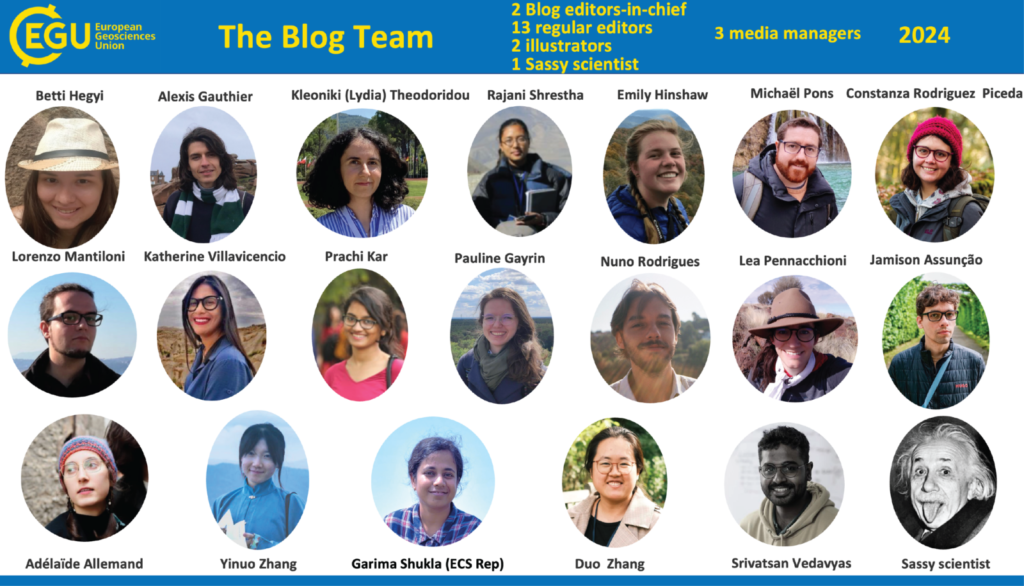
It’s time to introduce the new blog team! After the EGU General Assembly in April and a few hectic weeks of preparation, we are happy to present the new blog team for the year 2024-2025. The new team consists of 2 editors-in-chief, 13 (!) regular editors, 2 illustrators, 1 sassy scientist and 3 social media …[Read More]
Geodynamics
Happy blog birthday!
As we hope it’s marked in all of our beloved readers’ calendars, it’s the time of the year to celebrate the blog’s birthday! This year, the blog turns seven, and we are thrilled to share a recap of our activities over the past 12 months. We published 58 blog posts, covering topics such as the …[Read More]
Geodynamics & Tectonics on-the-go
In 2020, we found ourselves fully immersed in the world of virtual seminar series, a trend that has continued since then. By that time, the blog team made a compilation of seminar series of interest to the Geodynamics community. Four years have passed bringing both new additions and some that have become inactive. It’s now …[Read More]
FEMR: An emerging “game changer” in predicting earthquakes and impending geohazards.
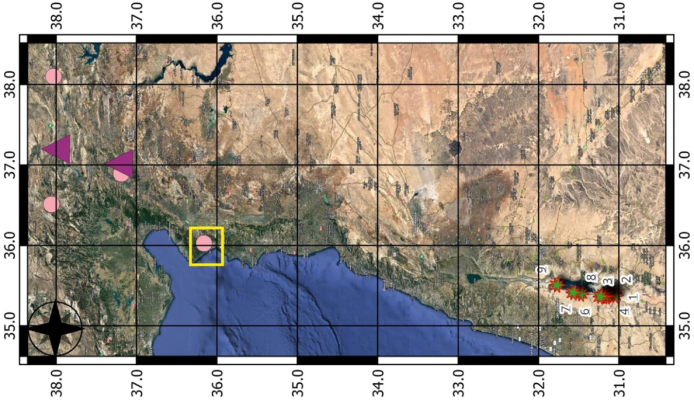
In this week’s blog, Shreeja Das, a Post Doctoral researcher at the Sami Shamoon College of Engineering, Ashdod, Israel working with Dr. Vladimir Frid, discusses her research involving the use of FEMR waves and its use as a tool in predicting impending geohazards , some of her results obtained using said technique to study transform …[Read More]
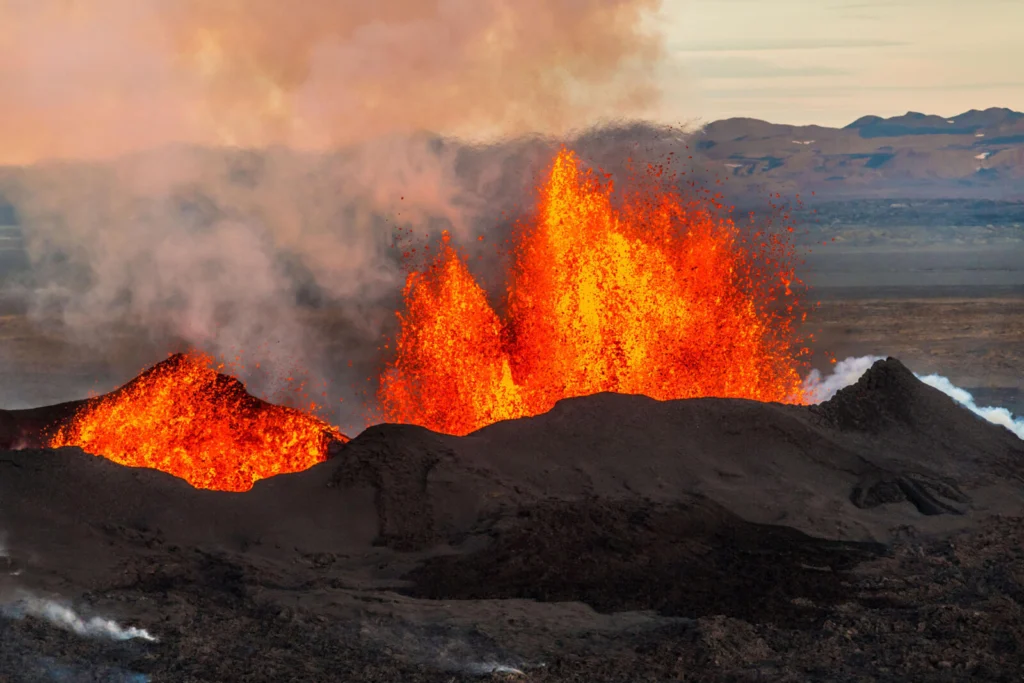
Exploring the Evolution of Rift Magmatism through Numerical Modelling
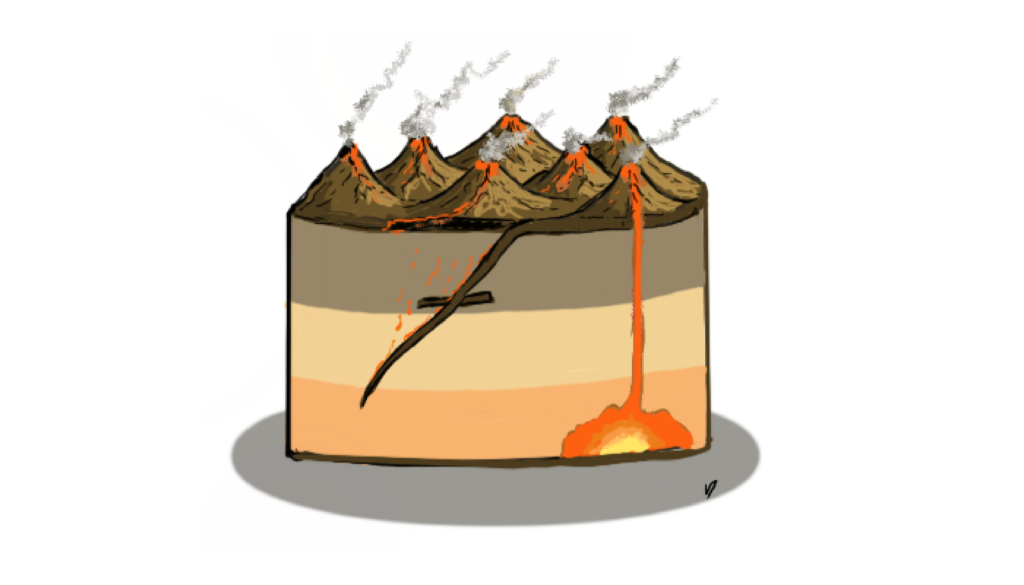
Continental rifts are a striking manifestation of the forces at work in the Earth’s interior and are often associated with volcanic activity. Contrary to intuition, volcanism is not confined to rift grabens, but migrates as the rifts evolve. How and why this happens is still not clear. This week, Gaetano Ferrante from Rice University, Houston …[Read More]
The Sassy Scientist – To fly or to couch surf
One thing that the COVID pandemic has left us is the flexibility to attend a conference either in person or virtually. This has been the case for the last three editions of the EGU GA. As the deadline for an expected conference approaches, we face the dilemma of whether to attend it in person or …[Read More]
Unravelling the Magma Plumbing network of the Deccan Traps
In this week’s blog, Garima Shukla, ECS representative of the Geodynamics Division and PhD student at the Indian Institute of Science Education and Research, Bhopal, India, working with Dr. Jyotirmoy Mallik, discusses her research involving fieldwork and statistical calculations. Her research also delves into rock magnetism and palaeomagnetism to unravel the longstanding enigmas surrounding the …[Read More]
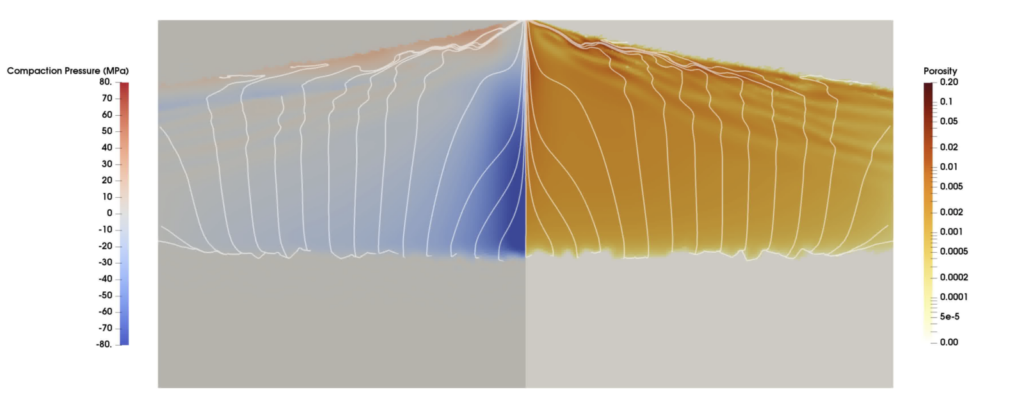
Two phase or not two phase
In this week’s blog Shi Joyce Sim from Georgia Institute of Technology shares the underlying science behind two-phase flow dynamics. A talk at the Lunar and Planetary Science Conference in March got me thinking. Basically, the presenter described how boundary layers grow over time, a phenomenon that cannot be captured using one dimensional models and …[Read More]
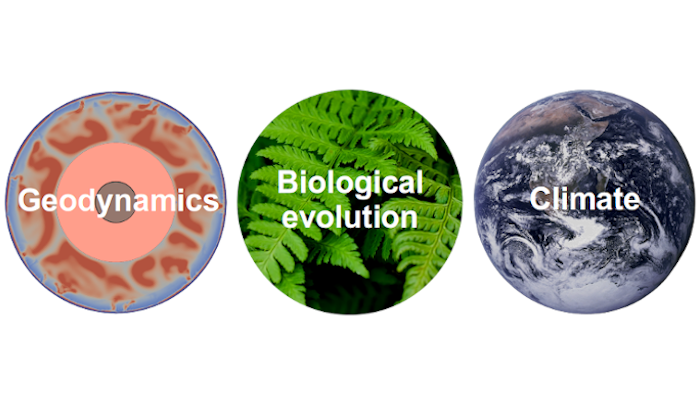
Biogeodynamics – Let’s model the entire world!
All models are wrong, but some are useful – we all have heard this quote. But it raises several questions (including but not limited to) – What would a model of the entire world look like? Can you couple geodynamical models with climate and biological evolution models? Would these models be useful? In this week’s …[Read More]
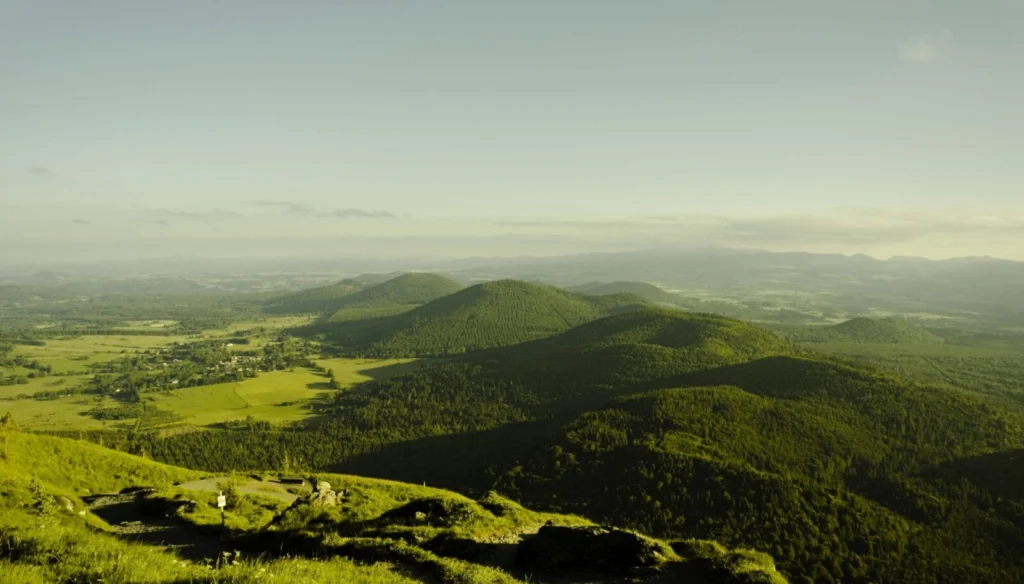
Linking the Earth’s Engine and Landscape Formation and Evolution
The Earth’s internal engine drives several geodynamic processes such as continental rifting and dynamic topography, shaping mesmerizing landscapes. Through numerical modeling, insights into formations like the Continental Rift of Southeastern Brazil deepen our appreciation of Earth’s dynamic nature and the forces sculpting its surface. The heat engine beneath our feet Not so long ago, human …[Read More]