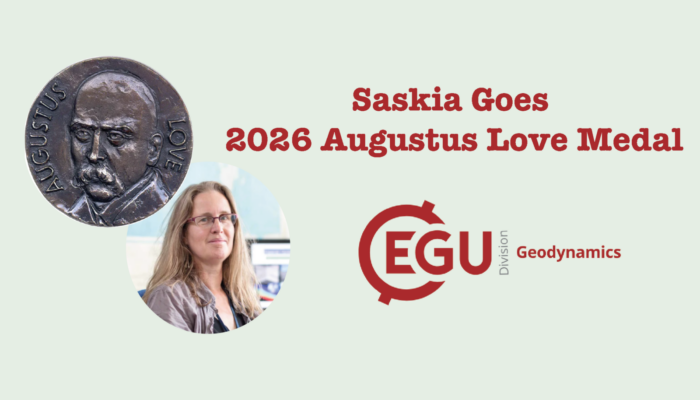
Profesor Saskia Goes is the receipent of the 2026 Augustus Love Medal of the Geodynamics Division for her outstanding contributions to our understanding of Earth structure and evolution, using integrative research at the confluence of geodynamics, seismology, mineral physics, and geochemistry. In this interview, she talks about her professional journey and shares her thoughts on what the future of geodynamics might hold.
Saskia Goes’s Augustus Love Medal Lecture will take place on Tuesday 05 May at the EGU General Assembly.
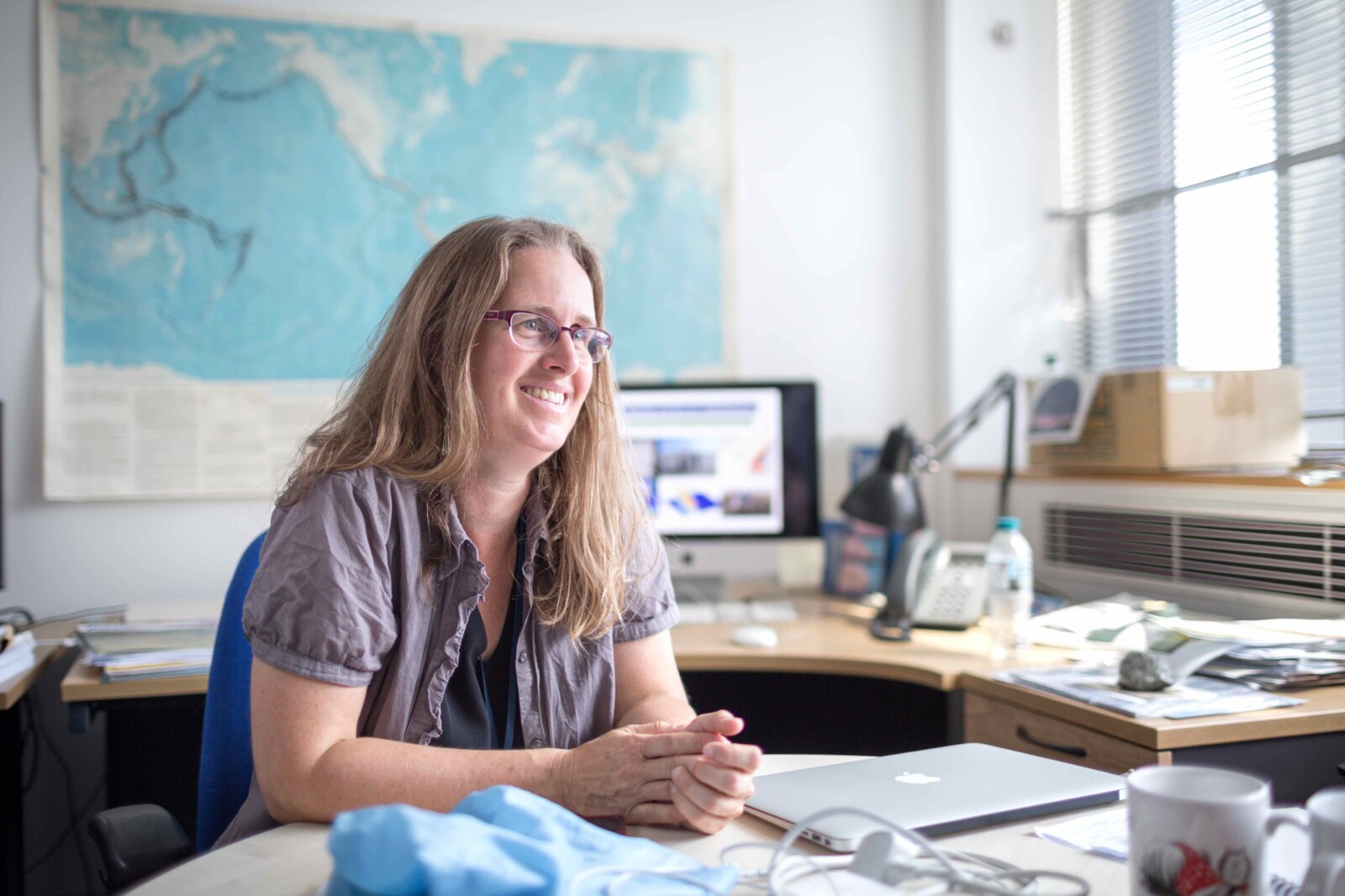
Saskia Goes, Professor at Imperial College London is the recipient of the 2026 Geodynamics Division Augustus Love Medal (credit: Saskia Goes)
How would you describe your research in a nutshell?
My research combines interpretation of geophysical data and other data with numerical modelling to try to understand plate-mantle dynamics and its surface expressions, including earthquakes.
What was your reaction to the news that you had been awarded the Augustus Love medal?
Delighted and grateful to those who felt I deserved to be nominated.
How did you get involved in the field of Geodynamics? What has been the biggest challenge so far?
I first got involved in my undergraduate thesis project in Utrecht, where I modelled stresses in subducting plates to relate these to Wadati-Benioff seismicity. This is where my interest in the dynamics of plate tectonics and subduction started. My PhD in Santa Cruz, California further strengthened my interest in earthquakes as an expression of plate dynamics and as a geohazard. The department in Santa Cruz provided a wonderful environment with opportunities to work on various projects and collaborate with different staff and students.
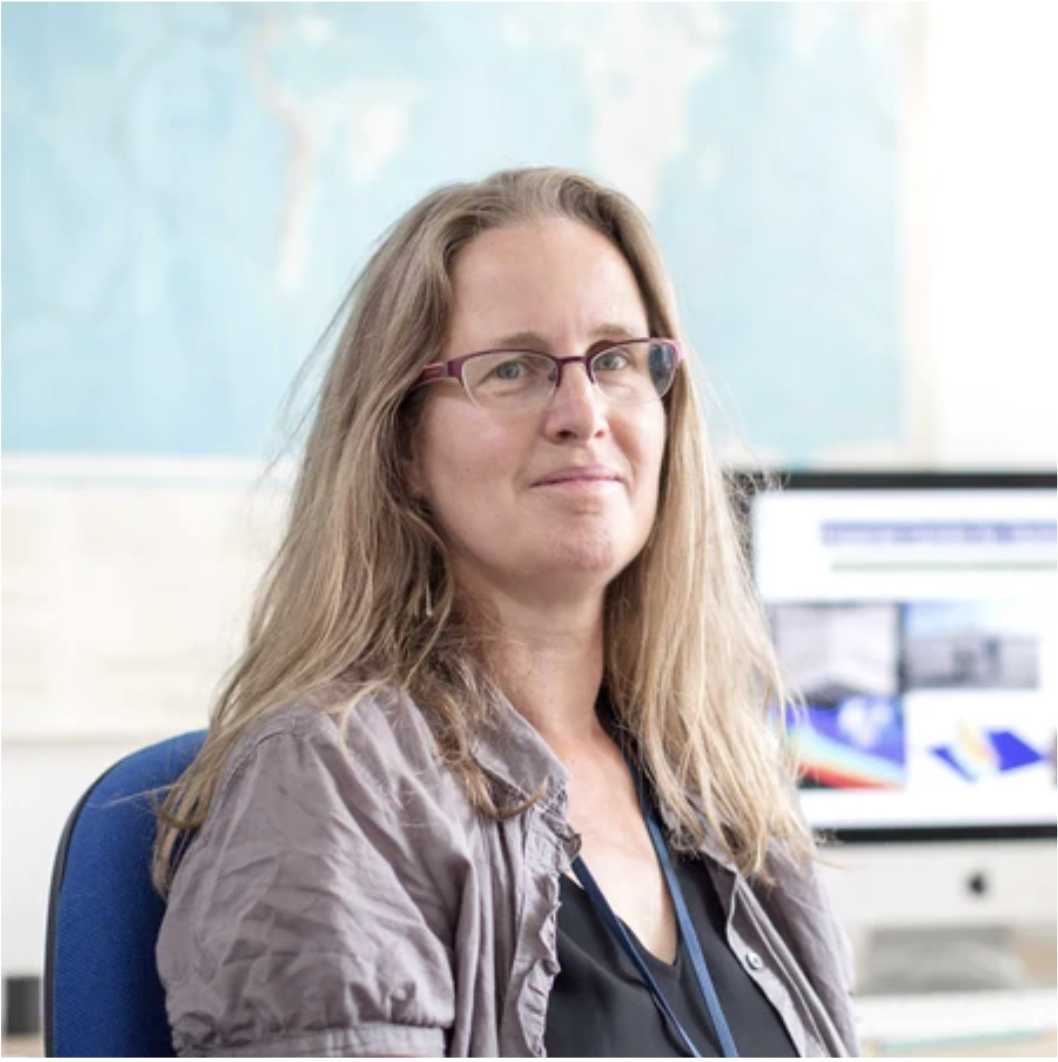
Saskia Goes is a solid Earth geophysicist based in Imperial College London
A really rewarding challenge was co-leading the VoiLA (Volatile Recycling in the Lesser Antilles Arc) project, a consortium grant that brought together marine geophysicists, passive-source seismologists, petrologists, geochemists and geodynamic modellers to study of the endmember subduction at the Lesser Antilles. By all working together, we learned (and are still learning) a lot about the tectonics of this isolated Atlantic subduction zone and the storage and release of volatiles from the Atlantic crust/lithosphere which, because it was formed by slow spreading, is about 50/50% tectonic and magmatic.
All research projects come with challenges; most research projects do not work exactly as you expect at the start, so it is important to remain open to further investigating and revising your initial hypotheses if model results or data appear not consistent with them. For numerical models, the first challenge is designing a good set of model experiments to address a relevant question. This involves deciding what the key physical processes/factors are that are relevant to the question and simplifying the experiments so that those can be studied, while bearing in mind any numerical limitations and effects (e.g. choice of grid, boundary conditions). In projects that involve data analysis, a key challenge is the incompleteness and limited resolution of the data on the Earth’s interior structure. The effects of data resolution and model regularisation always need to be carefully considered when using results from data inversions.
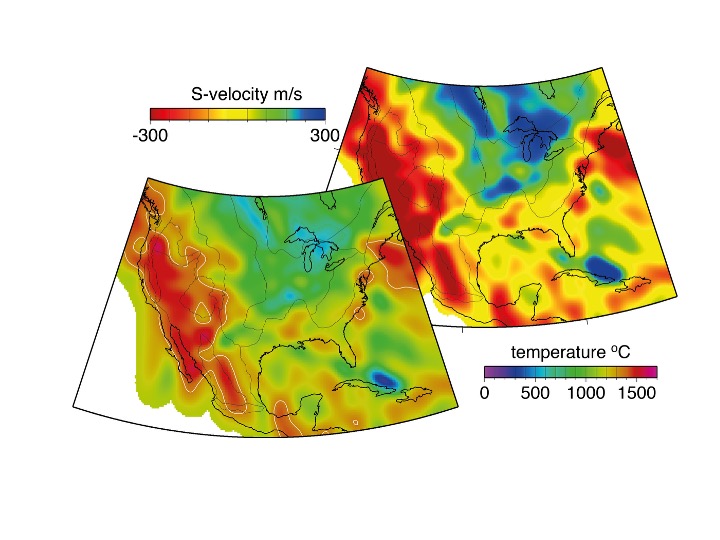
FIgure 2: Mapping lithospheric temperatures from seismic velocities (based on Goes and Van der Lee, 2002). Goes develops and applies sophisticated geophysical methods to probe the dynamics of the lithosphere and mantle.
How do you think the field of geodynamics has developed over the years and what do you think it will be like in the future?
Over past 20 or so years, numerical capabilities have vastly improved, and the establishment of the CIG platform has facilitated the sharing of advanced software. This has allowed many more groups to build models (with as caveat that too much complexity or “realism” may also hamper gaining physical insights).
The rapid advance of AI techniques is providing new ways of inverting and interpreting data and for building numerical models (or short cuts thereof). This is already opening more avenues for assimilating data into models, or inverting data for physical mechanisms, while also mapping out uncertainties and null spaces.
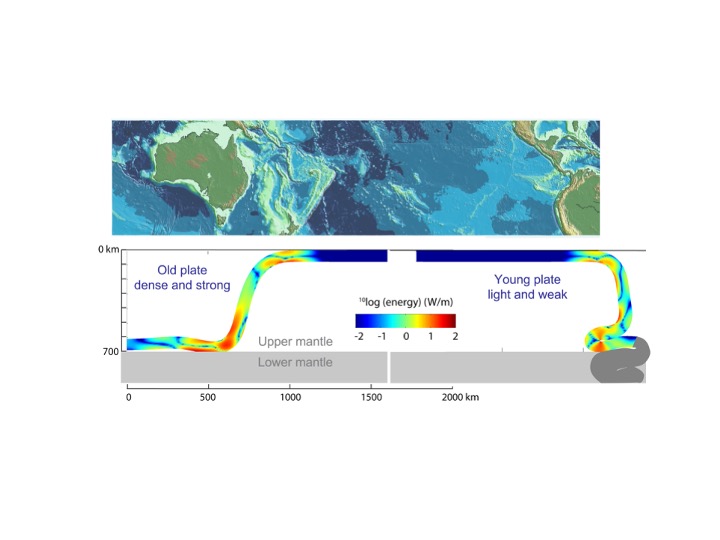
Figure 3: Modelling of different subduction styles (based on Goes et al. 2008). Her integrated approach, very much in the spirit of Augustus Love, has enabled her to address some of the most fundamental and complex questions in Earth science: What controls plate motions? Why do slabs stagnate or sink? How do mantle processes shape surface tectonics, volcanism, and seismic hazards?
What advice do you have for early-career researchers who would like to continue their careers in geodynamics?
Build a research profile that is unique and matches your interests and strengths. It is helpful to be as self-sufficient as you can where it concerns tools you need for your research., e.g., be able to install or adapt any codes you need yourself, But also, collaborate with others and keep reading the literature (including older papers) so that your work will build on and benefit from insights that others already gained.
References:

Goes, S., Capitanio, F. A., & Morra, G. (2008). Evidence of lower-mantle slab penetration phases in plate motions. Nature, 451(7181), 981-984.

Goes, S., & van der Lee, S. (2002). Thermal structure of the North American uppermost mantle inferred from seismic tomography. Journal of Geophysical Research: Solid Earth, 107(B3), ETG-2.