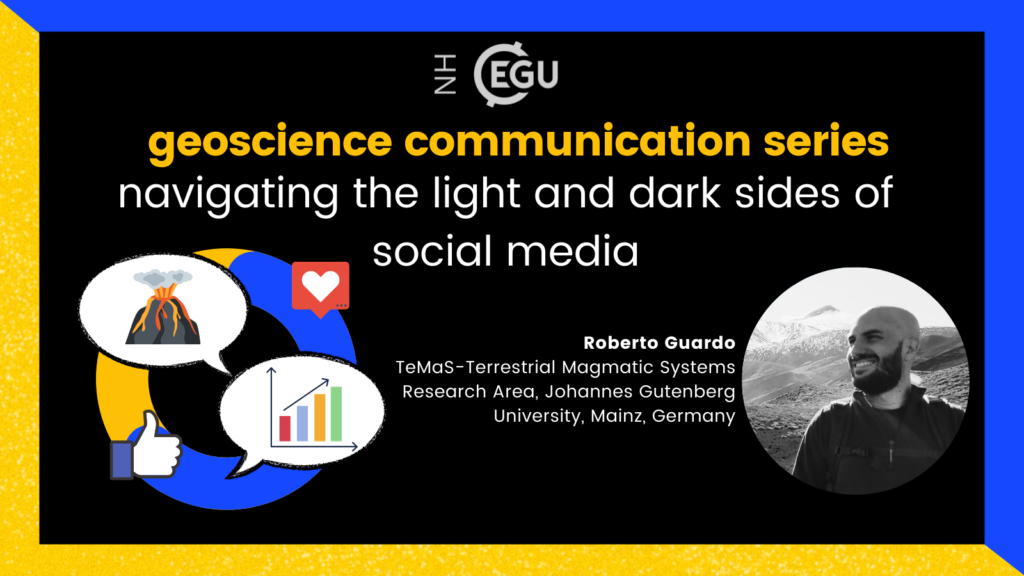
We are thrilled to present the last episode of the EGU WEBINARS: Digitalk: online (geo)science communication series. In this episode, we will explore the light and the dark sides of using social media for science communication by a special guest, Roberto Guardo. Roberto wished to engage in science communication just after completing his PhD. “I have never liked writing scientific papers,” he said ...[Read More]
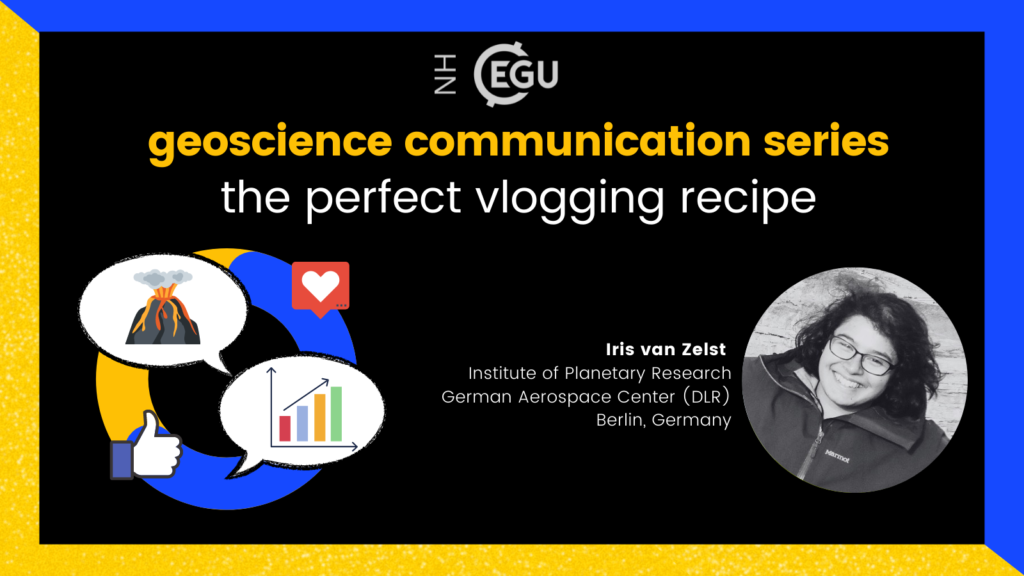
Geoscience communication series: the perfect vlogging recipe
Last year, we left you with an inspiring post about scientific blogging, where Giulia Roder, one of the authors of the EGU-NH blog, shared her ‘blogging survival kit’. Today we continue the series of EGU WEBINARS: Digitalk: online (geo)science communication exploring ‘the best vlogging recipe’ with Iris van Zelst, a researcher at the German Aerospace Center with a great passion for geoscience comm ...[Read More]
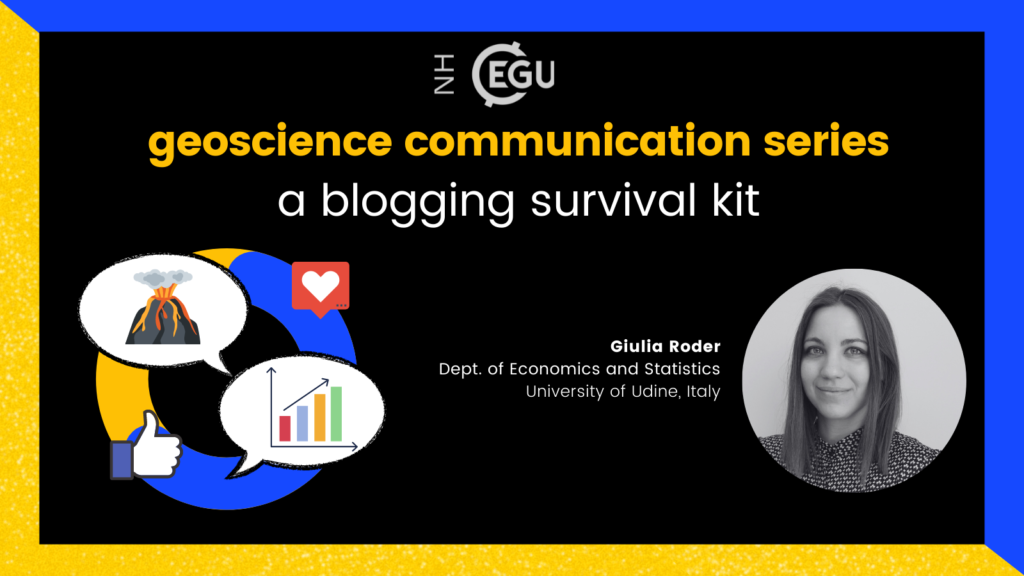
Geoscience communication series: a blogging survival kit
Science communication is the practice of informing and inspiring the public about scientific knowledge. It comes in different forms, from documentaries, books, academic publishing, mass media journalism, to public talks. These days, digital communication, including blogging, vlogging, podcasting, and social media, has become an increasingly popular form of science communication, reaching a wide au ...[Read More]
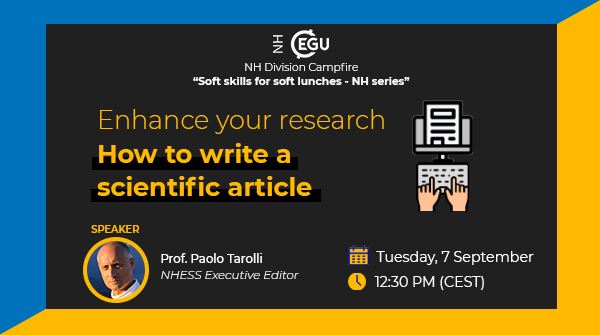
The road to successful scientific writing for early-career scientists
The world of research is highly competitive, and early career scientists face many challenges while trying to carve out a successful career path. Writing scientific articles is one of those challenges. Prof. Paolo Tarolli (University of Padova) shared his personal experience on “How to write a scientific article” with 130 attendees last 7th September, during the first Campfire event, & ...[Read More]
Faults and earthquakes as friends and not foes
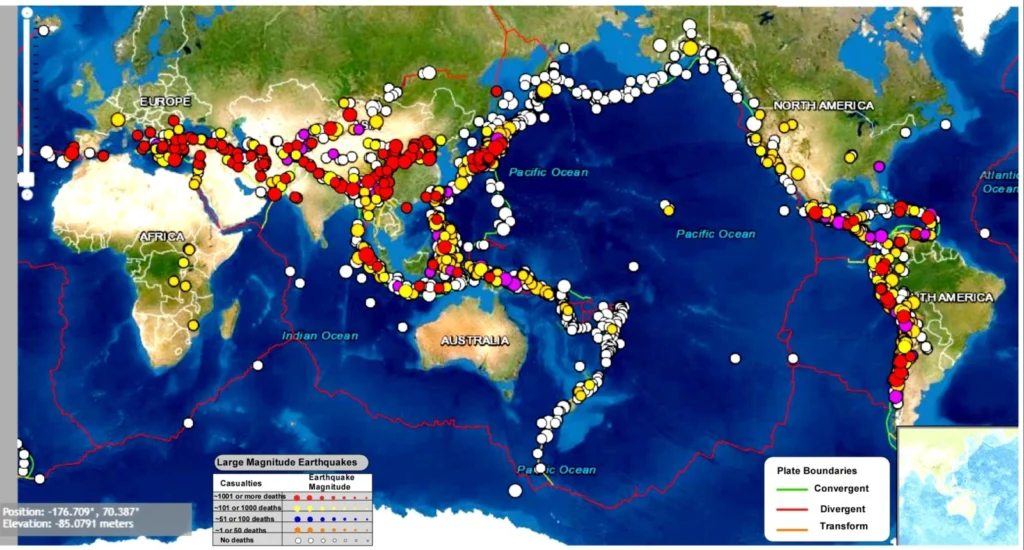
The earthquakes’ occurrence on the planet Earth is largely considered synonymous with disasters and people generally perceive geological faults as a threat to life and belongings. However, there are exceptions since a small community of earthquake researchers relate the occurrence of earthquakes with the lithospheric plate interactions where movement on faults causes earthquakes. Therefore, ...[Read More]
Blog column – PICTURE YOUR RESEARCH!
Working on natural hazards brings you to places (physically and virtually) you might never have discovered otherwise. You look at the world while asking questions about places, situations, relationships, and interactions of the natural processes surrounding you, inspiring your scientific potential. The Natural hazard Early Career Scientists Team is interested in your natural hazard research and wo ...[Read More]
Behind the scene: knowing the President of the EGU Natural Hazard Division – Ira Didenkulova!
In this last post of 2019, I have the pleasure to ask some questions to Ira Didenkulova, the President of the EGU Natural Hazards division who has been recently elected for a second mandate. Ira, can you introduce yourself and tell what led you the position of EGU Natural Hazard (NH) Division president? What are the main challenges you had and what’s next for the NH division? It seems this ...[Read More]
Hot topic for a hot summer: extreme weather and climate events in the ANYWHERE project – A Pan-European Platform for Multi-Hazard Early Warning and associated Impacts
In this post, I have the pleasure to interview Dr.ir. Henny A.J. van Lanen. He is Associate Professor in the Hydrology & Quantitative Water Management Group of Wageningen University and he has been involved in several EU projects. Further, he is involved in many international groups or networks: Coordinator of the European FRIEND programme (EURO-FRIEND Water, Flow Regimes from International Ex ...[Read More]
Our audience on stage: new NhET blog column
The diffusion of social media such as Facebook, Twitter, etc. in addition to traditional blogging led to a diversification in the impact of science communication. However, as Eryn Brown and Chris Woolston wrote in Nature last January, blogs continue to be effective platforms for disseminating research into the world and increase the discovery of science. This is the reason why we believe our natur ...[Read More]
Anthropogenic changes of the landscape and natural hazards
In this post, I had the pleasure to interview Paolo Tarolli, a very active member of the EGU community and a brilliant scientist. He is Professor in Water Resources Management and Integrated Watershed Management, and head of Earth Surface Processes and Society research group at the Università degli Studi di Padova (Italy). He has a PhD in Environmental Watershed Management and Geomatics and has wo ...[Read More]