
NH
Natural Hazards

Aldo Zollo

I am Professor of Seismology and Digital Signal Processing at the University of Naples Federico II. My research interests are in seismic wave propagation, earthquake fracture processes, volcano imaging, and seismic exploration. I worked and contributed to the development of earthquake early warning systems and seismic source modelling. I served key roles in national/international scientific committees and institutions, including INGV, the Italian Great Risks Committee - Section Earthquakes and ANR in France. In 2007, I received the honour of "Commendatore della Repubblica Italiana" for research achievements, and in 2020, I joined the European Academy of Sciences - Section Earth & Cosmic Sciences. Currently, I lead the Seismological Laboratory at the Department of Physics, which participates in major international research projects and operates the Irpinia Seismic Network.

From Seismic Signals to Safer Trains: Italy’s First Earthquake Early Warning System for High-Speed Railways
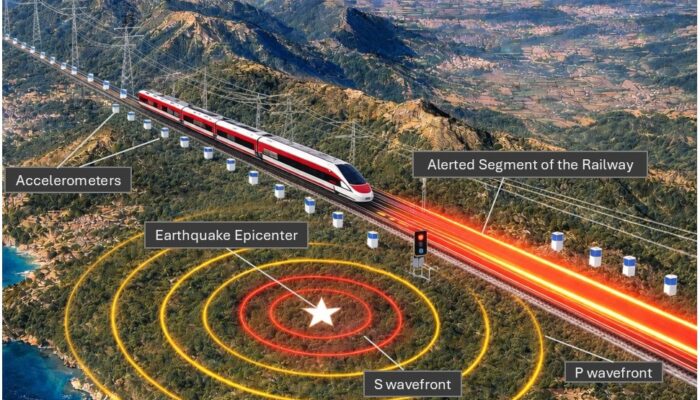
From Seismic Signals to Safer Trains: Italy’s First Earthquake Early Warning System for High-Speed Railways

Earthquakes remain among the most disruptive natural hazards worldwide, capable of causing sudden loss of life, severe economic damage, and long-lasting societal impacts. One of the most effective tools developed in recent decades to mitigate these effects is Earthquake Early Warning (EEW), a real-time monitoring strategy that exploits a fundamental physical property of earthquakes: seismic waves ...[Read More]

Living with a restless giant: The challenge of multi-risk management and communication at Campi Flegrei Volcano

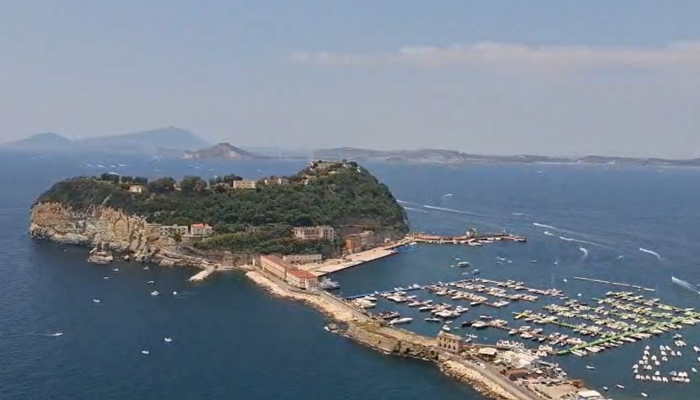
Living with a restless giant: The challenge of multi-risk management and communication at Campi Flegrei Volcano

Nestled within one of Europe’s most densely populated regions, the Campi Flegrei caldera is a volcanic system whose secular unrest shapes the daily life of its inhabitants. Here, during the last decade and still ongoing crisis, ground uplift, frequent earthquakes, and persistent gas emissions interact to create a complex, evolving multi-risk environment. These natural hazards rarely follow simple ...[Read More]