GD
Geodynamics

seismology

Fault characteristics, how close is close enough?
Fault characteristics, how close is close enough?

Have you ever wondered what common thing connects fault surfaces and their characteristics with your… squeezy sneakers on a wet surface or the required frequent change of your car tyres? Well, the answer is simple. The fundamental principles of stress and friction can significantly cause this behaviour in our everyday lives. However, these two factors can also be responsible for the slip behaviour ...[Read More]

FEMR: An emerging “game changer” in predicting earthquakes and impending geohazards.

FEMR: An emerging “game changer” in predicting earthquakes and impending geohazards.

In this week’s blog, Shreeja Das,  a Post Doctoral researcher at the Sami Shamoon College of Engineering, Ashdod, Israel working with Dr. Vladimir Frid, discusses her research involving the use of FEMR waves and its use as a tool in predicting impending geohazards , some of her results obtained using said technique to study transform fault activity along the Dead Sea Transform fault. Earthqu ...[Read More]

Ambient seismic wavefield: how noise can be a signal

Ambient seismic wavefield: how noise can be a signal

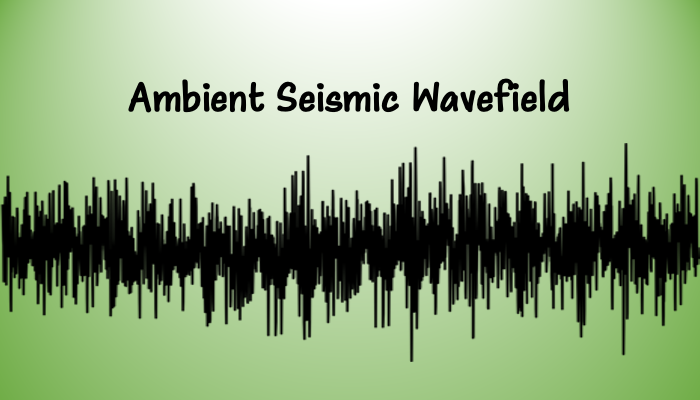
Every now and then, the surface of our planet shakes violently during earthquakes like the recent magnitudes 7.8 and 7.5 Kahramanmaraş Earthquake Sequence in Türkiye. These vibrations are recorded by instruments called seismometers and are then processed and analyzed by seismologists to study the earthquake processes themselves as well as other deep Earth structures. Interestingly, seismometers al ...[Read More]