Have you ever wondered what common thing connects fault surfaces and their characteristics with your… squeezy sneakers on a wet surface or the required frequent change of your car tyres? Well, the answer is simple. The fundamental principles of stress and friction can significantly cause this behaviour in our everyday lives. However, these two factors can also be responsible for the slip behaviour ...[Read More]
FEMR: An emerging “game changer” in predicting earthquakes and impending geohazards.
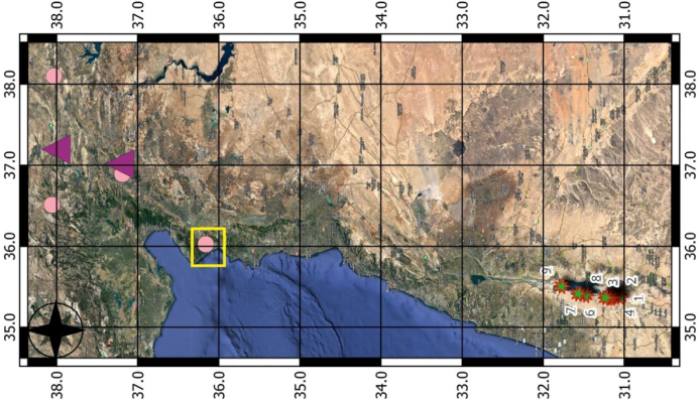
In this week’s blog, Shreeja Das, a Post Doctoral researcher at the Sami Shamoon College of Engineering, Ashdod, Israel working with Dr. Vladimir Frid, discusses her research involving the use of FEMR waves and its use as a tool in predicting impending geohazards , some of her results obtained using said technique to study transform fault activity along the Dead Sea Transform fault. Earthqu ...[Read More]
Ambient seismic wavefield: how noise can be a signal
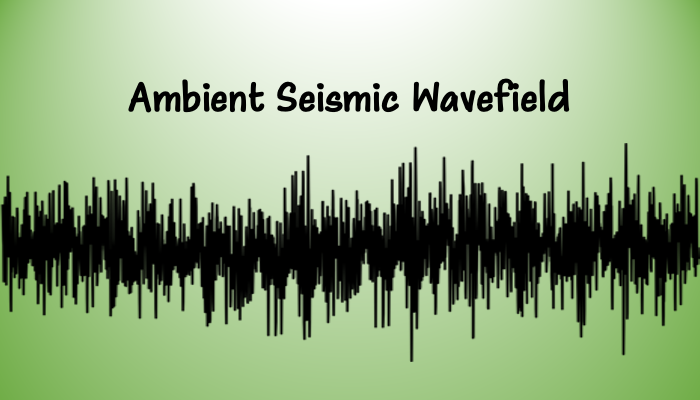
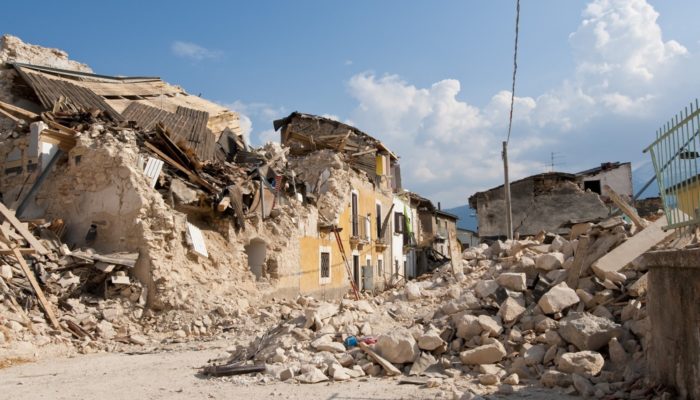
Every now and then, the surface of our planet shakes violently during earthquakes like the recent magnitudes 7.8 and 7.5 Kahramanmaraş Earthquake Sequence in Türkiye. These vibrations are recorded by instruments called seismometers and are then processed and analyzed by seismologists to study the earthquake processes themselves as well as other deep Earth structures. Interestingly, seismometers al ...[Read More]
What is the role of fluids in seismic cycles
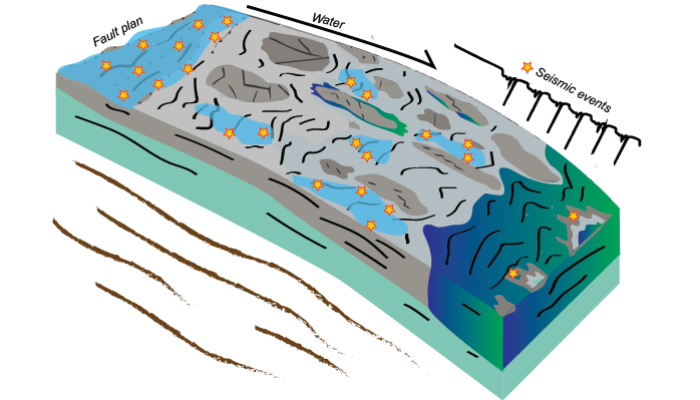
What is the role of fluids in seismic cycles ?
Into the anisotropic Earth
While we have sent several rovers to Mars, drilling down even just to the mantle of our own planet is a challenge that we are yet to overcome. How is it then that we know all these things about our planet’s interior? It turns out, we do not need to be inside the Earth to know what is happening there. Observations from geophysics and geochemistry can inform us about the processes and the properties ...[Read More]
Advanced geodynamic models of giant earthquakes
Though giant earthquakes are disastrous, they provide essential information to investigate earthquake physics. In this week’s news and views, Thyagarajulu Gollapalli, a PhD student jointly from the Monash University and the Indian Institute of Technology, Bombay, discusses our present understanding of such big earthquakes and how advanced numerical models will help to get a more precise picture of ...[Read More]
Should we still study LLSVPs?
All blobs are equal, but some blobs are more interesting than other blobs. In this new Wit & Wisdom post, Jamie Ward, PhD student in seismology at the University of Leeds, United Kingdom, explores this age-old saying and discusses whether or not LLSVPs are the most important blobs in our lives. Also, there is a picture of a dog. It makes sense, I promise. Large Low Shear Velocity Provinces (LL ...[Read More]
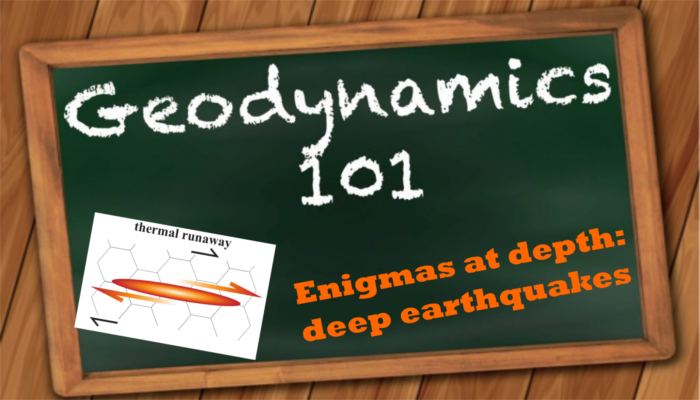
Enigmas at depth
The Geodynamics 101 series serves to showcase the diversity of research topics and/or methods in the geodynamics community in an understandable manner. In this week’s Geodynamics 101 post, Marcel Thielmann, Senior Researcher at the University of Bayreuth, discusses the possible mechanisms behind the ductile deformation at great depths that causes deep earthquakes. Earthquakes are one of the expre ...[Read More]
On the resolution of seismic tomography models and the connection to geodynamic modelling (Is blue/red the new cold/hot?) (How many pixels in an Earth??)
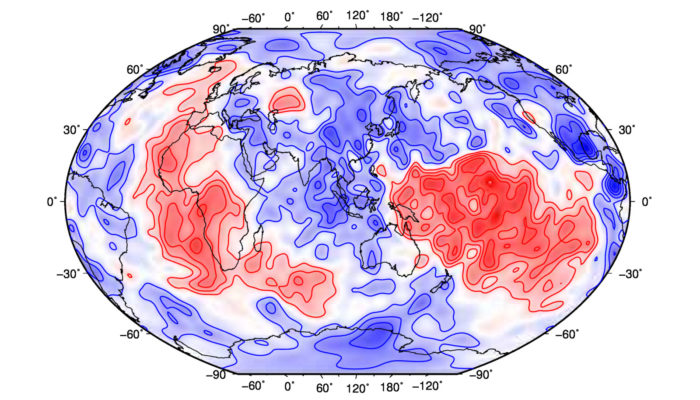
Seismologists work hard to provide the best snapshots of the Earth’s mantle. Yet tomographic models based on different approaches or using different data sets sometimes obtain quite different details. It is hard to know for a non specialist if small scale anomalies can be trusted and why. This week Maria Koroni and Daniel Bowden, both postdocs in the Seismology and Wave Physics group in ETH ...[Read More]
Tomography and plate tectonics
The Geodynamics 101 series serves to showcase the diversity of research topics and methods in the geodynamics community in an understandable manner. We welcome all researchers – PhD students to Professors – to introduce their area of expertise in a lighthearted, entertaining manner and touch upon some of the outstanding questions and problems related to their fields. For our first ‘Geodynami ...[Read More]