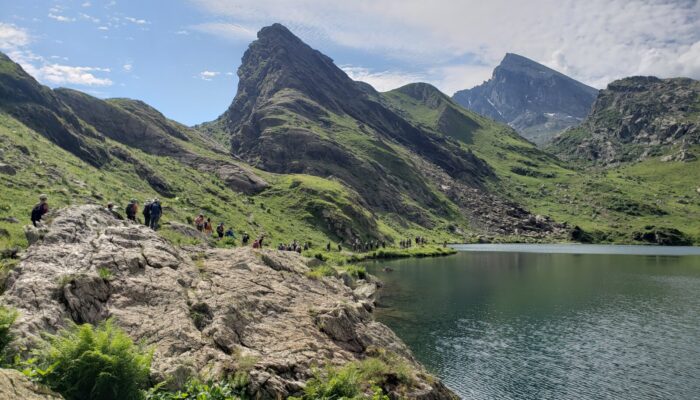
Since 2022, the annual FrenSZ workshop has been bringing together a vibrant and interdisciplinary community around subduction zones in France. In this week’s blog post, we dive into how FrenSZ is organized, highlight its scientific outcomes and how it is opening new connections on the international stage.
A large French community.
In France, a fairly large community of Earth Scientists devote their research efforts to subduction zones through very diverse approaches, rooted in fieldwork investigations, laboratory experiments, geophysical and seismological monitoring and numerical modelling. Applied to a unique geological system, this diversity provides a great opportunity to develop truly interdisciplinary research aimed at understanding subduction zone dynamics and related hazards (earthquakes, volcanism, etc.).
To fully explore this potential, the community must first recognize itself as such. This was one of the conclusions drawn at the 2021 French geoscience conference (RST): conferences too often organized around methods, instead of geological targets, limit fruitful cross-disciplinary discussions as well as the emergence of joint projects. To give subduction research greater coherence and visibility in France, and contribute to European efforts, they organized a first ‘Subductology’ workshop in the summer of 2022, bringing together around 30 participants across two days.
Funding and organization.
Building on this, an annual FrenSZ (French Network on Subduction Zones) workshop was launched in 2023 with the ambition of fostering and sustaining this interdisciplinary momentum. Since then, the FrenSZ gathering has been held every summer for 4 days in the Alps: twice in Barcelonnette (France) and once in Sampeyre (Italy). FrenSZ is held by the International Research Network (IRN) Andes-FrenSZ programme, which is supported by two French national agencies (IRD and CNRS) and coordinated by Mathilde Radiguet and Jean-Paul Ampuero. Several partner universities also provide support.
Financial support to FrenSZ allows the workshop to remain entirely free of charge, encouraging participation from early-career researchers, including undergrad students. Each edition gathers around 60 participants, with an even balance between permanent and non-permanent researchers. The rotating organizing committee gathers colleagues from several French Geoscience institutions (Géoazur Nice, Géosciences Montpellier, ISTeP Paris, Géoressources Nancy, ENS Paris, ISTerre Grenoble, etc) with diverse expertise to promotes the good representation of different approaches.
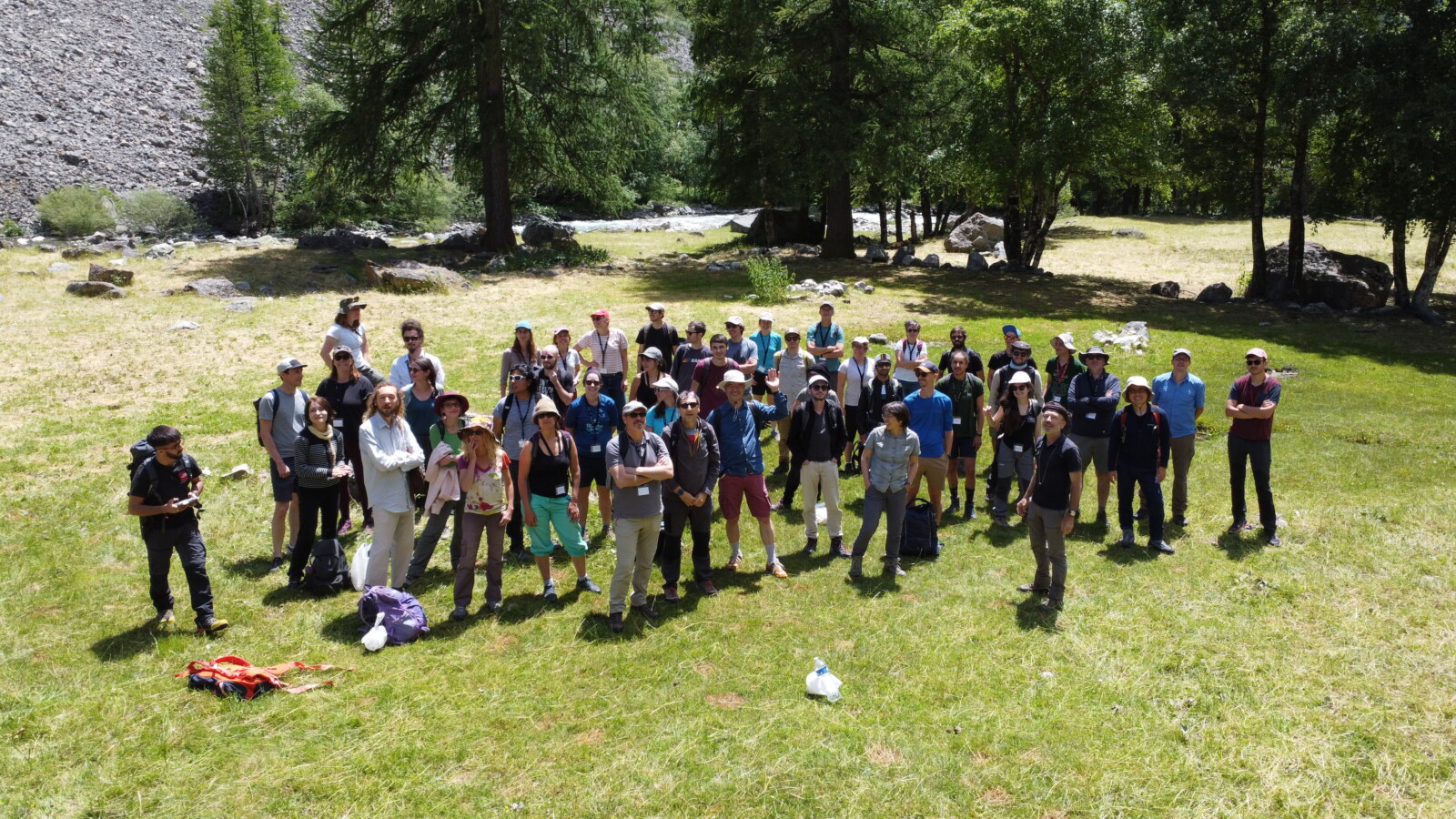
FrenSZ 2023 annual meeting in Barcelonette (France).
How to promote interdisciplinary collaborations?
To foster new collaborations and shape a truly interdisciplinary community, each FrenSZ workshop strives to be welcoming, supportive and inclusive. Its ultimate goal is to help researchers from different backgrounds (seismology, modelling, petrology, experimentation, and more) develop a common language and fully understand the questions and challenges that are specific to other fields.
Achieving this goal requires both pedagogical efforts and an adequate methodology. Consequently, ample time is allocated to questions following each presentation, as well as to collective discussions at the end of the day. Naive questions are welcome and actively encouraged, as they help revisit the foundations of each discipline. Particular attention is also given to clarifying terminology. A striking example is the concept of “coupling”, whose meaning changes radically depending on the timescale considered: for seismologists, a “coupled” subduction interface shows strong slip deficit during the interseismic period, whereas for geologists, the same zone is considered “decoupled” at the million-year scale (save for episodes of tectonic slicing) because the two plates essentially move past one another.
Most importantly, FrenSZ sessions help participants understand the strengths and limitations of each approach and avoid over-interpretation in future research. Several tutorials have been dedicated to explaining specific methods to a non-specialist audience (GNSS, tomography imaging, marine surveys, etc.). Field excursions range amongst the highlights of the workshop: they strengthen community cohesion through the benefits of a shared outdoor experience, and boost scientific discussions on readily accessible natural analogues. Grounding in real geology often shifts perspectives in meaningful ways. For example, the 2023 excursion on accretionary wedge dynamics near Barcelonnette and the 2025 excursion showcasing the Monviso deeply buried slab fragment provided exceptional insights onto well-preserved exposures of material subducted, strained and metamorphosed during the closure of the Neotethys Ocean.
Across its three editions, the FrenSZ workshop has stimulated the emergence of new ideas, leading to funded projects and interdisciplinary collaborations. These efforts have already translated into tangible outcomes, including an ANR-funded project led by Blandine Gardonio (Interaction between mantle-wedge seismicity and the subduction interface) and several scientific studies (e.g., Legros et al., 2025; Jara et al., 2025).
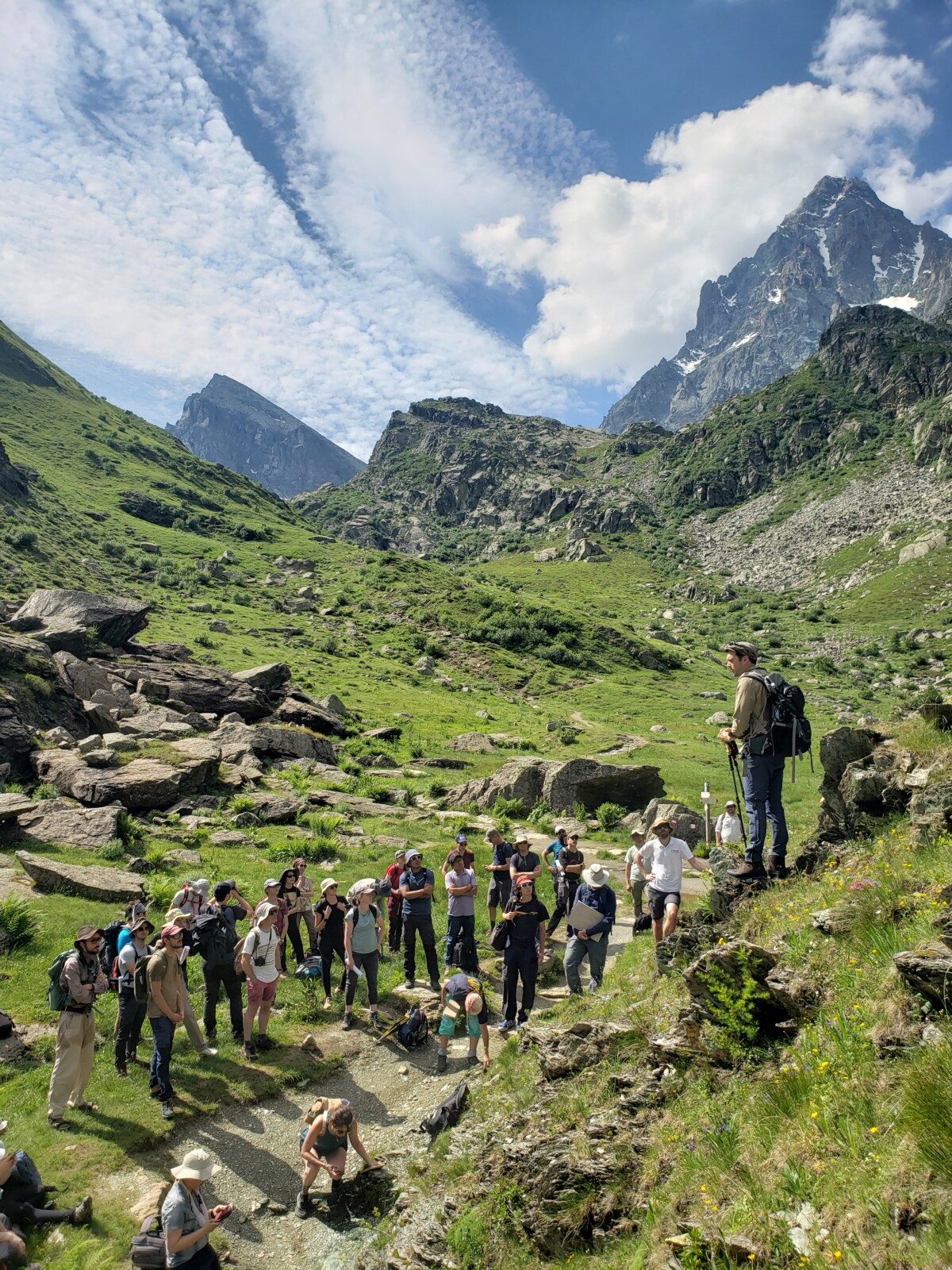
Field excursion at Monviso during 2025 edition.
Beyond national boundaries.
The FrenSZ workshop has so far helped to consolidate an interdisciplinary subduction community in France. However, this initiative aims to extend its reach beyond national borders by connecting the French community with its counterparts across Europe and beyond through the dedicated IRN Andes-FrenSZ programme. In addition to supporting the FrenSZ workshops, the IRN Andes-FrenSZ organizes monthly webinars to share research and foster discussions on subduction dynamics and related hazards. It also provides mobility support with partner countries to facilitate the development of international collaborations, notably for young scientists. The IRN Andes-FrenSZ is also a member of the SZNet coordination network, the international collaboration component of SZ4D US-based research initiative.
In this frame, the FrenSZ community will organize in 2026 the second international school on subduction processes at the Cargese Institute for Scientific Studies in Corsica. The objective of this school is to provide young Earth scientists (Masters, PhD candidates, post-docs) with an overview of the state of the art and current challenges in the study of active subduction. An exciting event providing the opportunity to all participant to extend their international network and interdisciplinary knowledge. Finally, to further foster interdisciplinary discussions at international scale, interdisciplinary sessions dedicated to subduction zones are regularly organized at the EGU General Assembly by FrenSZ participants, in collaboration with European colleagues (session TS3.5 for EGU 2026).
Let’s fill the gaps!
This article was written with contributions from Mathilde Radiguet, Armel Menant, Philippe Agard, and Anne Soquet.
IRN Andes-FrenSZ website: https://irn-andes-frensz.osug.fr/

Jara, J., Soret, M., Jolivet, R., Cubas, N., Maksymowicz, A., & Cotton, F. (2025, April). Metamorphic dehydration reactions trigger slow slip events in subduction zones. EGU General Assembly 2025

Legros, E., Malvoisin, B., Brunet, F., El Yousfi, Z., Batanova, V., Sobolev, A., & Auzende, A. L. (2025). Massive Mg-rich fluid release across the brucite+ serpentine reaction in subduction zones. Earth and Planetary Science Letters, 671, 119602.