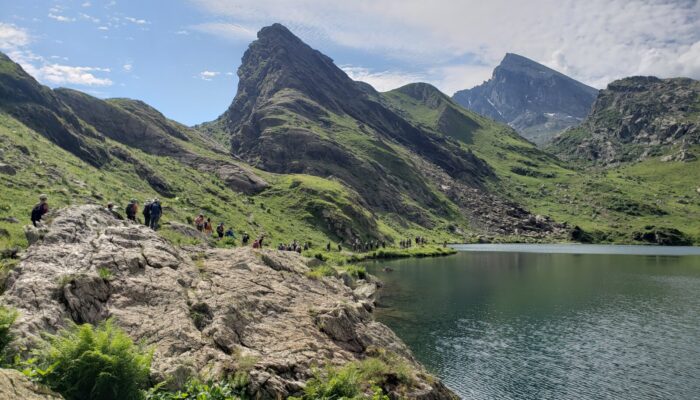
Since 2022, the annual FrenSZ workshop has been bringing together a vibrant and interdisciplinary community around subduction zones in France. In this week’s blog post, we dive into how FrenSZ is organized, highlight its scientific outcomes and how it is opening new connections on the international stage. A large French community. In France, a fairly large community of Earth Scientists devote thei ...[Read More]
Running Models, Chasing Bugs – from Crashes to Convection
Mantle convection may unfold the hidden stories of planetary interiors over billions of years, but geodynamic models can crash in milliseconds. While figures in papers often show smooth convective flows with elegant plumes and slabs, the path to those results is not very easy. This week, Prachi Kar, a PhD candidate at Arizona State University, shares her honest thoughts on the part of geodynamics ...[Read More]
Fault characteristics, how close is close enough?
Have you ever wondered what common thing connects fault surfaces and their characteristics with your… squeezy sneakers on a wet surface or the required frequent change of your car tyres? Well, the answer is simple. The fundamental principles of stress and friction can significantly cause this behaviour in our everyday lives. However, these two factors can also be responsible for the slip behaviour ...[Read More]
The courage to be disliked: reflections on peer-review processes
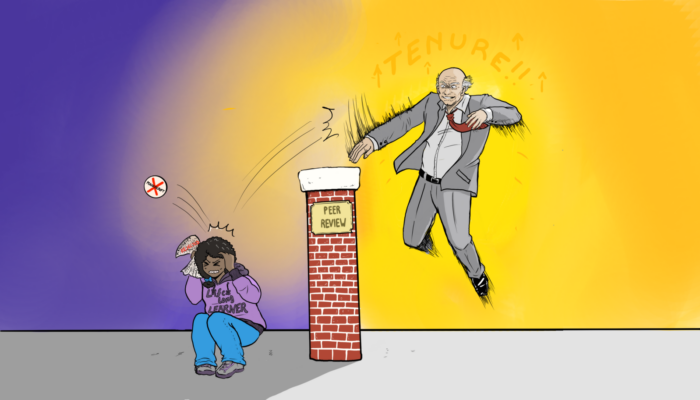
Although often daunting and discouraging, every academic must navigate the inevitable process of peer review. In this week’s post, Jean-Baptiste Koehl, postdoctoral researcher at the University of Oslo (Norway), reflects on what the future of peer review might be. Author disclaimer: The reflections presented here reflect my perspective grounded in my own experience. While peer review is a key mech ...[Read More]