HS
Hydrological Sciences

Catchment hydrology

What machine learning can and cannot tell us about floods

Collage based on a picture by Imad Clicks via Pexel

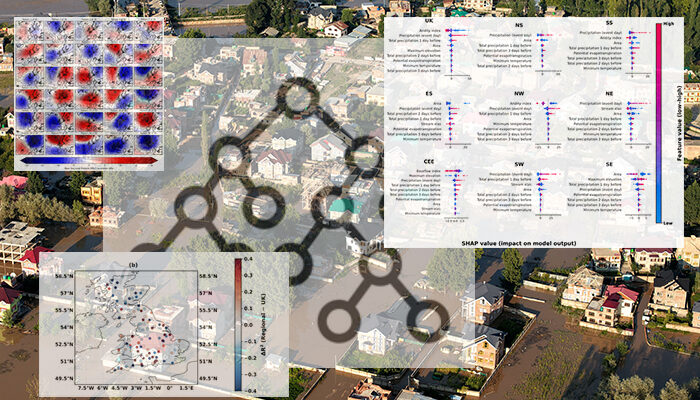
Floods are shaped by complex and nonlinear interactions between weather patterns, rainfall, soil properties, topography, land cover, and how wet a catchment already is. This complexity is one reason machine learning (ML) is increasingly used in hydrology. ML models can learn patterns from large and complex datasets with many variables.  Early in my PhD, while exploring machine learning models for ...[Read More]

Communicating and Managing Residual Risk with Perfect Storms and Other Counterfactual Stories

Communicating and Managing Residual Risk with Perfect Storms and Other Counterfactual Stories

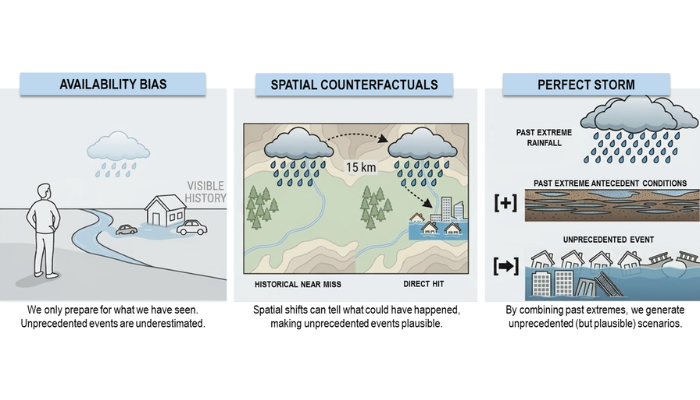
The aim of risk management is to prepare society in order to limit loss and damage when an extreme event occurs and to restore the functioning of society afterwards . While current risk management practices are helpful in many regards, they fall short when it comes to unprecedented events. An analysis of event pairs and recent disasters show that societies often fail to cope with events that are l ...[Read More]

Can Machine Learning Help Us Monitor Streams?

Can Machine Learning Help Us Monitor Streams?

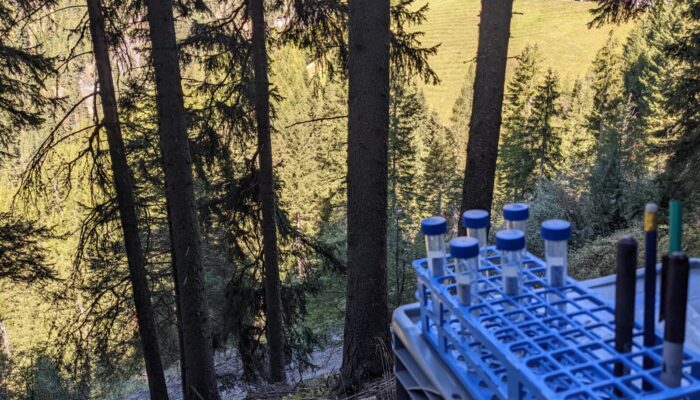
Picture this: you’re hiking through a dry landscape when suddenly you hear it—the serene sound of a babbling brook. You round a corner and discover a small waterfall cascading into crystal-clear pools, surrounded by lush green ferns and wildflowers attracting buzzing bees. It feels like stumbling upon a secret oasis. These magical streams that appear and disappear with the seasons are called ...[Read More]

Prevent before repair: What a new hydrology-based index reveals about river ecological status

Prevent before repair: What a new hydrology-based index reveals about river ecological status

When I first began analysing agricultural pressures in German river networks, I expected the familiar story of nutrient loads, pesticide traces and differences between landscapes. What I did not expect was how narrow the ecological safe operating space has become for many rivers. Even small increases in agricultural pressure, especially from pesticides, reduced the likelihood of achieving good eco ...[Read More]