HS
Hydrological Sciences

Subsurface hydrology

HydroTalks: Prof. Laura Richards and Ajmal Roshan on groundwater quality, arsenic, and citizen science
HydroTalks: Prof. Laura Richards and Ajmal Roshan on groundwater quality, arsenic, and citizen science
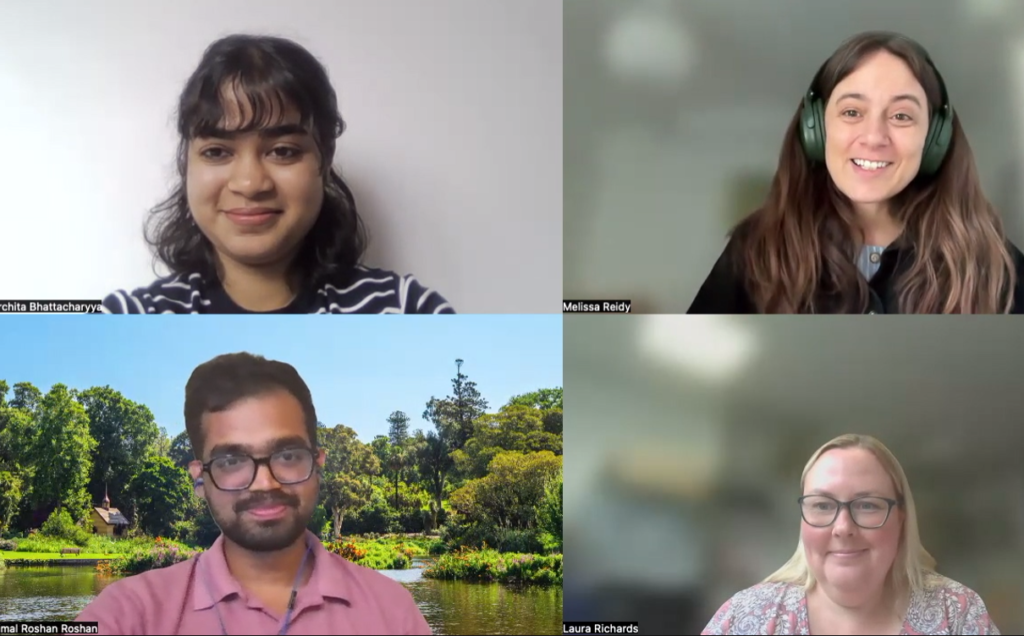
For this month’s episode of HydroTalks, we’re thrilled to welcome Prof. Laura Richards and Ajmal Roshan. Laura is a UKRI Future Leaders Fellow and Professor of Water Resources and Environmental Geochemistry at the University of Manchester. Laura is also the project lead of the AQUAROAD Programme on groundwater quality in the Global South. Ajmal is a Cookson Awardee PhD scholar, and he’s work ...[Read More]

HydroTalks: Prof. Sally E. Thompson on ecohydrology, vegetation, climate change and working across continents

HydroTalks: Prof. Sally E. Thompson on ecohydrology, vegetation, climate change and working across continents

In episode 7 of the Hydrotalks podcast, our guest was Dr. Sally Thompson (Sally Thompson – the UWA Profiles and Research Repository). She is a Professor at the University of Western Australia, and the Co-Director of the Centre for Water and Spatial Science. Her research spans ecohydrology, surface hydrology, and Critical Zone Science, exploring how vegetation and ecosystems interact with wat ...[Read More]

Where The River Feeds The Wells: A Story Of Smart Monitoring For Safe Drinking Water Supply

Where The River Feeds The Wells: A Story Of Smart Monitoring For Safe Drinking Water Supply

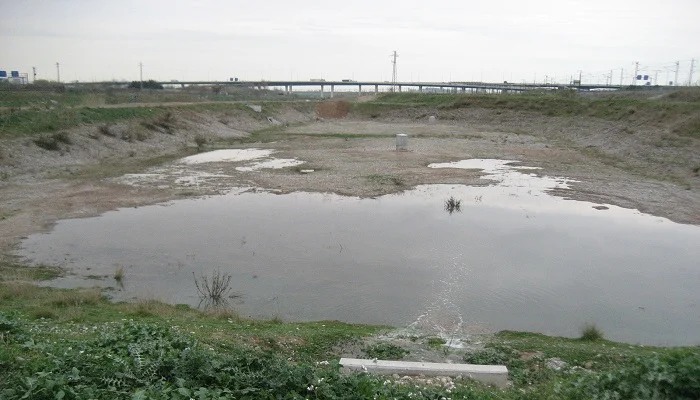
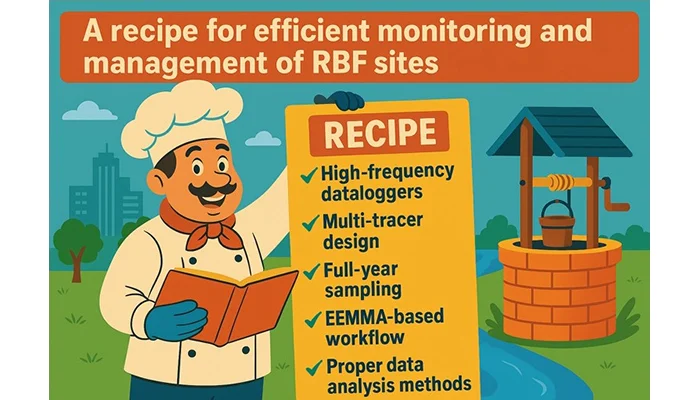
When a river becomes your drinking water  When you open the tap in Tarnów, a charming city in southern Poland with a history dating back to the Middle Ages, chances are that most of the water you are about to drink once flowed in the nearby Dunajec River. Yet between the river and your glass lies an invisible world: a network of sand and gravel that filters, delays, and transforms the river’s wate ...[Read More]

Do-It-Yourself (DIY) in Geoscience Miniseries – Part 3: Getting it all together – Cables, Breadboards and Circuit Boards

Do-It-Yourself (DIY) in Geoscience Miniseries – Part 3: Getting it all together – Cables, Breadboards and Circuit Boards

You got all your components for your project, so now it’s all about getting it all together. Then it’s great to be able to quickly exchange components and change wiring. That’s where a so-called “breadboard” comes in handy. It’s an easy to use device where you can connect microelectronic components without the need to solder anything.   Breadboards are like pinboards for cables and microelect ...[Read More]

Overlooked tips for the lost art of fieldwork

Overlooked tips for the lost art of fieldwork

Not so long ago, almost all hydrologic data depended almost exclusively on fieldwork.  Today, sure, you can download data from repositories, there are satellites that beam you magic numbers that you can interpret to give you almost any variable, and some (less than we might hope) long-term monitoring has been outsourced to governments (or in some cases to citizens with sensors).  But somewhere in ...[Read More]

Do-It-Yourself (DIY) in Geoscience Miniseries – Part 2: Sensors & Electronics

Do-It-Yourself (DIY) in Geoscience Miniseries – Part 2: Sensors & Electronics

As a child, I was a huge fan of LEGO. I would spend hours building and creating structures, vehicles and landscapes. For every birthday & Christmas, I wished for the newest sets of these colorful plastic bricks. While building the sets manually was fun, creating something new from my own fantasy was even better. It seemed like once I had a substantial amount of different bricks, combination po ...[Read More]

Do-It-Yourself (DIY) in Geoscience Miniseries – Part 1: Microcontrollers

Do-It-Yourself (DIY) in Geoscience Miniseries – Part 1: Microcontrollers

We geoscientists need all different kinds of data: soil moisture, water-levels, snow height, radiation, precipitation height and the list goes on. However, the devices we need to generate that data are often too expensive, not available or even don’t exist. Therefore, it’s sometimes necessary to build them yourself (like many geoscientists do – those who annually present their senors p ...[Read More]

Organizing a Workshop as an ECS: Lessons learned from “Cryosphere-groundwater interactions: a missing link in mountain water research”

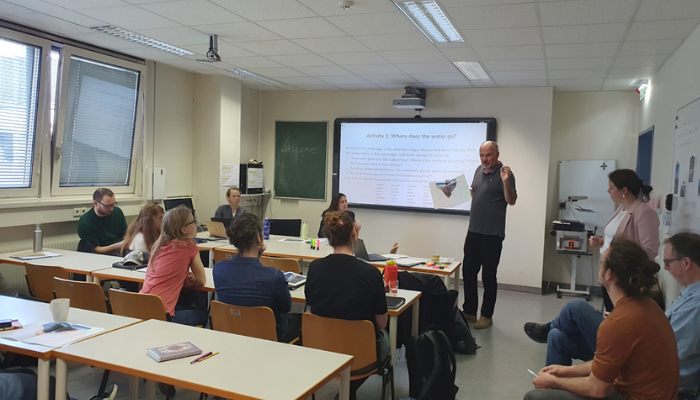
Plenary discussion on the outcomes of one of the group discussions on “where does the water go in the glacierized landscape”?

Despite the importance of mountains for downstream water supply, there are large gaps in our scientific understanding of how snow and ice meltwater travels through the landscape, specifically which flowpaths meltwater takes below the surface. Plus, existing knowledge is scattered throughout various sub-disciplines of mountain hydrology: glaciology, snow science, hydrogeology, and surface hydrology ...[Read More]

Running a live stream of proglacial processes

Running a live stream of proglacial processes

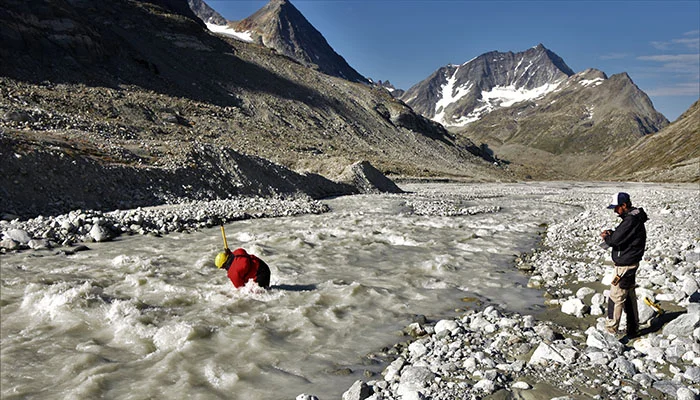
In Switzerland, nothing is really remote, but some places are more so than others. Dense infrastructure networks typically provide convenient access to research sites in the Alps where it is difficult to feel far away from home. However, this is not always the case… For us, our home for the summer is a bit different. We work at 2400 m above sea level in Southern Switzerland, in a narrow vall ...[Read More]

Xavier Sánchez-Vila (2020 Henry Darcy Medallist) on these strange times and the usefulness of scientific thinking

Xavier Sánchez-Vila (2020 Henry Darcy Medallist) on these strange times and the usefulness of scientific thinking

The EGU 2020 Henry Darcy Medal of the EGU Division on Hydrological Sciences was awarded to Xavier Sánchez-Vila in recognition of his innovative theoretical work and practical solutions regarding aquifer characterisation, subsurface solute transport processes and managed aquifer recharge. Given the online EGU 2020 GA, the medal lecture was however postponed to 2021. We then invited Xavi to write so ...[Read More]