Teaching the next generation of scientists, engineers, and planners hydrology may sometimes feel like a chore, but it might be the most impactful thing we do! So, I think it is always worth taking a look to see if we can optimize our approaches. What follows are some ideas that have shaped my teaching strategies …[Read More]
Teaching
Thirsty Earth: a multiplayer online game for water resources education and research
The Rising Need for Interdisciplinary Literacy The sustainable management of water resources requires cooperative institutions whose development are rarely included in already overloaded engineering and earth sciences curricula. The resilience of such institutions in the context of climatic and demographic change is also poorly understood. Enter “Thirsty Earth,” an online open-access multiplayer simulation game designed …[Read More]
Overlooked tips for the lost art of fieldwork
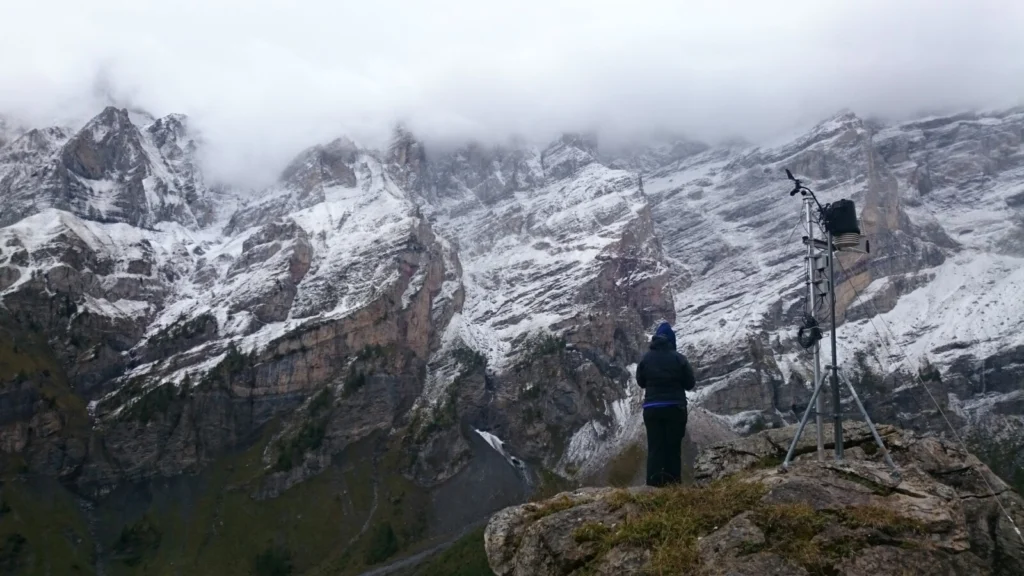
Not so long ago, almost all hydrologic data depended almost exclusively on fieldwork. Today, sure, you can download data from repositories, there are satellites that beam you magic numbers that you can interpret to give you almost any variable, and some (less than we might hope) long-term monitoring has been outsourced to governments (or in …[Read More]
May the year-end be Exceptional, not only hydrologically!
What a hydrological year it has been! From the winter drought and flash floods detailed in Matano and Avanzi‘s blog post to the remarkably warm and wet November 2023, Europe has witnessed a range of extraordinary weather phenomena. In the Alpine region, the convergence of warm and wet weather resulted in numerous rain-on-snow events (see …[Read More]
How has ChatGPT changed the way you teach hydrology?
Have you ever used ChatGPT to teach hydrology? If so, when did you start? I opened my account on openai.com in November 2022, out of curiosity, to test GPT-3 (Generative Pretrained Transformer generation 3). This was shortly before ChatGPT was launched (30 November 2022). Now, I even have a paid account to speed up the …[Read More]
Listening to a bouquet of articles: review papers
Let me guess from which city in the world you are reading this post: Lima, Lahore or Louisville? It might be that you are modelling one of these rivers: Nile, Rhine or Lena? Or studying the Caribbean Sea, the Arabian Sea or the Caspian Sea? The country you live might be Uganda, Philippines or maybe …[Read More]
Open teaching to navigate hydrology: how ready are we?
Around a year ago, I all of a sudden had to find a quick solution to do online teaching. The timing was perfect: start of the semester, start of online teaching, video conference infrastructure unavailable, three kids at home and me, a hydrology teacher who has never produced any kind of video exceeding a 20s …[Read More]
The Covid-19 pandemic cannot stop young change makers
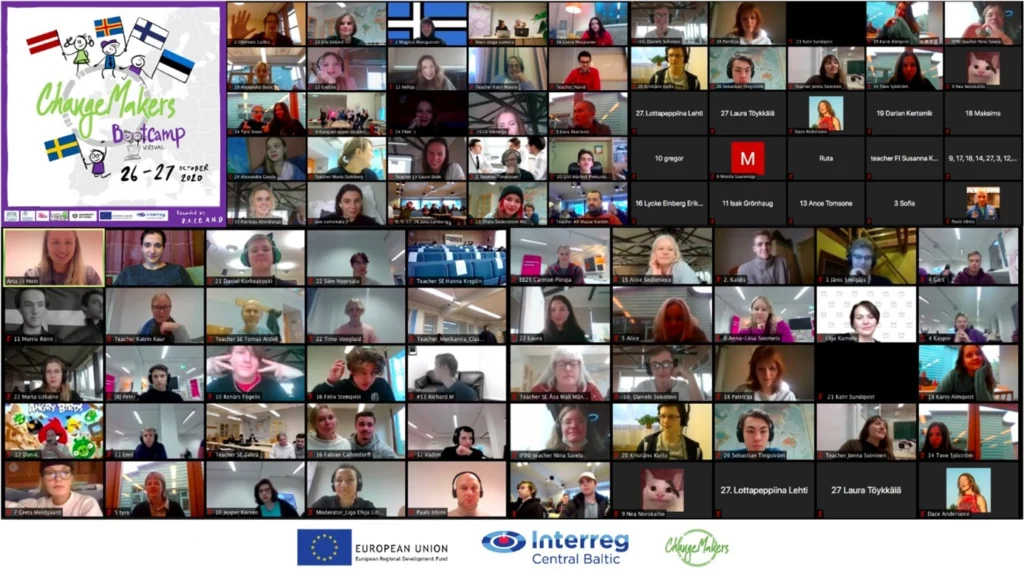
The Coronavirus pandemic demands creativity and flexibility from all of us when we cannot meet in person any longer and need to switch to online meetings and events. Just recently, 120 upper secondary school students (15-18 years old) of four different countries around the Baltic Sea — Finland (incl. Åland), Sweden, Latvia, and Estonia — …[Read More]
Hybrid field courses – a teaching format beyond emergency solution?
Conducting field courses in times of a pandemic can be challenging. In our case, we had to cancel a planned field trip in economic geography that would have taken 19 students and two advisors to the Valle Maira in the Italian province of Cuneo in the Piemont. We had planned to spend 10 days in …[Read More]
Virtual Meetings: Hypnotic sedative or effective stimulant?
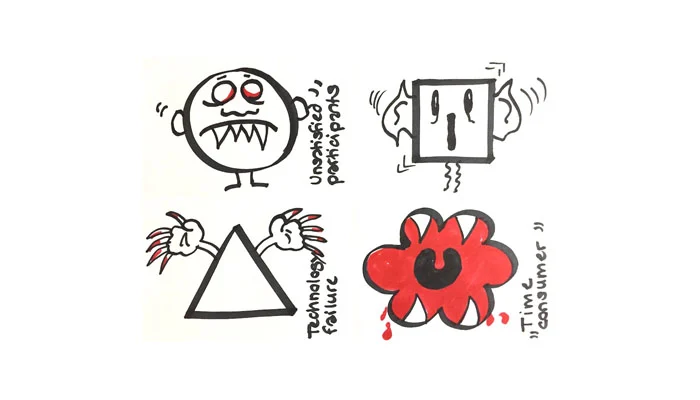
Some people claim that teaching online courses or virtual workshops is not very different from face-to-face meetings. In my experience, however, it is much harder to sneak away secretly from a half-occupied seminar room than to withdraw from a virtual meeting where you simply mute the speaker to work on your emails located only one …[Read More]