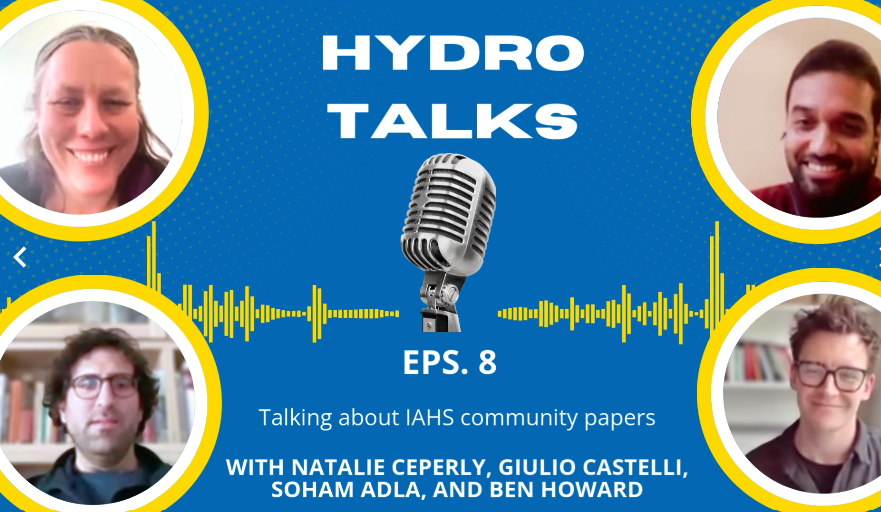
In episode 8 of the Hydrotalks podcast, we hosted four coordinators of working groups of the HELPING hydrological decade. We warmly welcomed Dr. Giulio Castelli (University of Florence) and Dr. Natalie Ceperley (University of Bern), group co-leaders of Co-Creating Water Knowledge working group; Dr. Soham Adla (ING Bank, Netherlands), a coordinator of Science communication, outreach, and promoting ...[Read More]
How to Create Your Own Water-Themed Audiotour
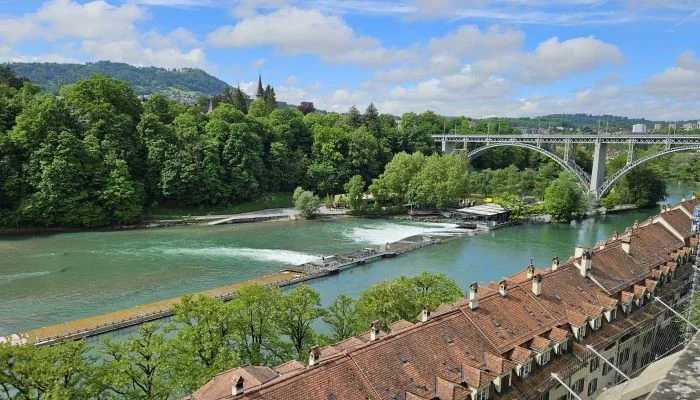
Imagine walking through the Swiss capital, Bern, a city full of water. While you walk, a voice from your headphones guides you along the way and tells you interesting facts about the river and other water sites. You discover the Matteschwelle dam, pass by several fountains, visit a historic weather station, and have a closer look at the clear blue water of the Aare River and its old bridges. This ...[Read More]
HydroTalks Podcast: Professor Li Li on data and models, water chemistry, climate change and science communication
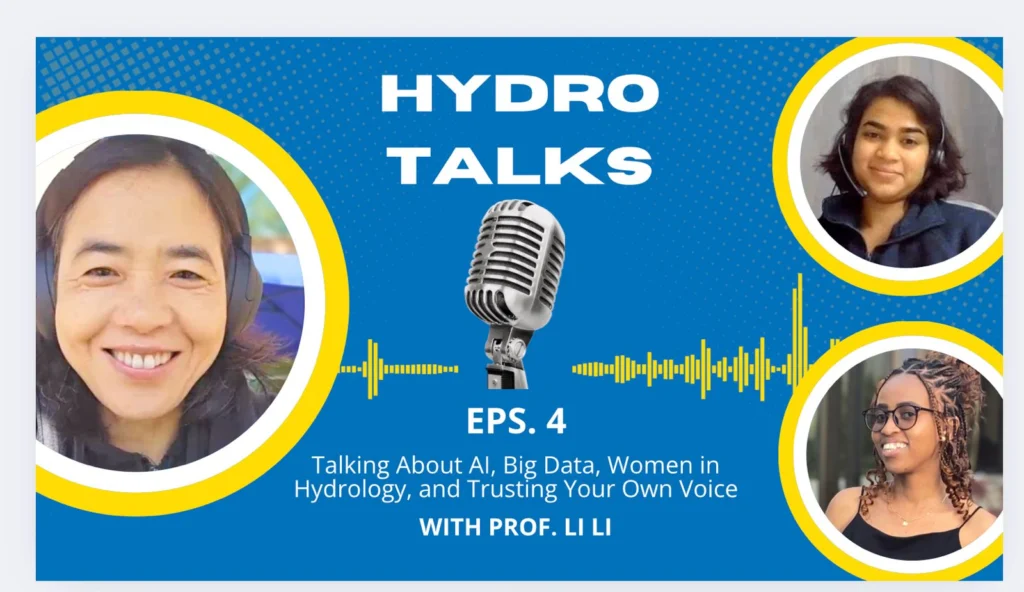
Welcome to HydroTalks, the EGU HS division’s podcast series. In this episode, we interviewed Prof. Li Li (Li Li – Penn State), leader of the Li Reactive Water group at Penn State University. We talked about her research on using data and models for hydro-biogeochemical processes, river water quality, climate change, and research communication. Her research sits at the intersection of h ...[Read More]
Women in Hydrology – The Story of a Special Issue
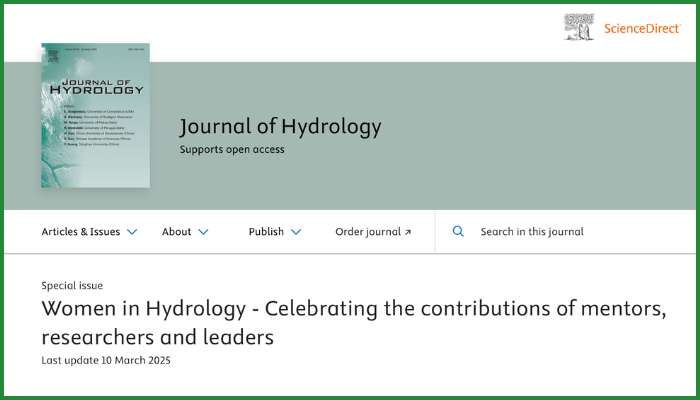
It was 2021, and we were not feeling good. COVID-19 was in full force. Personally we were experiencing lockdown conditions, disruptions to our work, schooling and childcare arrangements. Our social media feeds were lighting up with stories about how women scientists were disproportionately exposed to the negative career impacts of the pandemic. The US was reeling from the aftermath of George F ...[Read More]
Mapping the Future of Freshwater: An Interview with Niko Wanders on the World Water Map Project
Back in 2022, two hydrologists and water resources specialists from University of Utrecht launched the World Water Map in collaboration with the National Geographic Society and ESRI. Based on the outputs of their global hydrological model PCR-GLOBWB, the team of Marc Bierkens and Niko Wanders map global water resources and identify the regions most at risk of water scarcity. The maps combine stat ...[Read More]
Public engagement in science: how to position ourselves?
The recent student protests against the war in Gaza reminded all of us that being a member of the academic community requires us to reflect upon our role in society. In Switzerland, the university occupations (see SwissInfo) led to several open letter-type reactions from academic staff, either supporting the protests or on the contrary, recalling that scientists should abstain from activism. This ...[Read More]
Historical evolution of water management: the example of Switzerland over 200 years
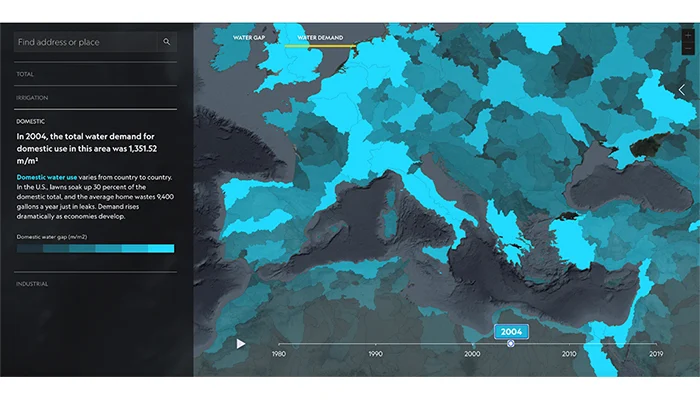
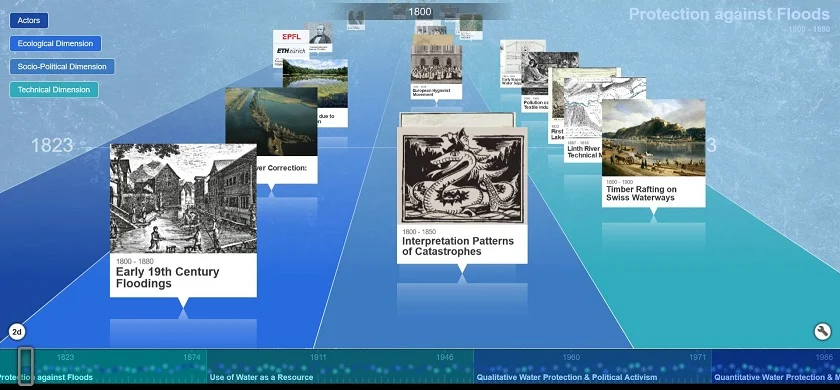
How can we use and manage natural resources more sustainably? This question stands at the core of many social, political and scientific debates about how we can reach the United Nation’s Sustainable Development Goals (SDGs). The targets are ambitious, and there is a growing consensus that rapid and extensive structural change is needed in various sectors simultaneously. However, how transformation ...[Read More]
Thirsty Earth: a multiplayer online game for water resources education and research
The Rising Need for Interdisciplinary Literacy The sustainable management of water resources requires cooperative institutions whose development are rarely included in already overloaded engineering and earth sciences curricula. The resilience of such institutions in the context of climatic and demographic change is also poorly understood. Enter “Thirsty Earth,” an online open-access m ...[Read More]
EGU is more than just a conference! – An Update from the Heart of the European Geosciences Union
Behind the European Geosciences Union (EGU) is a dedicated team ensuring smooth operations for our 20,000+ members. The entire EGU Council recently convened in person, fostering essential dialogue among council members, including the 22 Division Representatives and us, the Early Career Scientist (ECS) Division Reps. Read on to delve into the latest developments and initiatives driving our union fo ...[Read More]
CrowdWater: A Citizen Science Revolution for Flood Prediction with Machine Learning
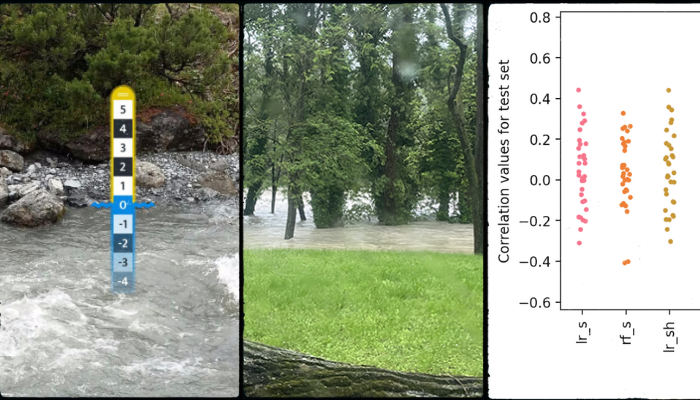
CrowdWater is a citizen science project that enables the collection and sharing of water level data on streams and rivers worldwide using virtual scales. As part of the project, a CrowdWater (CW) mobile application was developed that allows users to take and upload geo-referenced photos of water bodies, which are then processed and stored in a global database. CW data provides valuable information ...[Read More]