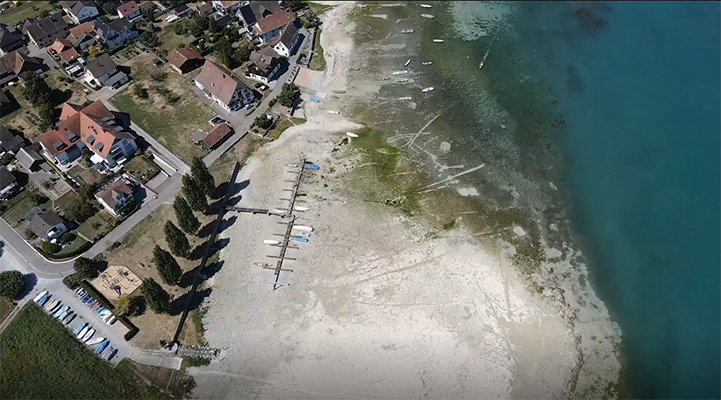
Many of us are experiencing it right now: Europe is suffering from a long lasting large scale drought (Fig. 1), with record heat and low-flow levels that probably nobody of us has seen before; and current forecasts do not announce any relieve for the coming weeks. The pictures of record low levels in the river Rhine are scaring – knowing how strongly Europe depends on this fluvial transport ...[Read More]
Ready for EGU GA 2026?
Most of us are almost ready to go to EGU General Assembly 2026. It will take place on 3–8 May 2026, with more than 21,000 submitted abstracts (presented as orals, posters, and PICOs, onsite and virtual). The EGU-Programme App is ready to be downloaded. Speakers can already upload their material and of course, all of us can start preparing our personal programme (which can be synchronized with the ...[Read More]
Improve your chances in hiring processes and proposal evaluations: curate your ORCID
Today – while preparing my latest Sience – CV (SciCV) version for a proposal submission – I noticed that I will soon celebrate my 20th net-academic-age birthday* (see below). No worries, my editorial is not about looking back on my career, but about offering some hints on how to keep up with evolving research evaluation practices. One of the things that is evolving quickly (for academi ...[Read More]
Last minute information for EGU26 abstract submission
If you have not yet submitted your abstract for this year’s General Assembly (GA2026), do not forget to submit as early as possible this week (instructions here), this avoids any last minute technical challenges. . You can submit only one abstract (except for invited speakers or if you submit to an EOS-session). For your hydrology-related research, the call-for-abstracts programme proposes t ...[Read More]
A quick update on the paper submission process for EGU journals
The EGU preprint server on EGUsphere was launched in 2022. It constitutes the (to-date) last step in a fully transparent and interactive peer-review and publication process. In its early days, authors could actively choose to submit their preprints to the new server or to submit them as preprints directly to a selected EGU Journal (see our blog post from March 2023). This option is now passé: all ...[Read More]
Your contribution to the Hydrology Division programme of GA2026
The call-for-session-proposals for the General Assembly (GA) 2026 was launched on July 29. We take the opportunity to encourage all members of the hydrological community to participate in shaping the next year’s conference programme and in particular early career scientists. (Co-)convening a session is a great experience and the perfect networking opportunity. The Hydrology Division offers every y ...[Read More]
World Water Day & World Glacier Day
The this year’s UN World Water Day on 22 March 2025 is under the theme of ‘Glacier Preservation’, a nice opportunity to recall that 2025 is also the UN year on glacier preservation and that this year, we celebrate the first World Glaciers Day on 21 March 2025. Glaciers play the role of ambassadors for climate change awareness, highlighting the urgent need for global action to protect these vital f ...[Read More]
Public engagement in science: how to position ourselves?
The recent student protests against the war in Gaza reminded all of us that being a member of the academic community requires us to reflect upon our role in society. In Switzerland, the university occupations (see SwissInfo) led to several open letter-type reactions from academic staff, either supporting the protests or on the contrary, recalling that scientists should abstain from activism. This ...[Read More]
Communicating science to the public – an example after the recent floods in Germany
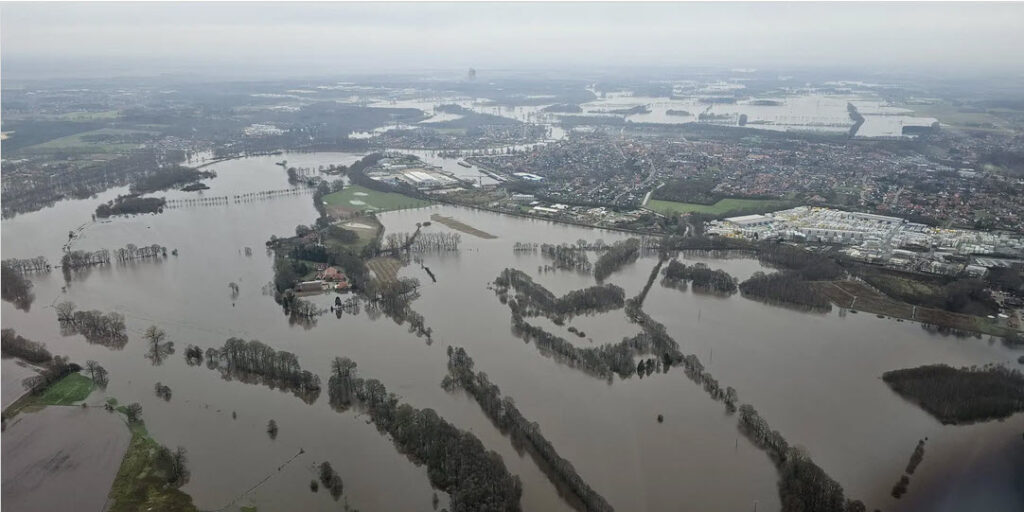
After the wet December 2023, the year 2024 started with widespread flooding in parts of Europe. Flooding during winter times is not unusual but brings particular challenges in terms of spatial extent, and the impact on people can be exacerbated when flooding comes with very low temperatures. The exceptionally wet and warm winter necessarily triggers questions from the public about how this links t ...[Read More]
May the year-end be Exceptional, not only hydrologically!
What a hydrological year it has been! From the winter drought and flash floods detailed in Matano and Avanzi‘s blog post to the remarkably warm and wet November 2023, Europe has witnessed a range of extraordinary weather phenomena. In the Alpine region, the convergence of warm and wet weather resulted in numerous rain-on-snow events (see eg. the streamflow recording below), offering valuabl ...[Read More]