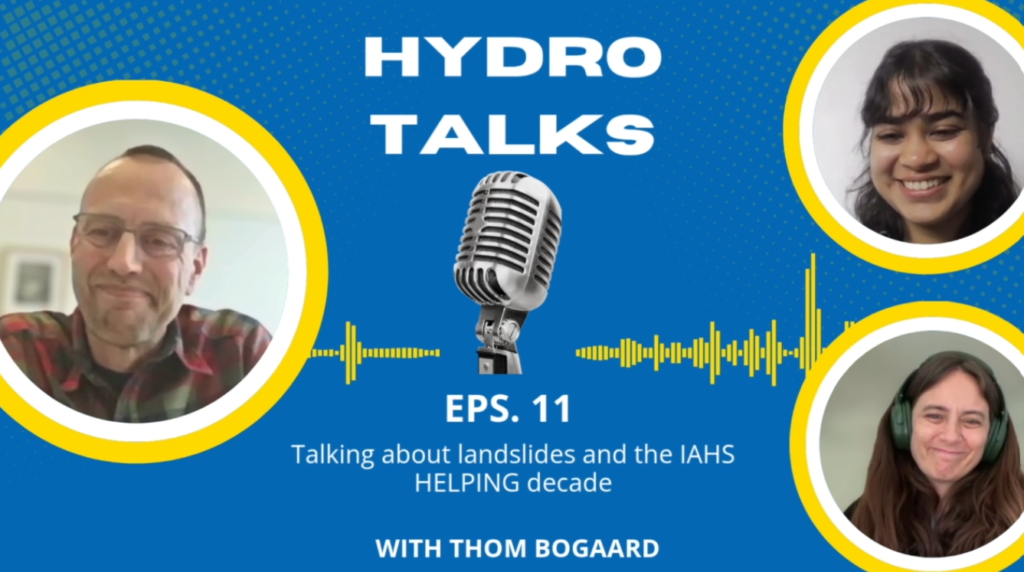
“The number one piece of advice I would give anybody is to pick a problem and go after that problem. Ideally, you should pick a problem that requires a lifetime to solve.” Prof. Siva Sivapalan, episode 1 “A lot of greybeards telling us what we should be doing is absolutely the wrong way to do science. Science is anarchic, it’s bottom-up.” Prof. Mike Kirkby, episode 2 “I wr ...[Read More]
Close the gender gap among EGU awardees: Nominate your women peers
Scientists are often imagined through a narrow and gendered stereotype. This matters because society’s image of scientist shape who is seen, remembered and valued as a role model. When recognition, leadership and awards are skewed towards male scientists, scientists from underrepresented genders are less likely to feel that they belong, or see a future for themselves in the field. In geosciences, ...[Read More]
Doing flood frequency hydrology in a non-stationary climate
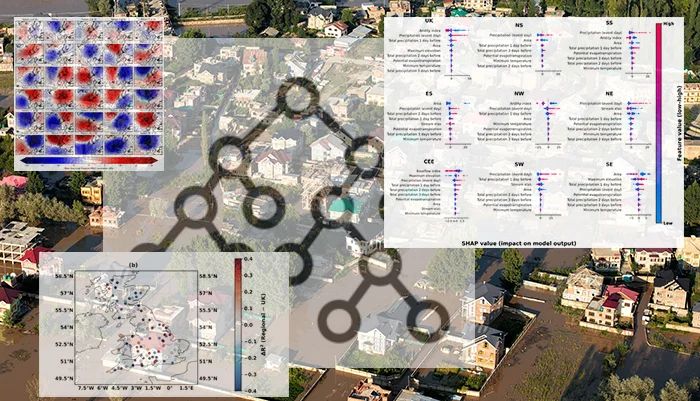
A robust estimation of probabilities of extreme floods is the Holy Grail in flood hydrology in view of limited available observations, variability of climate, and complexity of flood generation processes in catchments. Flood frequency hydrology, spearheaded in the past decades by Ralf Merz and Günter Blöschl, offers a powerful toolbox to enhance the reliability of flood probability estimates by co ...[Read More]
Communicating and Managing Residual Risk with Perfect Storms and Other Counterfactual Stories
The aim of risk management is to prepare society in order to limit loss and damage when an extreme event occurs and to restore the functioning of society afterwards . While current risk management practices are helpful in many regards, they fall short when it comes to unprecedented events. An analysis of event pairs and recent disasters show that societies often fail to cope with events that are l ...[Read More]