GD
Geodynamics

News & Views

Dual inward dipping subduction: A Christmas Cracker Model

Dual inward dipping subduction: A Christmas Cracker Model

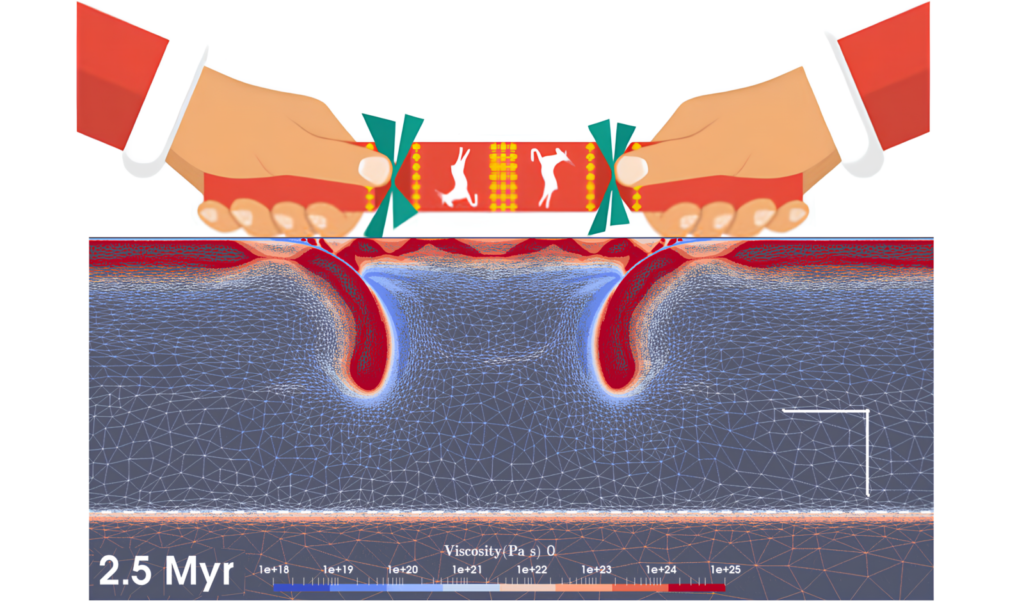
A recent research finds that dual inward dipping subduction framework, after considering thermal dependent deformation mechanisms, can pull apart the middle overriding plate (Lei and Davies, 2023), just like pulling Christmas crackers from both ends! Dual inward dipping subduction (DIDS) occurs when the overriding plate is decoupled with two subducting slabs dipping towards each other. DIDS is fou ...[Read More]

Exploring Kolumbo: Unveiling the Secrets of a Submarine Volcano

Exploring Kolumbo: Unveiling the Secrets of a Submarine Volcano

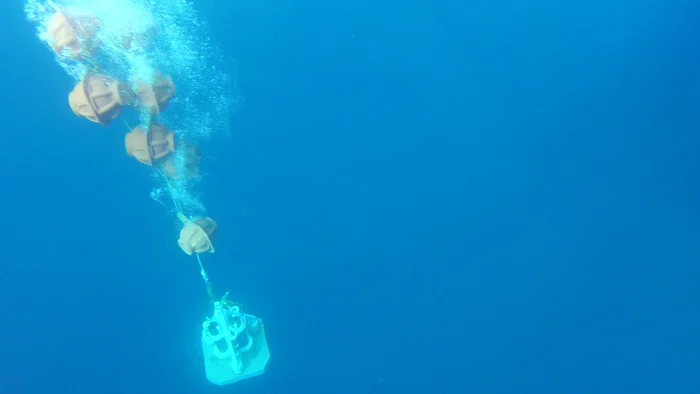
Santorini Island without a doubt is one of the top worldwide destinations, taking our breath away with its unparalleled beauty. However, from the geological perspective as well, this mystifying island can reveal hidden secrets of the past and pave the way for our future. In this week’s blog, Associate Professor Paraskevi Nomikou, the 2023 awardee of EGU’s Geoscience Days Grant from the National an ...[Read More]

Alice in Depressionland

Alice in Depressionland

Not all is about internal evolution of Earth and geodynamic processes. It is also important to make the space for ourselves to separate academic responsibilities and personal interests, in a way that equilibrate our health and make the develop of the PhD thesis “easier”. As it was described in previous blogs (as here and here), mental health matters during the PhD pathway especially when the illus ...[Read More]

Into the Unknown: Research Cruises and the Geologist’s Drill

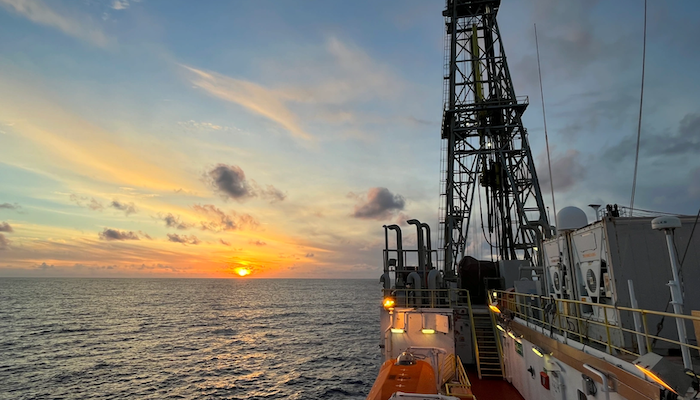
View aboard the JOIDES Resolution

With love for geoscience comes a zest for exploring the natural world. What we want to explore might not always be close to us. But science finds a way, even if it means sailing to the middle of the ocean. This week, we are going to dive into the nuts and bolts of how research cruises work in this blog post by Kuan-Yu Lin from the University of Delaware. Kuan-Yu recently sailed as an igneous petro ...[Read More]

Modelling CPO evolution with D-Rex

Modelling CPO evolution with D-Rex

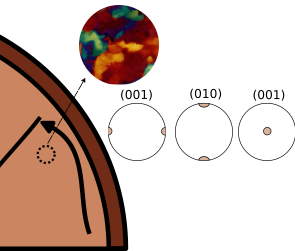
As a result of Earth’s mantle convection, rocks in the earth’s interior flow and develop a crystallographic texture. These textures reveal the planet’s thermal and tectonic history and are responsible for the viscous anisotropy, which can be used to study the planet’s deeper recesses that are not visible through other means. This necessitates the use of models that can pred ...[Read More]

Physics-Based Machine Learning – Curse or Blessing?

Physics-Based Machine Learning – Curse or Blessing?

The advance of Artificial Intelligence is impacting all spheres of human activity, and Geosciences are no exception. In this week’s post, Denise Degen from RWTH Aachen University, Germany, gives us a glimpse of what this means for Geodynamics. Discussing the advantages and caveats of different approaches, she shows how physics-based Machine Learning may help us investigating and understanding comp ...[Read More]

Going to the mountains is going home

Going to the mountains is going home

Geoscientists explore the nature from a different perspective than the commoners. In this week’s blog, Stephanie Sparks from Arizona State University shares her story how her passion for mountains gradually became her profession. Her journey through different regions in Himalaya leads her to understand the exhumation rate and the underlying geodynamic processes behind the formation of world’s high ...[Read More]

On the usefulness of geodynamic numerical models

On the usefulness of geodynamic numerical models

Within the vast realm of geoscience, the intricate mechanisms governing Earth’s internal processes continually pose challenges for researchers attempting to unveil its mysteries. This blog post acknowledges the inherent limitations of geological and geophysical data while highlighting the important role that geodynamic modeling plays in bridging these datasets. The motivations for this discu ...[Read More]