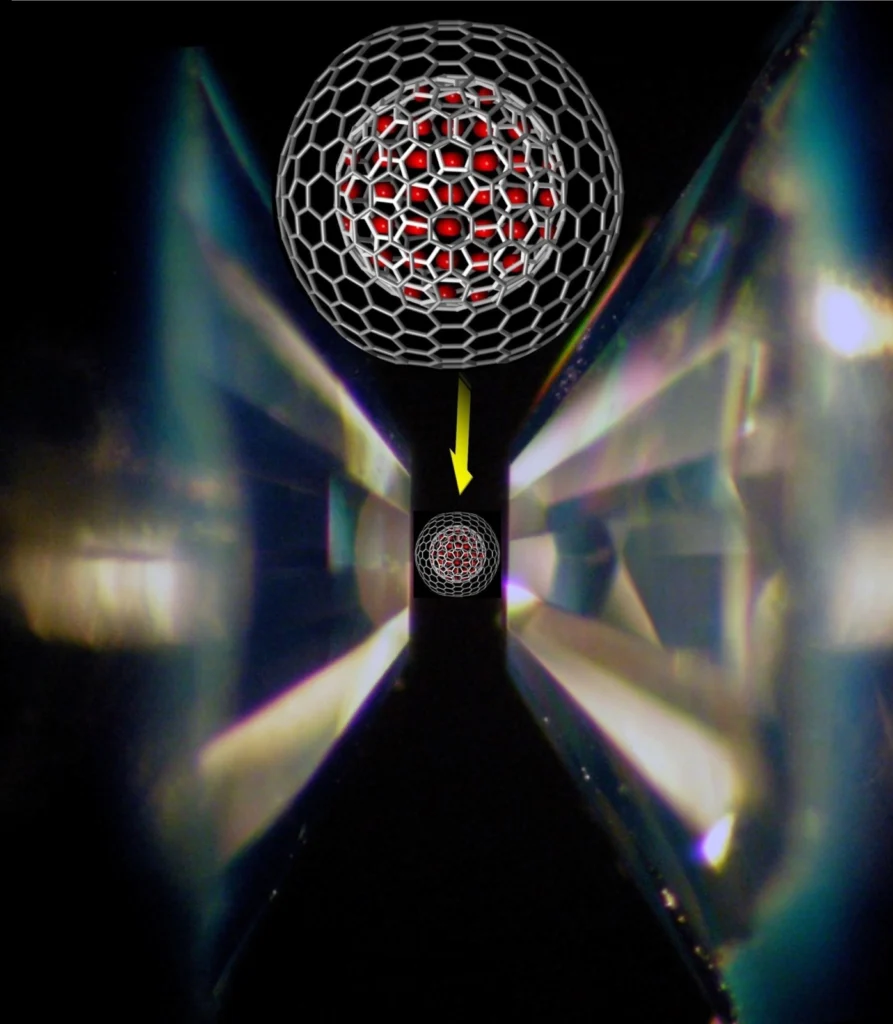
This week UCLA PhD student Leslie Insixiengmay takes us on a microscopic journey to the Earth’s interior and tells us all about the atomic forces that shape the deep Earth behaviour! A question I get asked a lot is: “How do we know what’s inside of the Earth?” It’s a good and valid question considering that the deepest hole humans have dug only reaches about 12.2 km, which is about 0.2% of ...[Read More]
Plate tectonics from a perspective of continental crustal growth
Understanding the plate tectonics initiation can give us incredible opportunity to guess the physical state of the early Earth. This week, Hee Choi, a Ph.D. candidate, takes us on a journey on initiation of plate tectonics and how continental crustal growth is related to it. Our planet Earth is the only place where plate tectonics takes place. No other planet or rocky moon in our solar system has ...[Read More]
The geophysicist’s toybox
Simplified models or toy models explain the complex Earth processes fairly well, even though they are far from reality. In this week’s Geodynamics 101, Adam Beall, Research Associate at Cardiff University, discusses some of his favourite geophysical toy models! I remember being excited to first hear about scientists doing Earth modelling and imagined impressive computer visualisations of tec ...[Read More]
Earthquakes within the plates
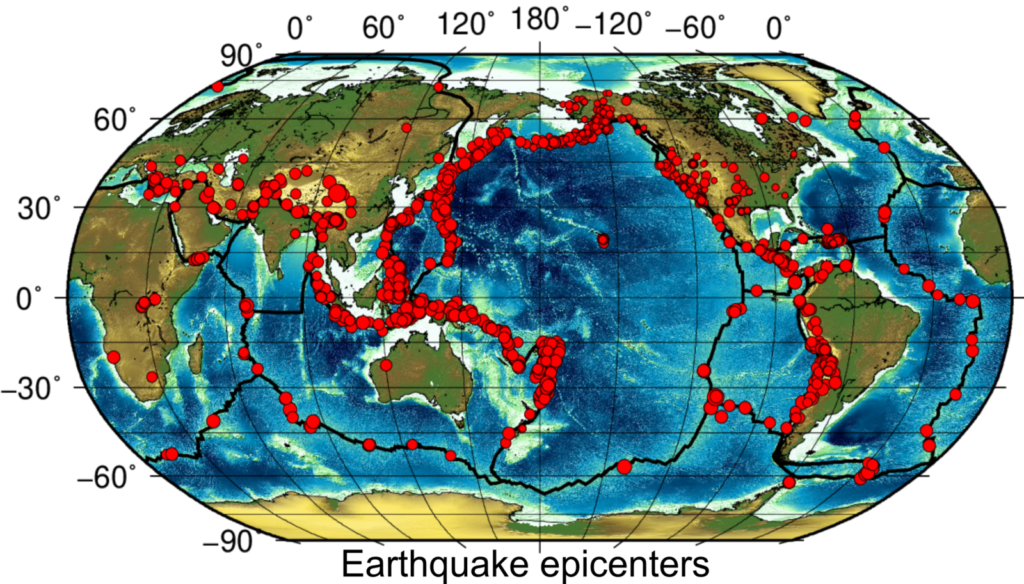
As fascinating as the plate tectonics and its accompanying dynamics are, continental interiors are no quiescent zones. The tectonics within these interiors are apparent in the occurrence of numerous intraplate earthquakes, and this week, EGU blog editor Arushi Saxena briefly discusses them and their mechanisms. Earthquakes are a fairly common occurrence here on Earth’s crust. Although most are ess ...[Read More]
Magnetic field generation and its reversal in dynamo models
Generation and reversal of the Earth’s magnetic field have remained one of the most controversial topics. In this week’s geodynamics 101, Debarshi Majumder, a PhD student from the Indian Institute of Science, gives a brief overview of the theory of geodynamo reversal and discusses some of the preliminary results obtained from numerical modelling. A planetary magnetic reversal is one of ...[Read More]
The Supercontinent Cycle
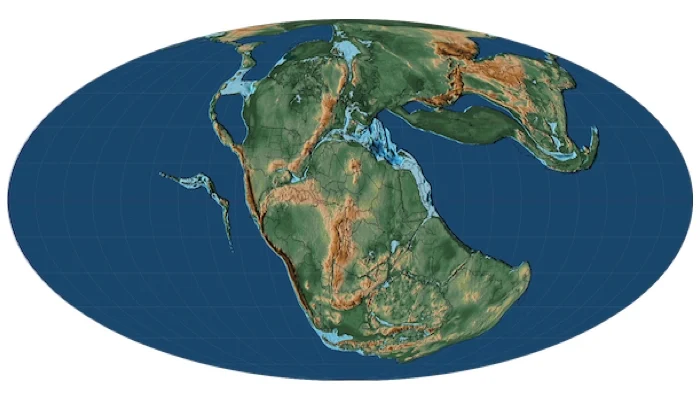
From orbital, to climatic, to tectonic evolution, many aspects of the Earth’s dynamics feature high degrees of cyclicity and episodicity, which can give us important insights into how the Earth’s works. The supercontinent cycle is an example capturing the Earth’s grandest scales and this week EGU geodynamics blog editor Tobias Rolf takes a closer look at it. Pangaea. This is a familiar term to eve ...[Read More]
The boundaries of plate modelling
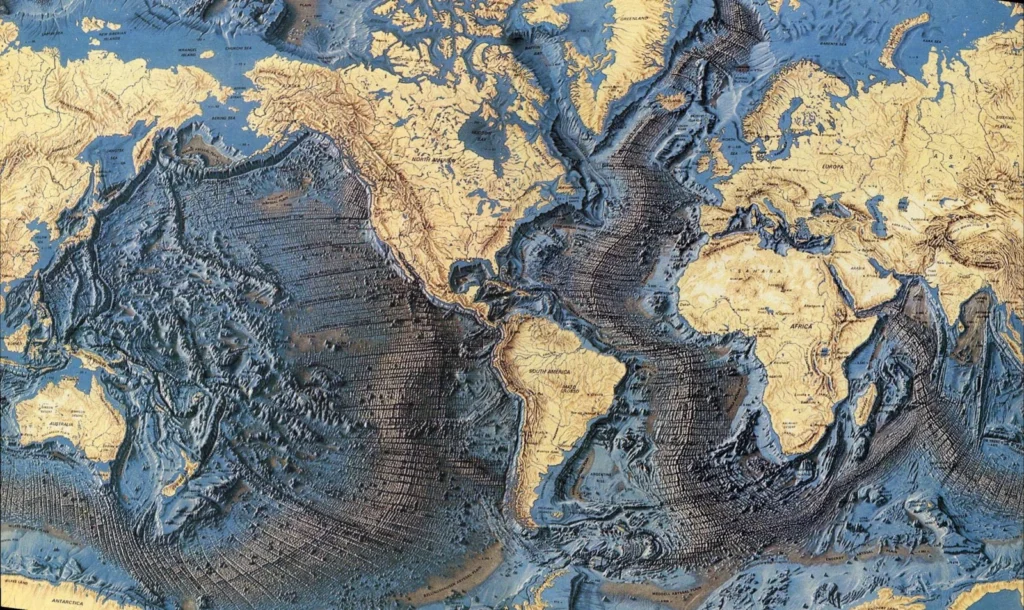
This weeks post is all about the importance of boundaries. Plate boundaries that is. Jean-Christophe Wrobel-Daveau and Graeme Nicoll tell us why we should care where plate boundaries are and how they evolve through time, when attempting to reconstruct past plate motions. Global plate tectonic models are an incredible way to synthesise geological knowledge to gain both direct and indirect insight i ...[Read More]
Paleogeography – A window into past mantle dynamics
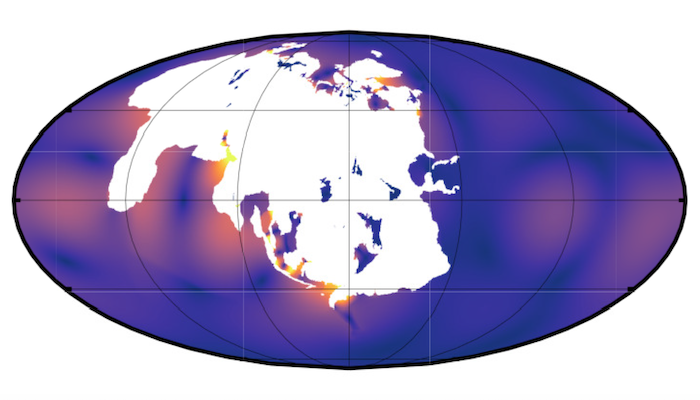
Paleogeography refers to the past distribution of landmasses and oceans and gives important insights into the state of previous tectonics. This is a useful cornerstone for many aspects of geodynamics and this week Boris Robert – previously postdoctoral fellow at the Centre for Earth Evolution and Dynamics Oslo (Norway) and currently visiting scientist at GFZ Potsdam (Germany) – tells us how we may ...[Read More]
Rayleigh-Taylor instability in geodynamics
Flow against gravity is a common feature in the geodynamic phenomenon. In this week’s Geodynamics 101, Dip Ghosh from Jadavpur University Geodynamics Lab will explain the fundamentals of Rayleigh-Taylor instability: A key to understanding the anti-gravity flow. It has long been realized that most of the geodynamic processes can be described in terms of slow viscous flow. Thus, like many othe ...[Read More]
Geodynamics 101: Dynamic Topography
The Geodynamics 101 series serves to showcase the diversity of research topics and/or methods in the geodynamics community. In this week’s post, Fred Richards explains how ‘Dynamic Topography’ is used in the Geosciences, and discusses the knowns, unknowns, and the challenges ahead. Since shortly after its tumultuous formation 4.5 billion years ago, Earth has been steadily cooling, wit ...[Read More]