HS
Hydrological Sciences

Extreme events

What machine learning can and cannot tell us about floods

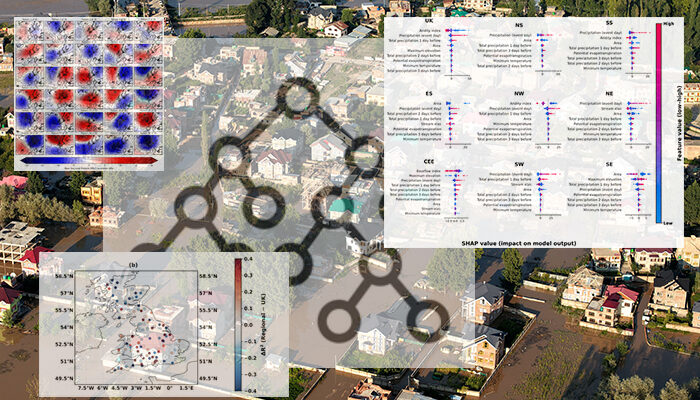
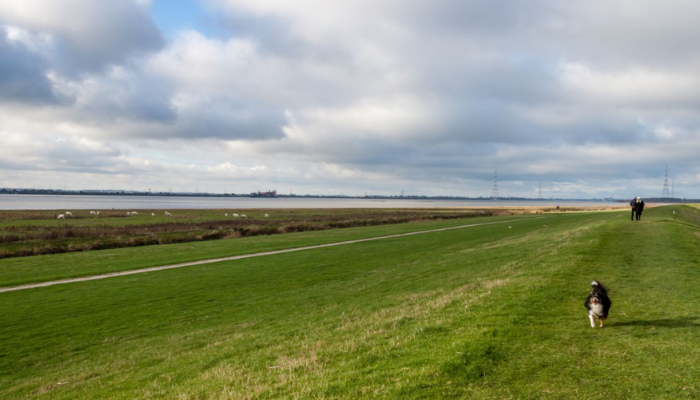
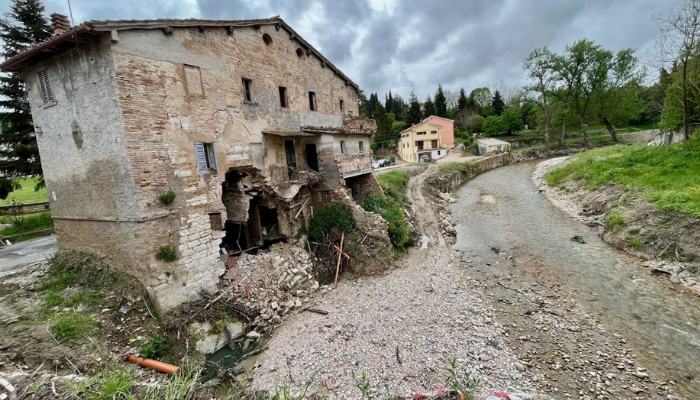
Collage based on a picture by Imad Clicks via Pexel

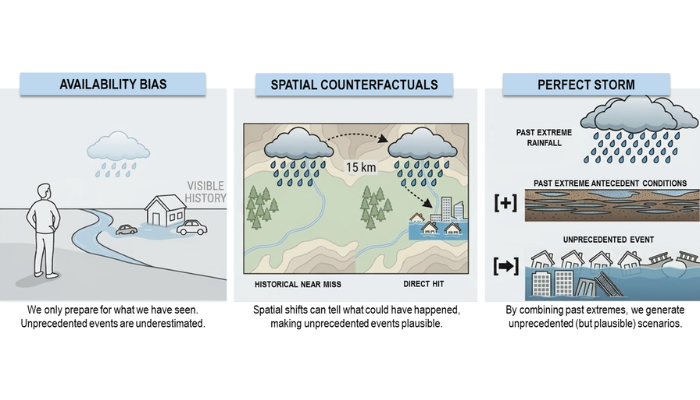
Floods are shaped by complex and nonlinear interactions between weather patterns, rainfall, soil properties, topography, land cover, and how wet a catchment already is. This complexity is one reason machine learning (ML) is increasingly used in hydrology. ML models can learn patterns from large and complex datasets with many variables.  Early in my PhD, while exploring machine learning models for ...[Read More]

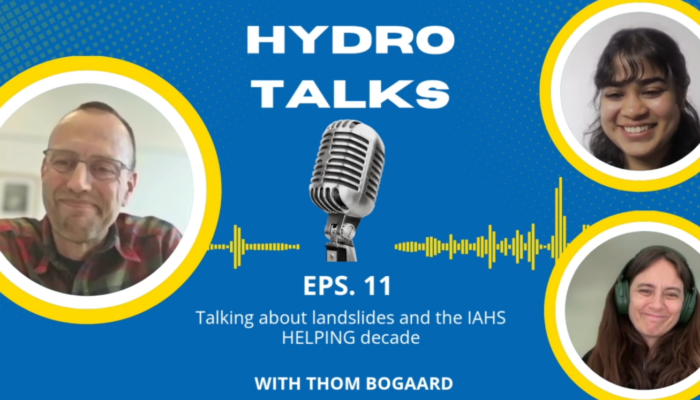
HydroTalks: Prof. Thom Bogaard on Water and Landslides, Early Warning Systems, and IAHS-HELPING Decade

HydroTalks: Prof. Thom Bogaard on Water and Landslides, Early Warning Systems, and IAHS-HELPING Decade

For episode 11 of HydroTalks, we welcomed Prof. Thom Bogaard of Delft Technical University and visiting professor at Kasetsart University, Bangkok. His research explores the intersection of hydrology, geomorphology, ecology, and natural hazards. We discussed his work on understanding how water triggers landslides, improving regional early warning systems, and developing practical solutions that re ...[Read More]

HydroTalks podcast: Introducing Ilias Pechlivanidis, the HS Division President-elect

HydroTalks podcast: Introducing Ilias Pechlivanidis, the HS Division President-elect

For this  episode of HydroTalks, we’re thrilled to welcome Dr. Ilias Pechlivanidis, Senior Researcher and Associate Professor (Docent) in hydrology and water resources at the Swedish Meteorological and Hydrological Institute (SMHI), and Visiting Researcher at Uppsala University. He is currently the Vice President of the EGU Hydrological Sciences Division and will serve as Division President for th ...[Read More]

Doing flood frequency hydrology in a non-stationary climate

Doing flood frequency hydrology in a non-stationary climate

A robust estimation of probabilities of extreme floods is the Holy Grail in flood hydrology in view of limited available observations, variability of climate, and complexity of flood generation processes in catchments. Flood frequency hydrology, spearheaded in the past decades by Ralf Merz and Günter Blöschl, offers a powerful toolbox to enhance the reliability of flood probability estimates by co ...[Read More]