HS
Hydrological Sciences

Catchment hydrology

Do-It-Yourself (DIY) in Geoscience Miniseries – Part 3: Getting it all together – Cables, Breadboards and Circuit Boards

Do-It-Yourself (DIY) in Geoscience Miniseries – Part 3: Getting it all together – Cables, Breadboards and Circuit Boards

You got all your components for your project, so now it’s all about getting it all together. Then it’s great to be able to quickly exchange components and change wiring. That’s where a so-called “breadboard” comes in handy. It’s an easy to use device where you can connect microelectronic components without the need to solder anything.   Breadboards are like pinboards for cables and microelect ...[Read More]

Overlooked tips for the lost art of fieldwork

Overlooked tips for the lost art of fieldwork

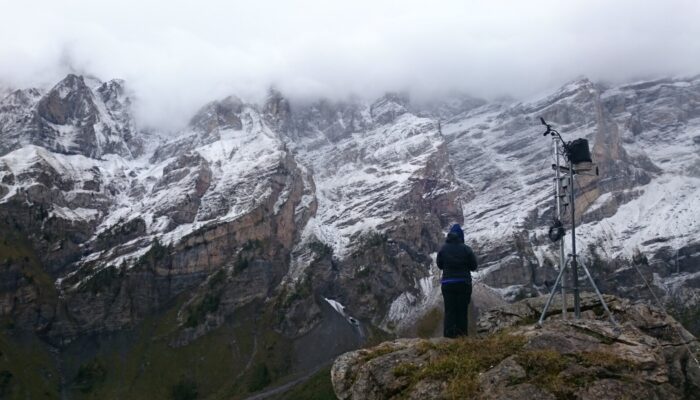
Not so long ago, almost all hydrologic data depended almost exclusively on fieldwork.  Today, sure, you can download data from repositories, there are satellites that beam you magic numbers that you can interpret to give you almost any variable, and some (less than we might hope) long-term monitoring has been outsourced to governments (or in some cases to citizens with sensors).  But somewhere in ...[Read More]

Do-It-Yourself (DIY) in Geoscience Miniseries – Part 2: Sensors & Electronics

Do-It-Yourself (DIY) in Geoscience Miniseries – Part 2: Sensors & Electronics

As a child, I was a huge fan of LEGO. I would spend hours building and creating structures, vehicles and landscapes. For every birthday & Christmas, I wished for the newest sets of these colorful plastic bricks. While building the sets manually was fun, creating something new from my own fantasy was even better. It seemed like once I had a substantial amount of different bricks, combination po ...[Read More]

Communicating science to the public – an example after the recent floods in Germany

Communicating science to the public – an example after the recent floods in Germany

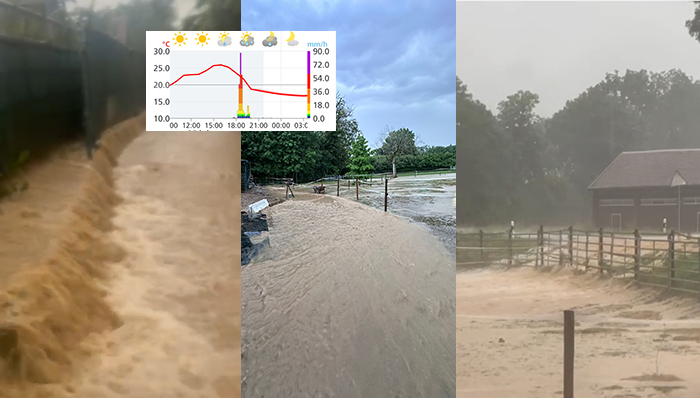
After the wet December 2023, the year 2024 started with widespread flooding in parts of Europe. Flooding during winter times is not unusual but brings particular challenges in terms of spatial extent, and the impact on people can be exacerbated when flooding comes with very low temperatures. The exceptionally wet and warm winter necessarily triggers questions from the public about how this links t ...[Read More]