GD
Geodynamics

mantle flow

Biogeodynamics – Let’s model the entire world!
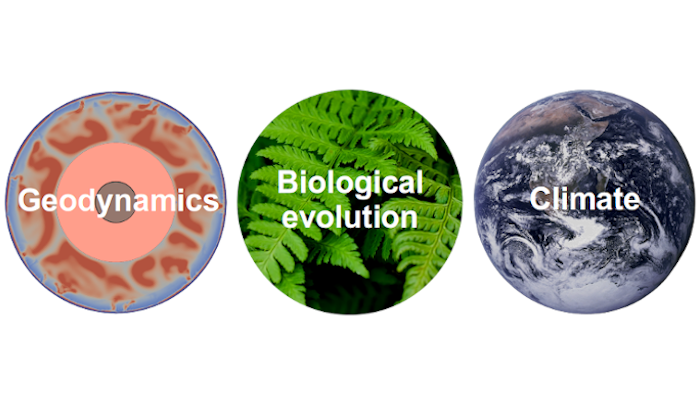
Biogeodynamics – Let’s model the entire world!
All models are wrong, but some are useful – we all have heard this quote. But it raises several questions (including but not limited to) – What would a model of the entire world look like? Can you couple geodynamical models with climate and biological evolution models? Would these models be useful? In this week’s blog post, Timothy Gray, a PhD student from ETH Zürich is looking for ans ...[Read More]

Modelling CPO evolution with D-Rex

Modelling CPO evolution with D-Rex

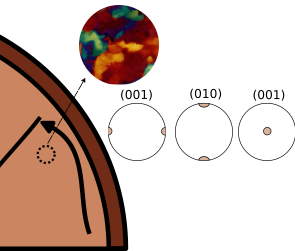
As a result of Earth’s mantle convection, rocks in the earth’s interior flow and develop a crystallographic texture. These textures reveal the planet’s thermal and tectonic history and are responsible for the viscous anisotropy, which can be used to study the planet’s deeper recesses that are not visible through other means. This necessitates the use of models that can pred ...[Read More]

Into the anisotropic Earth

Into the anisotropic Earth

While we have sent several rovers to Mars, drilling down even just to the mantle of our own planet is a challenge that we are yet to overcome. How is it then that we know all these things about our planet’s interior? It turns out, we do not need to be inside the Earth to know what is happening there. Observations from geophysics and geochemistry can inform us about the processes and the properties ...[Read More]

Journey of the Indian plate

Journey of the Indian plate

Plume craton interaction is a fascinating geological phenomenon. The Indian plate, which has experienced several plume eruptions underneath it, is one of the best locations to study the effect of plume craton interaction. In this week’s news and view, I will provide an overview of the controversy and hypotheses related to the plume craton interaction within the Indian plate since the mid-Cre ...[Read More]

Whole solid-Earth numerical simulation: Towards an understanding of mantle-core interactive dynamics

Whole solid-Earth numerical simulation: Towards an understanding of mantle-core interactive dynamics

Due to huge difference between the time scale of the mantle convection and the outer core convection, they are modelled separately. In this week’s News and Views, Masaki Yoshida from the Volcanoes and Earth’s Interior Research Center, Japan Agency for Marine-Earth Science and Technology (JAMSTEC), Japan, put forward the recent development on the modeling of the whole solid-Earth. The E ...[Read More]

Modelling the deformation in the Indian plate and the India-Eurasia collision zone

Modelling the deformation in the Indian plate and the India-Eurasia collision zone

A complete fluid dynamical approach of modeling the Earth’s deformation can not provide a complete picture due to presence of rigid lithospheric plates. In this week’s news and views, Srishti Singh, scientist at National Geophysical Research Institute, India, explains how coupled models of lithosphere dynamics and mantle convection are developed.  The ongoing collision of the Indian plate wi ...[Read More]

The Indian Ocean Geoid Low at a plume-slab overpass

The Potsdam gravity potato

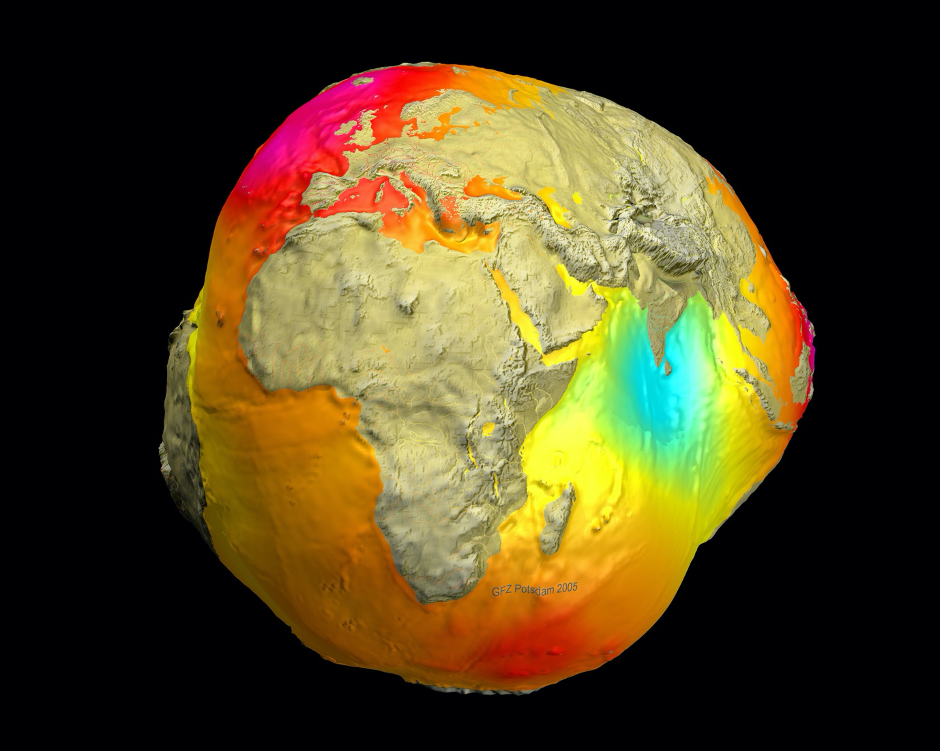
In this week’s News & Views, Postdoc Elodie Kendall from GFZ Potsdam shares with us recent work on the mantle structures that could explain the Indian Ocean Geoid Low.           What is the geoid, what does it look like and what can it tell us about mantle structure? The geoid is a model of the shape of the oceans’ surface if only gravity and Earth’s rotation act ...[Read More]

Remarkable Regions – The Réunion Hotspot

Remarkable Regions – The Réunion Hotspot

This week we again turn our attention to a Remarkable Region that deserves a spot in the scientific limelight. Postdoctoral researcher Eva Bredow of Kiel University shares with us her long history with Réunion Island. At first glance, Réunion is a relatively small tropical island, located between Madagascar and Mauritius, and from my personal experience, most Germans have never even heard of it. T ...[Read More]

The past is the key

The past is the key

“The present is the key to the past” is a oft-used phrase in the context of understanding our planet’s complex evolution. But this perspective can also be flipped, reflected, and reframed. In this Geodynamics 101 post, Lorenzo Colli, Research Assistant Professor at the University of Houston, USA, showcases some of the recent advances in modelling mantle convection.     Mantl ...[Read More]