Every week, The Sassy Scientist answers a question on geodynamics, related topics, academic life, the universe or anything in between with a healthy dose of sarcasm. Do you have a question for The Sassy Scientist? Submit your question here. David asks: What do you think about analogue modelling? Dear David, Analogue modelling. Well, what’s not to like? Who doesn’t want to spend weeks or months fin ...[Read More]
The past is the key
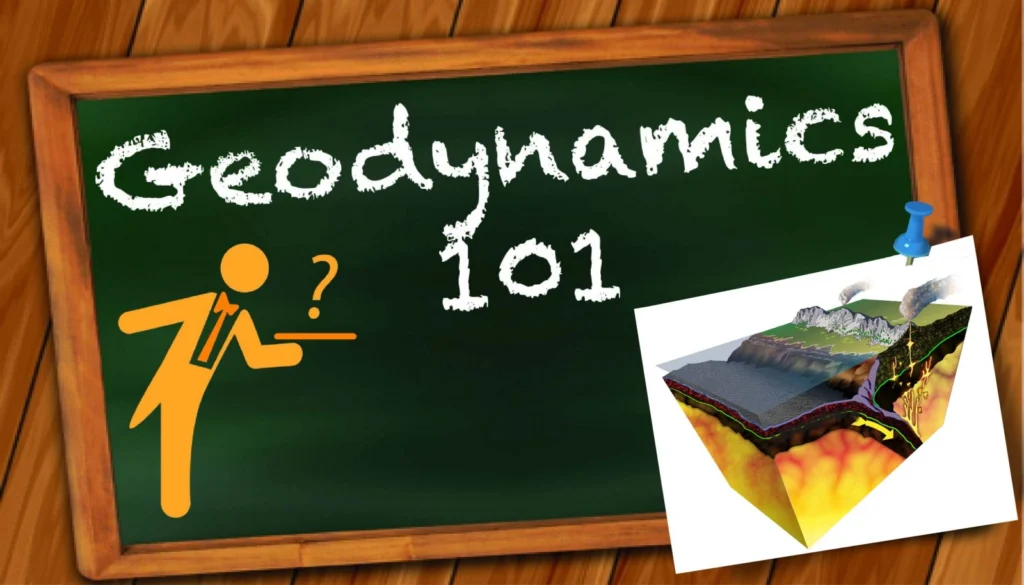
“The present is the key to the past” is a oft-used phrase in the context of understanding our planet’s complex evolution. But this perspective can also be flipped, reflected, and reframed. In this Geodynamics 101 post, Lorenzo Colli, Research Assistant Professor at the University of Houston, USA, showcases some of the recent advances in modelling mantle convection. Mantl ...[Read More]
Geodynamics in Planetary Science
It is a question that humankind has been asking for thousands of years: Are we alone in the Universe or are there other worlds like our own? As of today, it is unknown whether or not inhabited planets exist outside of our own solar system. With the discovery of the extrasolar planet 51 Peg b in 1992, it was confirmed that our sun is not the only star that hosts planets and therefore the search for ...[Read More]
Introducing the blog team!
It’s time for another proper introduction of the blog team! As you will probably know, things have been a bit silent on the blog front lately. This is because all the blog editors were very busy and also: it’s hard to upload 52 times a year. You come up with some great blog ideas! (if you do: e-mail us, please!). Luckily, we used the EGU General Assembly to find some fresh blood for th ...[Read More]
The geodynamic processes behind the generation of the earliest continents
The earliest continents played a fundamental role on Earth’s habitability. However, their generation is still not understood, and it requires an integrated approach between petrology and geodynamic modelling. In a new study, Piccolo and co-workers developed a method to handle the effects of chemical evolution on the geodynamic processes. They show that the production of the earliest felsic c ...[Read More]
Travel log – The Kenya rift
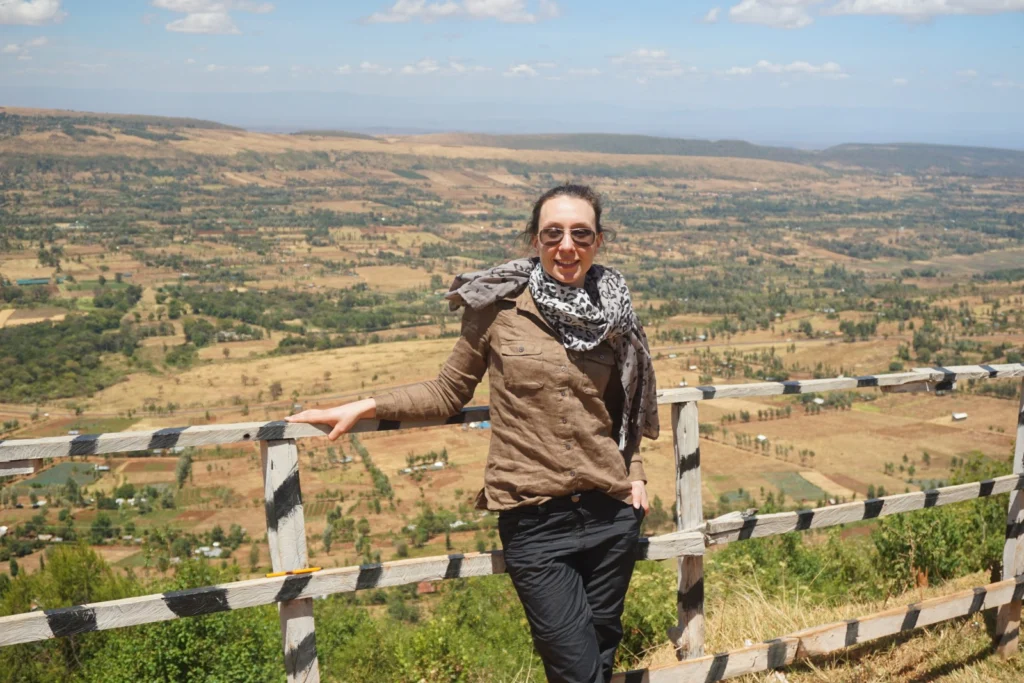
A little over a year ago, I was lucky enough to join a field trip to the Kenya rift organized by Potsdam University and Roma III. This rift is part of the active East African Rift System, which I introduced in a previous blog post. With a group of 25 enthusiastic participants from Roma Tre, Potsdam University, Nairobi University and GFZ Potsdam (we somehow always managed to make the 20-person bus ...[Read More]
GD Guide to EGU19
With this year’s EGU General Assembly (GA; #EGU19) looming in less than a week, it’s time for all attendees to finish (or start) their own scientific contributions, create their own personal programs as well as plan other activities during the conference. In this blog Nico Schliffke (GD ECS Rep) would like to share some useful advice how to successfully navigate through the conference and hi ...[Read More]
How to make a subduction zone on Earth
Subduction zones are ubiquitous features on Earth, and an integral part of plate tectonics. They are known to have a very important role in modulating climate on Earth, and are believed to have played an essential part in making the Earth’s surface habitable, a role that extends to present-day. This week, Antoniette Greta Grima writes about the ongoing debate on how subduction zones form and persi ...[Read More]
Conferences: Secret PhD Drivers
Conferences are an integral part of a PhD. They are the forum for spreading the word about the newest science and developing professional relationships. But as a PhD student they are more likely to be a source of palpitations and sweaty palms. This week Kiran Chotalia writes about her personal experience on conferences, and lessons learnt over the years. My PhD is a part of the Deep Volatiles Cons ...[Read More]
Demystifying the Peer-Review Process
An important and inevitable aspect of being in academia is receiving a request to peer-review a paper. And much like the papers we write and submit, retaining structure and clarity for the review itself is important. This week Adina E. Pusok, Postdoctoral Researcher at Scripps Institution of Oceanography, UCSD, and our outgoing GD ECR representative, shares some detailed and helpful tips for writi ...[Read More]