
GD
Geodynamics

edited by Pauline Gayrin

Pauline is a doctoral researcher working in GFZ Potsdam, Germany. She is working on the development of new techniques to map and characterise the fault networks in continental rifts allowing a better global understanding of regional dynamics. She likes to study motion in general (of plates, of faults, etc.) using different approaches such as analogue modelling, satellite imagery.

What’s blobbing inside the Earth? – insights from numerical modelling
What’s blobbing inside the Earth? – insights from numerical modelling

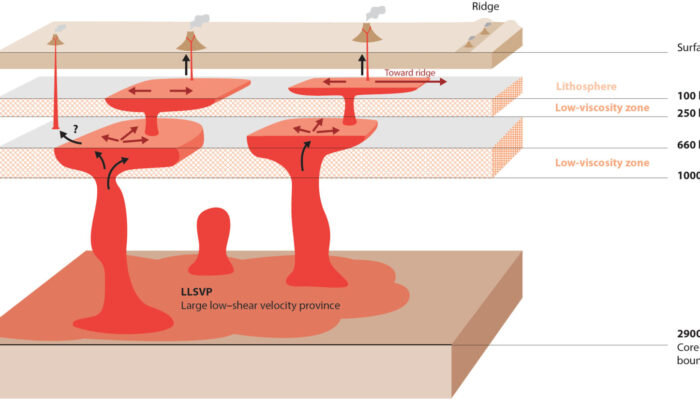
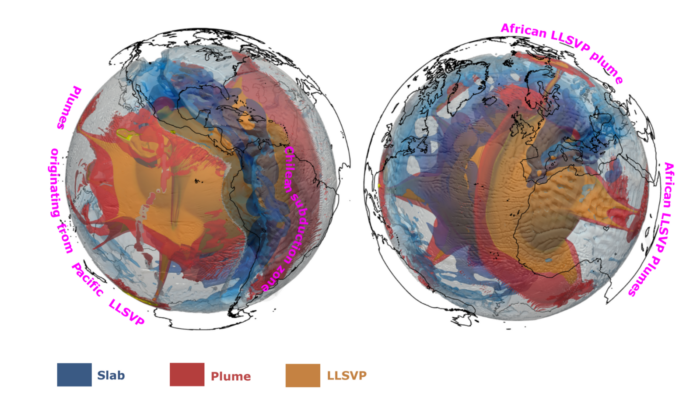
Seismic waves tell us that something unusual is happening in the lowermost few hundred kilometers of Earth’s mantle. Beneath Africa and the Pacific lie two enormous thermochemical structures known as Large Low-Shear-Velocity Provinces (LLSVPs). These “large blobs” are slower to transmit shear waves, but beyond that, their physical nature remains one of the biggest open questions in deep Earth geod ...[Read More]

Bored by the Lower Mantle? Think Again!

Bored by the Lower Mantle? Think Again!

Is the lower mantle boring? For a long time, the lower mantle was thought to be relatively featureless and uniform compared to the more dynamic upper mantle. But recent seismic observations are challenging that idea, especially when we look near the base of the mantle. Recent studies from Maureen Long’s group (Creasy et al. 2017, Wolf et al. 2019, Reiss et al. 2019, Wolf & Long, 2023) and othe ...[Read More]

From Mountains to Oceans: How the memory of ancient orogens guides the rupture of continents

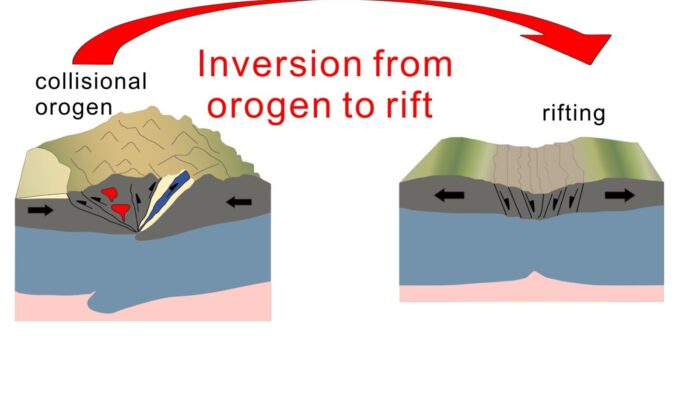
Picture showing an orogen that transform in a rift

In this new blog, Dr. Kai Li (GFZ Potsdam) talk about his PhD work, where he used accordion numerical models to explore the tectonic history of the South China Sea. His PhD research focuses on the impact of orogenic inheritance on rifts and rifted margins, employing advanced geodynamic modeling techniques. Have you ever tried to fit the west coast of Africa and the east coast of South America toge ...[Read More]