
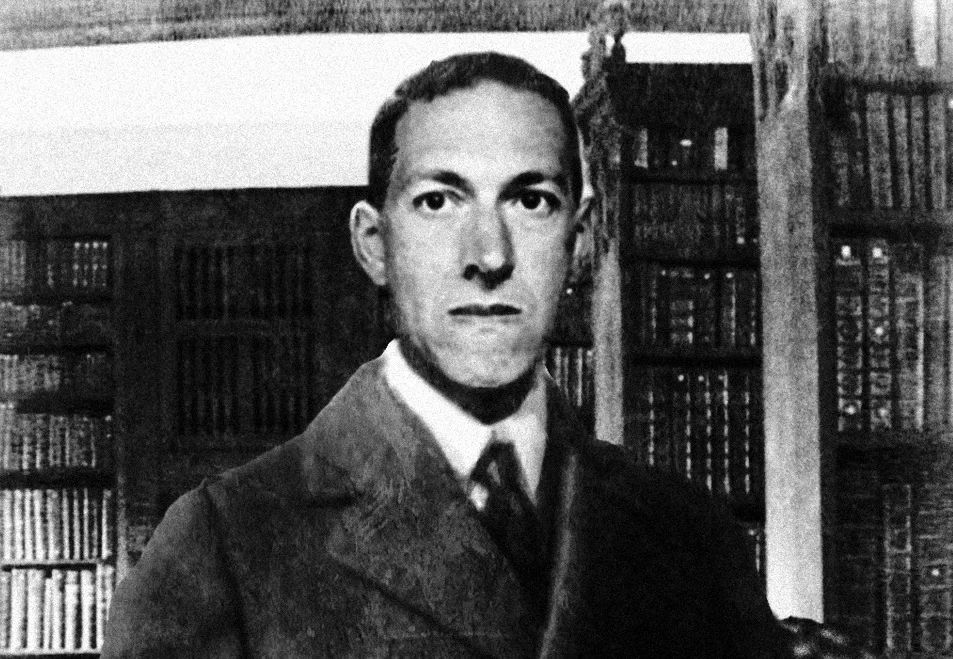
“I am forced into speech because men of science have refused to follow my advice without knowing why. It is altogether against my will that I tell my reasons for opposing this contemplated invasion of the antarctic—with its vast fossil-hunt and its wholesale boring and melting of the ancient ice-cap —and I am the more reluctant because my warning may be in vain.”
The opening lines from At the Mountains of Madness sound less like the beginning of a horror story than the start of an uncomfortable talk at EGU conference.
H.P. Lovecraft, born in Providence in 1890, wrote the novella in 1931, and it was finally published in 1936, at a time when Antarctica still felt like the unfinished edge of the map. Many explorers had already ventured there: Shackleton had come within 180 km of the South Pole in 1909, and Amundsen reached it in December 1911. For readers in the early twentieth century, Antarctica was not just remote—it was scientifically real, geographically extreme, and still surrounded by the aura of the unknown.
That is why Lovecraft’s Antarctic setting works so well. He did not choose a generic white wasteland; he chose a continent that was already a natural archive of deep time. In the novella, geology is not decoration—it is the engine of the plot. The story advances through stratigraphy, fossils, field observations, and the slow realization that rocks are not simply background scenery, but records of worlds vastly older than humanity. In that sense, the horror is profoundly geological: it emerges from time, burial, preservation, and the idea that the Earth has existed far longer than we would like.
From a geological perspective, one of Lovecraft’s sharpest intuitions was to present Antarctica as (geo)dynamic rather than static (we are in a geodynamics EGU blog, this joke was inevitable). Today we know that Antarctica was once part of Gondwana, and that it preserves evidence of climates radically different from the present. Fossil plants, fossil wood, and other remains show that parts of Antarctica once supported much milder environments. As Jane Francis from the British Antarctic Survey has noted, rocks now near the South Pole can still contain fossil leaves and petrified tree stumps—clear signs that Antarctica was once much greener than its present icy image suggests. That single idea already sounds Lovecraftian enough: the frozen continent is not timeless, only transformed.
This is where the novella intersects beautifully with the history of geodynamics. Alfred Wegener proposed continental drift in 1912, only a couple of decades before Lovecraft wrote At the Mountains of Madness. As we (should) know, Wegener argued that continents had not always occupied their present positions, and he used the fit of continental margins, the distribution of fossils, and paleoclimate indicators as evidence. Antarctica played a central role in that argument. The occurrence of fossils such as Glossopteris (a very beautiful tree from the Permian) in now-polar regions, together with evidence for past warm climates, helped demonstrate that continents had moved dramatically over geological time. Lovecraft was writing at exactly that intellectual moment: after the idea of drifting continents had been proposed, but before plate tectonics had fully explained the mechanism. That timing matters, because it gave Antarctica a double identity: it was both a real field area and a continent still haunted by scientific uncertainty.

Distribution of modern day Glossopteris fossils (dark green) on the continents in their positions as parts of Pangaea. Legend: 1 South America 2 Africa 3 Madagascar 4 Indian subcontinent 5 Antarctica 6 Australia. Pangaea Glossopteris, by Petter Bøckman (2008), via Wikimedia Commons. Public domain.
But let’s get back to the book. The mountains in the novella are fictional in scale and terror, but they resonate with real Antarctic tectonic architecture (I remember trying to calculate whether such tall mountains were possible while reading this during my bachelor’s, pure horror). The (real) Transantarctic Mountains bisect the continent, separate East and West Antarctica, extend for more than 3,000 km, and expose major sedimentary records such as the Beacon Supergroup (I only chose this name because I was hungry while writing this and didn’t have any bacon at home). Their history is tied to uplift, denudation, and the evolution of the West Antarctic Rift System, with important tectonic and magmatic phases beginning during Jurassic rifting associated with Gondwana breakup. So while Lovecraft invents impossible peaks and impossible cities, he places them on a continent whose real geology is already extraordinary: long-lived continental crust, huge rift-flank mountains, buried basins, and a tectonic history stretching from ancient supercontinents to breakup and rifting.
For a geologist, that is what makes the novella so effective (at least for me, reading this on the train to the university for a structural geology class). Lovecraft understood, instinctively, that the rock record is unsettling. A cliff is never just a cliff; it is a stack of vanished environments. A fossil is never just a shape in stone; it is evidence that the world used to be structured differently. Antarctica intensifies that feeling because it combines tectonic inheritance, paleoclimate change, burial, exhumation, and preservation beneath one of the most extreme landscapes on Earth. In a literary sense, Lovecraft transforms geology into horror. In a geological sense, he simply pushes ordinary reasoning to its limit: if continents move, climates change, oceans open and close, mountains rise, and ecosystems disappear, then the Earth is telling a story in which humanity arrived very late.
There is also something wonderfully modern about that. At the Mountains of Madness is often remembered for cosmic horror, but much of its power comes from scale—and scale is one of geology’s native languages (do you remember in cartography class when professors always said “remember SCALE!”?). The story works because Lovecraft replaces the comforting human timeline with deep time. He lets fossils, sedimentary layers, and ancient landscapes do part of the terrifying. The result is not just a tale about monsters under the ice; it is a reminder that scientific knowledge can be destabilizing—that the Earth is older, stranger, and more dynamic than human intuition likes to admit, and that sometimes the most frightening thing in a story is not the creature, but the outcrop that proves it could have existed. And all of this without any spoilers!
Now my purpose is done, and you are part of it. This blog was not (only) to explain how cool geodynamics are. When I explain this to my friends or family, they usually laugh at me—but now you should think like me: Lovecraft always wanted to be a geologist, but was not accepted into the geology bachelor’s.
“Tekeli-li! Tekeli-li!”
References

Bøckman, P. (2008). Pangaea Glossopteris [Image]. Wikimedia Commons. https://commons.wikimedia.org/wiki/File:Pangaea_Glossopteris.jpg

H. P. Lovecraft. (1936). At the Mountains of Madness.

Francis, J. (n.d.). Interview on Antarctic paleoclimate and fossil evidence. British Antarctic Survey. https://www.bas.ac.uk

Wegener, A. (1915) Die Entstehung der Kontinente und Ozeane. Braunschweig: Vieweg. [English translation: The Origin of Continents and Oceans, 1924, London: Methuen.]